

Commercial buildings are exposed to ongoing structural demands, from changing occupancy loads and environmental forces to material ageing and site-specific ground conditions. Over time, even well-designed structures can develop performance issues that affect safety, compliance, and long-term asset value. As a result, commercial structural engineer inspections have become a critical risk-management tool rather than a compliance formality.
In 2026, inspections go far beyond visual checks. Engineers evaluate load paths, material behaviour, foundation performance, and code alignment under tighter regulatory and operational constraints. These inspections help owners and project teams distinguish cosmetic concerns from conditions requiring engineering action.
In many cases, inspection findings hinge on how loads are transferred into the ground, making foundation performance the controlling factor in long-term structural risk. This guide explains what commercial structural inspections involve, when they are required, and how findings inform practical, cost-effective decisions.
Key Takeaways
Commercial structural engineer inspections assess load paths, material behaviour, and foundation performance to verify building safety beyond surface-level defects.
Inspections are commonly driven by transactions, renovations, use changes, or compliance needs, helping owners manage structural risk before failure occurs.
Foundation conditions often influence cracking, settlement, and load redistribution, making subsurface performance a critical factor in many inspections.
Inspection findings enable targeted, evidence-based repairs or monitoring, avoiding unnecessary construction while protecting long-term building performance.
When inspections identify foundation-related risk, TorcSill provides focused engineering input and stabilisation strategies aligned with real site conditions.
What a Commercial Structural Engineer Inspection Involves

A commercial structural engineer inspection provides a focused evaluation of a building’s load-bearing systems to confirm safety, performance, and structural adequacy. It goes beyond general condition checks to assess how the structure behaves under current loads and whether critical components are functioning as designed.
In commercial settings, these inspections are commonly performed to support property transactions, planned renovations, changes in use, or investigation of visible structural concerns.
Key elements of a commercial structural engineer inspection include:
Review of existing structural documentation: Available drawings, calculations, and prior reports are reviewed to understand original design intent and identify areas requiring closer evaluation.
Visual inspection of primary structural components: Foundations, slabs, columns, beams, load-bearing walls, and roof systems are examined for cracking, deflection, corrosion, or other indicators of distress.
Evaluation of load paths and structural continuity: Engineers verify that loads are being transferred correctly from floors and roofs through the structural system and into the foundation.
Identification of alterations affecting structural integrity: Modifications such as removed walls, added equipment, or increased floor loads are reviewed for their impact on the structure and foundation.
Safety and code-related observations: Conditions that may present immediate risk or conflict with applicable structural requirements are noted for corrective action.
Engineering conclusions and recommendations: Findings are summarized with clear guidance on monitoring, repair, or foundation stabilization measures where appropriate.
Assessment of foundation performance: Visible indicators of settlement, rotation, erosion, or loss of bearing support are documented and evaluated in the context of site conditions.
When foundation-related indicators are present, inspections often determine whether targeted stabilization, such as the addition of helical piles to restore load transfer at depth, is sufficient, or whether broader structural intervention can be avoided.
By combining observed conditions with engineering judgment, a commercial structural engineer inspection helps distinguish between cosmetic issues and foundation-driven risks, allowing owners and project teams to address underlying causes efficiently and avoid unnecessary disruption or reconstruction.
When a Commercial Structural Engineer Inspection Is Required
A commercial structural engineer inspection is required when decision-makers need independent, engineering-based verification of structural performance rather than surface-level condition checks. These inspections assess whether a structure is functioning as intended under real-world loading, aging, and site-specific influences.
In commercial environments, inspections are typically initiated to manage operational, financial, or regulatory risk, not simply to respond to visible damage.
Property Purchase or Sale
Buyers and lenders rely on structural inspections to confirm that no hidden deficiencies exist that could affect valuation, insurability, or future capital planning. An engineer evaluates whether observed cracking, settlement, or deflection is cosmetic or indicative of deeper structural issues requiring intervention.
Change of Building Use or Occupancy
When a building’s use changes, applied loads often increase or shift. Warehousing, medical facilities, data centers, and manufacturing spaces introduce higher floor loads, equipment vibration, or concentrated point loads that may exceed original design assumptions. Inspections confirm whether the existing structure and foundation can safely accommodate these demands.
Renovation or Structural Modification
Alterations such as wall removal, new openings, mezzanine additions, or rooftop equipment installation can interrupt established load paths. A structural engineer evaluates how these changes affect load distribution and determines whether reinforcement or foundation stabilization is required to maintain continuity and safety.
Visible Structural Distress
Cracks, uneven floors, deflection, corrosion, or water intrusion are often symptoms rather than root causes. An inspection determines whether these conditions reflect normal material behavior, historical movement, or active structural distress driven by settlement or loss of bearing support.
In many cases, inspections reveal that stabilizing the foundation, rather than repairing structural elements, addresses the underlying cause of movement, often through targeted solutions such as helical pile installation that restore load transfer without major excavation.
Post-Event Evaluation
Events such as flooding, seismic activity, vehicle impact, or extreme wind can compromise structural components even when damage is not immediately visible. Inspections assess whether load reversals, erosion, or soil disturbance have reduced structural or foundation performance.
Compliance, Insurance, or Lender Requirements
Regulatory agencies, insurers, and lenders may require documented structural verification to confirm that buildings meet safety and risk thresholds. Engineering inspections provide professional assurance that conditions align with applicable codes and underwriting expectations.
Foundation Performance Concerns
Changes in groundwater levels, adjacent construction activity, or long-term soil consolidation can affect foundation support. Structural inspections evaluate how these subsurface changes influence load transfer and whether foundation stabilization, such as supplemental deep support using helical piles, is needed to prevent progressive movement.
By identifying not just what is visible but why conditions exist, commercial structural engineer inspections guide owners toward corrective actions that address root causes, reduce disruption, and protect long-term building performance.
What Engineers Evaluate During a Structural Inspection
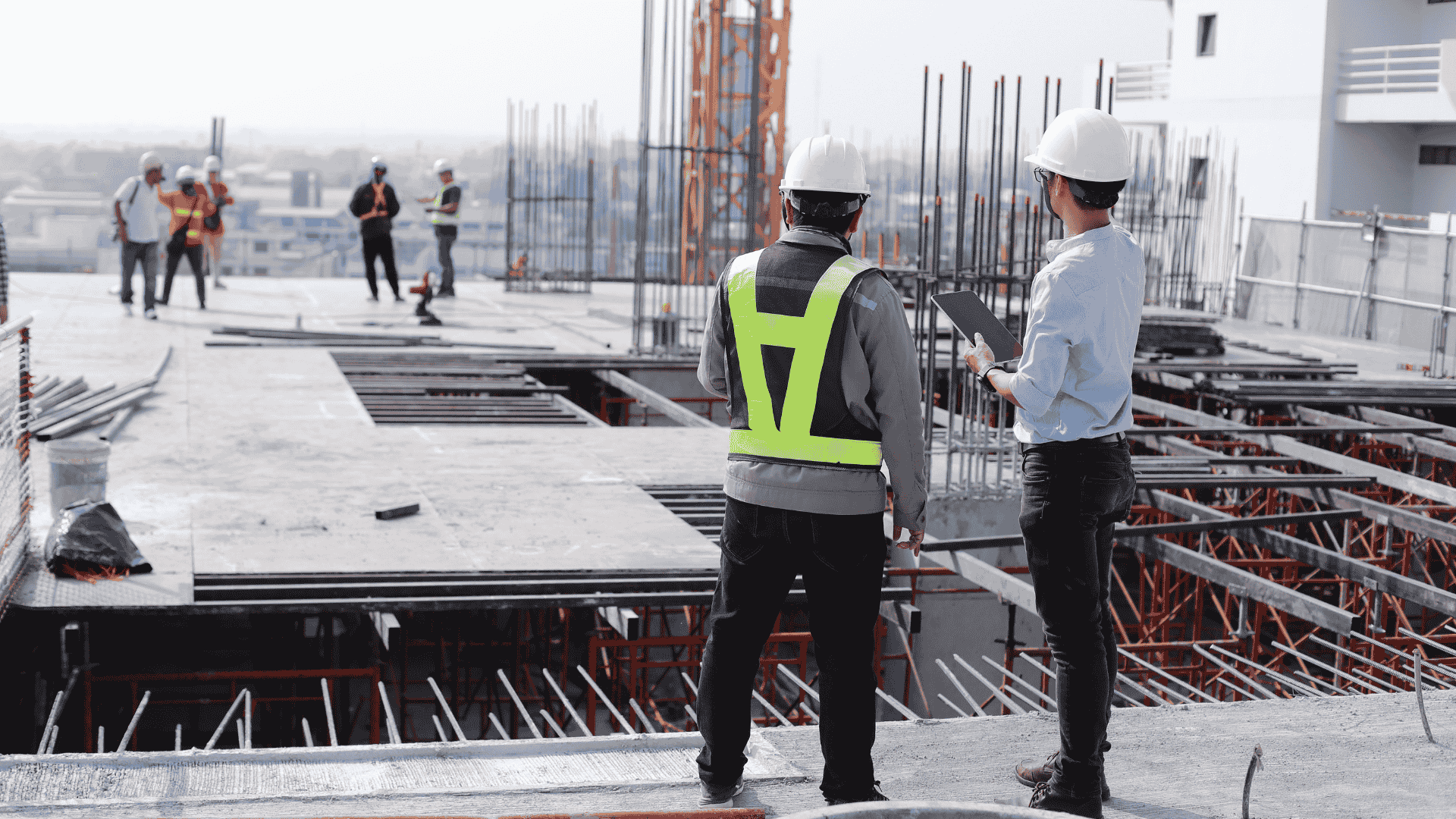
During a commercial structural engineer inspection, the focus is on how the building is performing structurally today, not how it was intended to perform on paper.
Engineers assess whether loads are being transferred as designed, whether materials are behaving predictably over time, and whether observed conditions indicate emerging structural risk that could worsen without intervention.
Key areas evaluated during the inspection include:
Structural Load Paths and Force Transfer
Engineers analyze how gravity, lateral, and operational loads move through the structure, from slabs and framing to columns, walls, and foundations. Disrupted or unintended load paths often point to settlement, loss of support, or previous alterations that require closer foundation-level evaluation.
Condition of Primary Structural Elements
Beams, columns, slabs, and load-bearing walls are reviewed for cracking patterns, deformation, corrosion, or section loss. Engineers distinguish between cosmetic distress and signs of overstress or movement tied to foundation behavior.
Foundation Performance and Settlement Behavior
Foundations are evaluated for differential settlement, rotation, erosion, or changes in bearing support. Floor levelness, crack progression, and column alignment are assessed in relation to soil conditions and site history.
When foundation movement is identified, engineers often evaluate whether additional load paths, such as targeted deep foundation elements, can restore stability without full structural reconstruction.
At this stage, TorcSill is frequently engaged to assess whether engineered helical piles or anchors can be introduced to reestablish load transfer, control settlement, and stabilize affected areas with minimal disruption to occupied buildings.
Connections and Critical Joints
Bolted, welded, and cast-in-place connections are examined, as these locations often reveal how movement is being accommodated—or resisted—within the structure. Connection distress may indicate underlying foundation displacement rather than isolated detailing issues.
Effects of Modifications or Load Changes
Added equipment, mezzanines, rooftop systems, or tenant improvements are reviewed to confirm whether existing structural and foundation systems were designed to support revised loads. Where capacity is marginal, foundation augmentation may be evaluated before structural strengthening.
Environmental and Exposure-Related Impacts
Moisture intrusion, poor drainage, adjacent excavation, or changes in groundwater conditions are considered for their effect on soil support and long-term foundation performance, often a trigger for foundation-focused solutions.
Code Alignment Relative to Current Use
Engineers assess whether the structure remains appropriate for its present occupancy and loading, even if it predates current codes. Where deficiencies are linked to foundation performance, targeted stabilization may provide compliance without extensive rebuilding.
By connecting observed distress to load transfer and soil–structure interaction, inspections frequently become decision points, not just diagnostics. In these cases,
TorcSill supports inspection outcomes by translating engineering findings into constructible foundation stabilization strategies, helping teams address root causes efficiently while avoiding unnecessary structural intervention.
How Inspections Support Safe Building Performance
Commercial structural engineer inspections play a critical role in protecting building occupants, meeting regulatory obligations, and managing long-term ownership costs.
Rather than reacting to visible damage or failure, inspections provide early, evidence-based insight into how a structure is performing and where intervention is truly required.
They support building performance in several key ways:
Early identification of structural risk: By analyzing load behavior, material condition, and movement patterns, inspections can detect developing issues before they escalate into safety hazards, operational disruption, or emergency repairs.
Verification of structural safety for ongoing use: Inspections confirm whether the structure can safely support current occupancy levels, equipment loads, and operational demands, reducing uncertainty for owners, tenants, insurers, and lenders.
Regulatory and compliance assurance: Engineering inspections provide documented verification that a building’s structure aligns with applicable codes, use classifications, and authority requirements, supporting approvals, audits, and insurance underwriting.
Targeted, evidence-based repairs: Inspection findings allow engineers to distinguish between cosmetic distress and performance-driven risk, enabling repair scopes that address root causes rather than symptoms.
Extended service life of structural assets: Identifying deterioration trends early enables planned stabilization or strengthening, helping buildings remain serviceable without major reconstruction.
Improved asset management decisions: Inspection reports give owners and facility managers reliable technical input for capital planning, lifecycle budgeting, and prioritization of upgrades across portfolios.
Reduced operational and financial risk: By preventing unplanned closures, structural failures, or compliance issues, inspections help minimize business interruption, liability exposure, and long-term repair costs.
This approach allows owners to address structural risk through targeted foundation solutions, such as localized stabilization using deep foundation elements, avoiding unnecessary demolition, invasive reconstruction, or prolonged disruption to building operations.
How TorcSill Supports Commercial Structural Engineer Inspection
Commercial structural engineer inspections often surface issues rooted in foundation performance, such as progressive settlement, rotation, or altered load paths. Addressing these findings requires more than documentation, it requires foundation solutions that are technically sound, constructible, and minimally disruptive to ongoing operations.
On occupied commercial buildings where inspections identified progressive settlement, TorcSill has supported stabilization using helical piles to restore load transfer without interrupting tenants, utilities, or daily operations. This approach allows inspection findings to translate directly into practical remediation strategies rather than prolonged monitoring or invasive reconstruction.
TorcSill supports inspection outcomes through an integrated foundation engineering model:
Engineering & Design for Tailored Foundation Engineering: Inspection data and geotechnical conditions are analyzed to determine whether targeted foundation stabilization, such as helical piles, can resolve identified risks.
Manufacturing for Quality Helical Piles & Components: Foundation elements are manufactured to consistent standards, ensuring design intent is maintained through execution.
Construction Services for Site Execution & Installation: Installation methods prioritize low disturbance, immediate load capacity, and verification during construction, critical for occupied buildings.
Drilling Services for Site Preparation & Soil Access: Controlled access solutions enable foundation work in restricted or sensitive environments.
Inspection-to-implementation continuity: TorcSill bridges the gap between inspection findings and constructible foundation solutions, reducing uncertainty and delay.
This integrated approach positions TorcSill as a foundation engineering partner that ensures structural inspection findings lead to timely, low-risk outcomes. It helps owners and project teams move from diagnosis to resolution with confidence. minimizing disruption, avoiding unnecessary reconstruction, and restoring long-term structural performance where it matters most.
Conclusion
Effective commercial structural engineer inspections go beyond identifying visible defects. They provide critical insight into how a building’s structure and foundation are performing under real loads, evolving use conditions, and long-term environmental influences. Making informed decisions at this stage is essential to maintaining safety, compliance, and asset value.
TorcSill supports inspection-driven decisions by providing specialised foundation engineering input where soil conditions, load transfer, or foundation performance influence structural behaviour. This focused support helps clarify whether observed issues require monitoring, targeted stabilisation, or engineered foundation solutions.
For commercial projects where foundation performance plays a role in structural risk, early technical evaluation can reduce uncertainty and prevent unnecessary or disruptive intervention.
Consult a TorcSill engineer to assess whether foundation-focused analysis or stabilisation strategies are appropriate for your building and inspection findings.
Frequently Asked Questions (FAQs)
1. Does a commercial structural engineer inspection always result in required repairs?
No. Many inspections confirm that a structure is performing as intended or identify conditions that can be monitored rather than repaired. The purpose of the inspection is to assess risk and structural adequacy, not to mandate construction work.
2. How is a structural engineer inspection different from a property condition assessment?
A structural engineer inspection focuses on load paths, structural capacity, and safety-related performance. Property condition assessments are broader and typically document visible wear, maintenance needs, and operational issues without detailed structural analysis.
3. Can an inspection determine whether a building can support new equipment or layout changes?
Yes. Structural engineer inspections are commonly used to evaluate whether existing structural and foundation systems can safely support added loads from new equipment, mezzanines, rooftop systems, or changes in occupancy.
4. When do foundation conditions become relevant during a structural inspection?
Foundation conditions are evaluated when signs of movement, settlement, cracking patterns, or load redistribution suggest that subsurface support may be affecting structural performance. In such cases, foundation-focused engineering input helps clarify the source and extent of risk.
5. How does TorcSill typically become involved following a structural inspection?
TorcSill supports projects where inspection findings indicate foundation-related concerns or where additional load support may be required. Their role is focused on evaluating foundation behaviour and, when appropriate, developing engineered helical pile or anchoring solutions aligned with the inspection conclusions.