Modern foundation construction is increasingly defined by uncertainty, with compressed schedules, variable ground conditions, and limited tolerance for rework before superstructures are erected. In many projects, foundation performance must be confirmed before steel, equipment, or modular systems can proceed, making verification and constructability critical design drivers.
In 2026, foundation performance is influenced as much by how foundations are installed as by what they are designed to carry. Installation-induced disturbance, vibration, sequencing constraints, and the ability to verify capacity in the field now shape foundation selection alongside traditional load calculations. These pressures have pushed rotational systems such as helical piles into wider use, particularly where immediate load capacity and predictable installation matter.
This guide examines modern foundation construction decisions, risk drivers, and how installation methods affect long-term performance under real project constraints.
Key Takeaways
Foundation construction now prioritizes performance verification over prescriptive design, with engineers focusing on measurable settlement, load transfer, and behavior during installation rather than assumptions alone.
Site-specific soil data and constructability constraints drive foundation selection in 2026, reducing overdesign and aligning foundation systems with real ground conditions and access limits.
Shallow and deep foundations are increasingly combined, allowing projects to balance settlement control, excavation limits, and sequencing efficiency instead of relying on a single system.
Helical piles have gained wider adoption for constrained, variable, or sensitive sites, offering controlled installation, immediate load capacity, and verifiable performance during construction.
Early, engineering-led foundation evaluation reduces downstream risk, helping project teams avoid unnecessary excavation, temporary works, and schedule disruptions across industries.
What Is Foundation Construction? Advancements in 2026
Foundation construction is the process of designing and installing systems that transfer structural loads safely and predictably into soil or rock under real site conditions. In modern projects, this process extends beyond theoretical capacity calculations to include constructability, verification, and long-term performance.
In 2026, foundation construction is increasingly performance-based. Engineers evaluate not only how much load a foundation can support, but how reliably that performance can be achieved and confirmed during installation. This shift reflects tighter schedules, reduced tolerance for rework, and greater scrutiny of field execution.
Key advancements shaping foundation construction include:
Integration of design and installation: Foundation systems are selected with installation method considered as a primary design variable, not an afterthought.
Emphasis on serviceability: Settlement control, stiffness, and deformation behavior often govern foundation selection more than ultimate capacity.
Verification during installation: Owners and engineers increasingly require confirmation of foundation performance as installation occurs, rather than relying solely on post-install testing.
Installation-parameter correlation: This has increased adoption of foundation systems where capacity can be correlated directly to installation parameters, improving confidence in as-built performance.
Reduced site disruption: Low-vibration, low-disturbance installation methods are favored where projects interface with existing structures, utilities, or active operations.
Together, these changes reflect a broader shift in foundation construction, from systems designed primarily on paper to systems selected for predictability, verification, and performance under real-world constraints.
Types of Foundations Used in Modern Construction
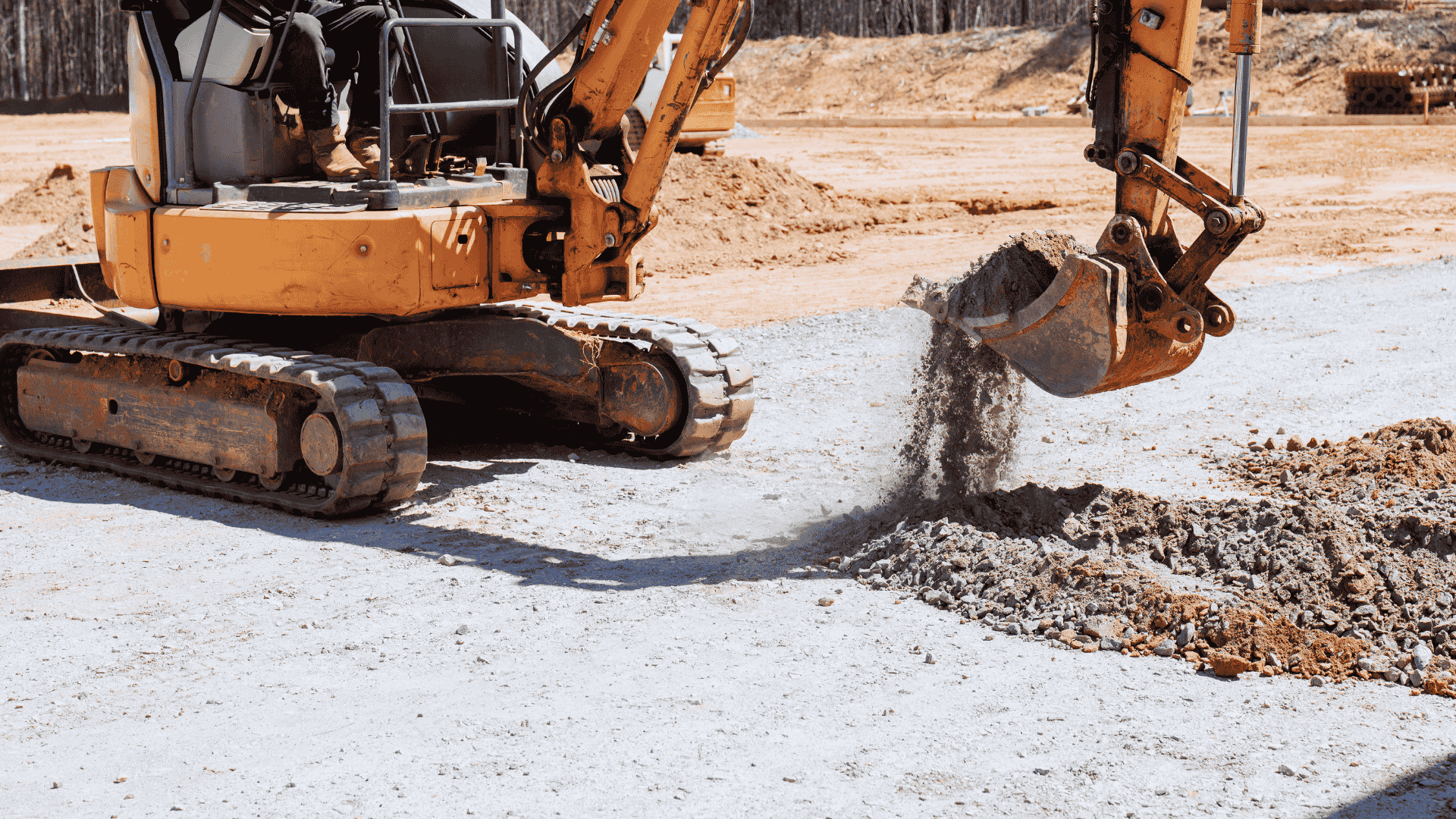
Modern construction relies on a range of foundation systems selected based on soil conditions, load demands, constructability, and long-term performance requirements. Broadly, these systems fall into shallow foundations, deep foundations, and ground-retention systems, each serving a distinct role.
Shallow Foundations
Shallow foundations, including spread footings, strip footings, and mat foundations, are used where competent soils exist near the surface and settlement can be controlled within acceptable limits. Their performance is governed primarily by soil stiffness and uniformity rather than ultimate bearing capacity.
Shallow systems are often economical and efficient but become impractical where loads are high, soils are compressible, or differential settlement tolerances are tight.
Deep Foundations
Deep foundations are used to transfer structural loads past weak or variable surface soils to deeper, more competent strata. Common deep foundation systems include driven piles, drilled shafts, and helical piles. These systems develop capacity through end bearing, shaft resistance, or a combination of both.
Deep foundations are frequently selected not because shallow soils cannot carry the load, but because settlement control, stiffness, and long-term performance govern design.
Helical Pile Foundations
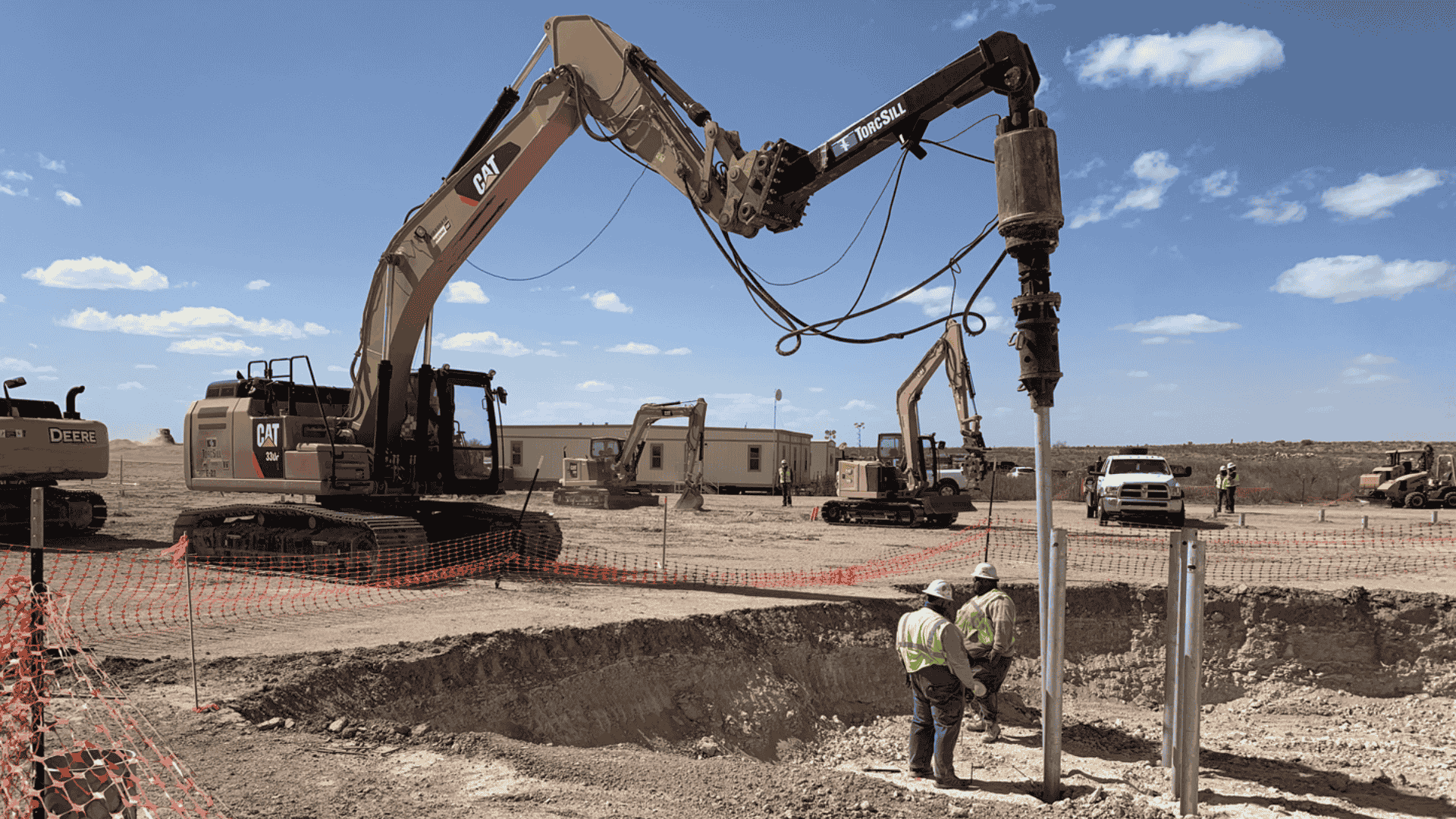
Helical piles are steel deep foundation elements installed by controlled rotation. Load capacity is developed through embedment and soil resistance along helical bearing plates rather than displacement or concrete curing.
Unlike many deep foundation systems, helical piles allow capacity and embedment to be verified continuously as installation progresses, reducing uncertainty and improving confidence in as-built performance under variable ground conditions.
Retention and Support Systems
Systems such as sheet piling, soldier piles, and braced excavations are used to retain soil and control groundwater during construction. These systems resist lateral pressures but are not intended to carry permanent vertical structural loads.
Separating the roles of load-bearing foundations and retention systems allows engineers to optimize each component for safety, constructability, and long-term performance.
Choosing the Right Foundation System
Selecting the right foundation system is rarely a binary choice. Modern projects often require hybrid solutions that balance load demands, settlement control, constructability, environmental constraints, and schedule risk.
The optimal system is the one that performs reliably under real ground conditions while remaining practical to install.
Engineers typically evaluate foundation options by considering:
Soil behavior and variability: Compressibility, strength, and stratification often govern settlement and stiffness more than ultimate capacity.
Structural demands: Vertical loads, lateral forces, uplift, and cyclic effects may favor different foundation mechanisms.
Installation constraints: Access, vibration limits, groundwater, and proximity to existing structures influence which systems can be installed consistently.
Verification requirements: The ability to confirm capacity and embedment during installation reduces reliance on conservative assumptions and post-install testing.
Lifecycle considerations: Removability, reuse, and long-term performance increasingly affect foundation selection.
In many cases, shallow foundations, deep foundations, and retention systems are combined to address different aspects of performance and constructability rather than relying on a single approach.
These tradeoffs are best evaluated early, before excavation limits, retention strategies, and structural layouts lock in higher-risk foundation approaches. Early coordination between geotechnical design, foundation selection, and construction planning is often the most effective way to reduce uncertainty and avoid downstream constraints.
Considering whether a deep foundation is required instead of traditional retention or shallow systems? TorcSill’s engineering team reviews soil conditions to determine where helical pile foundations can provide a simpler, lower-risk solution early in design.
How the Foundation Construction Process Looks in 2026
Foundation construction in 2026 is no longer a linear sequence driven solely by excavation and placement. It is an integrated process that combines design assumptions, installation methods, verification, and construction sequencing to reduce uncertainty before superstructures are erected.
A typical modern foundation construction process includes the following stages:
Site Investigation and Design Coordination
Projects begin with subsurface investigation and geotechnical analysis to characterize soil behavior, groundwater conditions, and variability across the site.
Foundation selection is coordinated with structural layouts, retention requirements, and construction constraints to ensure systems are compatible before excavation begins.
Excavation and Ground Support
Where required, excavation support systems such as sheet piling, soldier piles, or bracing are installed to stabilize soil and manage groundwater.
These systems enable safe construction but are designed independently from permanent load-bearing foundations.
Installation of Deep Foundation Elements
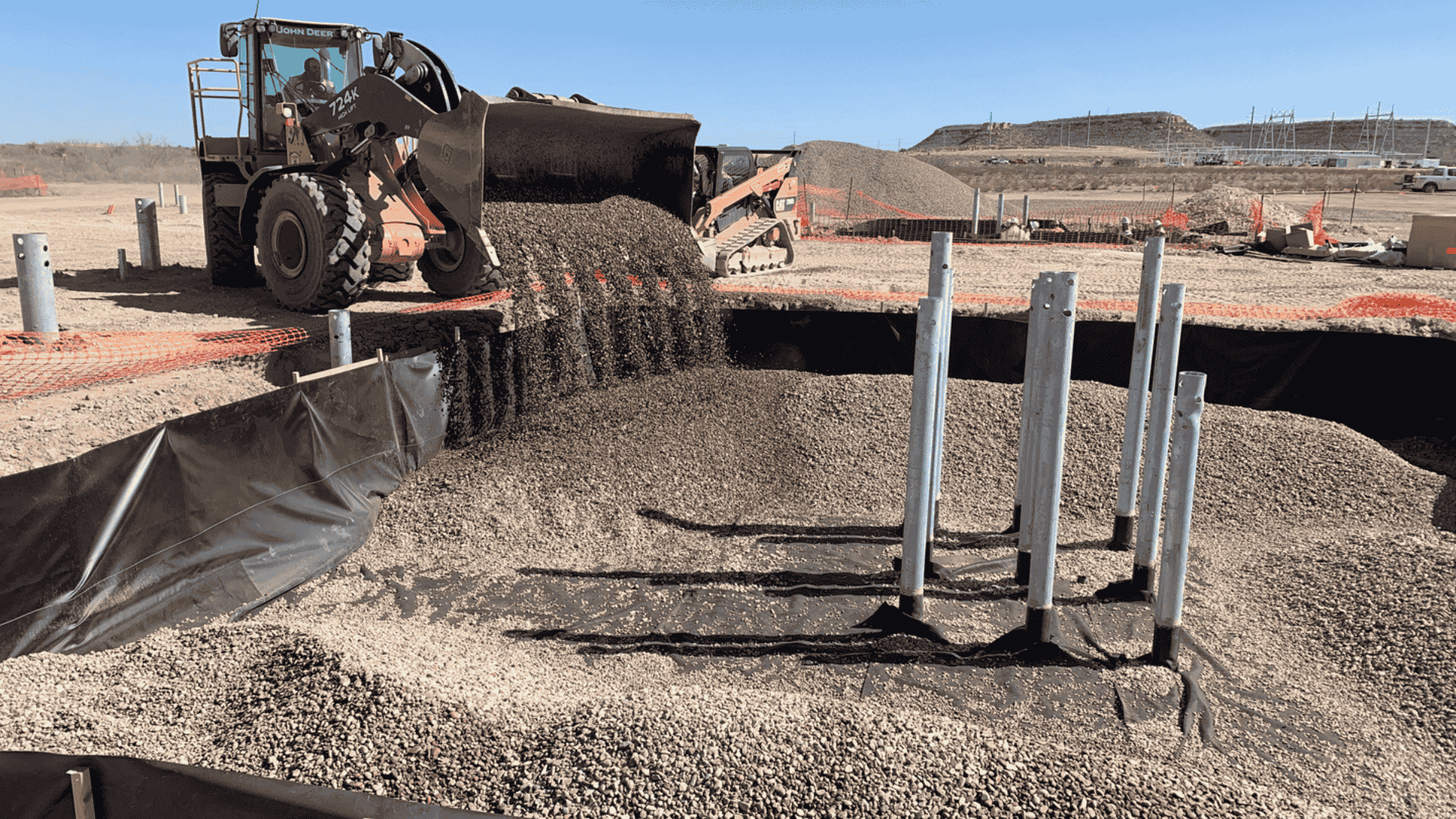
Deep foundation elements, including driven piles, drilled shafts, or helical piles, are installed to transfer structural loads to competent strata. Installation methods are selected based on access, vibration limits, and verification requirements.
Engineering oversight during installation is critical to ensure installation data is interpreted correctly and aligned with design assumptions, particularly where capacity verification occurs as installation progresses.
Verification and Quality Control
Modern foundation construction places increased emphasis on confirming performance in the field. Installation records, monitoring data, and inspection results are reviewed to validate that foundations meet design intent before superstructure construction proceeds.
Superstructure Interface and Sequencing
Once foundations are verified, superstructure erection can proceed without delay. Immediate-load systems allow steel, equipment, or modular assemblies to be installed without waiting periods, reducing schedule risk and rework.
In 2026, effective foundation construction is defined not just by what is built, but by how reliably performance is achieved and verified under real project conditions.
Why This Process Matters in 2026
The most successful projects treat foundation construction as a coordinated engineering process rather than a sequence of isolated tasks. When installation method, verification requirements, and construction sequencing are aligned early, uncertainty is reduced before excavation and structural layouts lock in risk.
Projects that involve foundation engineers early in construction planning consistently reduce redesign, temporary works, and verification delays, particularly where ground conditions are variable or access is constrained.
This process-driven approach allows foundation systems to support, not constrain superstructure progress. It also ensures that load paths, settlement behavior, and verification criteria are understood before steel, equipment, or modular assemblies arrive on site.
Foundation construction partners like TorcSill works with project teams as a foundation engineering partner, helping evaluate construction constraints, installation methods, and verification strategies early enough to reduce risk and improve schedule certainty across modern foundation construction projects.
Foundation Construction Across Different Industries

Foundation construction varies significantly by industry, driven by differences in loading, site constraints, operational sensitivity, and lifecycle expectations. While core engineering principles remain consistent, the factors that govern foundation selection shift depending on how and where structures are built.
Industrial Facilities
Industrial projects often involve heavy equipment loads, tight settlement tolerances, and active operations adjacent to construction zones. Foundations must support static and dynamic loads while minimizing vibration and disruption to ongoing processes.
In these environments, helical piles are frequently specified because they can be installed with minimal disturbance and verified during installation, helping maintain alignment and stiffness without interrupting plant operations or introducing settlement-related rework.
Energy and Power Infrastructure
Energy projects, including substations, generation facilities, transmission structures, and renewable installations, face compressed schedules and strict performance requirements. Foundations must resist uplift, lateral loads, and cyclic forces while remaining constructible in remote or constrained locations.
Here, helical pile foundations are often selected because installation verification and immediate load capacity govern performance more than nominal capacity alone, allowing structures to be commissioned without delays from curing or post-install testing.
Urban and Institutional Construction
Urban and institutional projects are constrained by adjacent buildings, utilities, vibration limits, and limited access. Excavation support and foundation construction must be coordinated carefully to avoid settlement impacts on surrounding assets.
In these settings, helical piles meet governing requirements by combining low-vibration installation with continuous capacity verification, making them well suited for foundations constructed within retained excavations or near sensitive structures.
Infrastructure and Transportation
Transportation projects such as bridges, retaining structures, and transit facilities demand foundations that perform reliably under long-term loading and environmental exposure. Right-of-way limitations and staged construction often dictate foundation sequencing.
Where access and vibration constraints apply, helical piles are used to transfer loads efficiently to competent strata while minimizing disruption to traffic and adjacent infrastructure.
Temporary and Modular Structures
Temporary facilities, modular installations, and phased developments prioritize speed, removability, and lifecycle flexibility. Foundations must support immediate use while allowing for future relocation or decommissioning.
In these cases, helical piles are particularly effective because they provide immediate load capacity and can be removed or reused, aligning foundation performance with the temporary or evolving nature of the structure.
How TorcSill Guides Foundation Construction Decisions in 2026
Foundation construction decisions in 2026 are rarely about selecting a single system in isolation. They involve balancing ground behavior, installation constraints, verification requirements, and construction sequencing long before excavation begins. TorcSill supports project teams by evaluating these factors together, helping engineers and builders reduce uncertainty before risk becomes locked into the design.
On constrained commercial, industrial, and infrastructure projects, TorcSill has supported designs where helical piles reduced excavation scope, simplified sequencing, and provided verified capacity under tight schedules. In these cases, separating retention needs from load-bearing foundations early allowed projects to proceed with fewer temporary works and greater confidence in as-built performance.
TorcSill delivers this support through a fully integrated foundation engineering model:
Engineering & design: Site-specific analysis of soil behavior, loading, serviceability limits, and constructability, with installation method considered as a primary design variable
Manufacturing: ISO-certified fabrication using new steel only, ensuring consistency between engineered intent and installed performance
Construction services: Controlled, low-disturbance installation with real-time capacity verification and strict safety oversight
Drilling services: Pre-boring and access solutions for rock, caliche, obstructions, and variable subsurface conditions
By integrating engineering, fabrication, installation, and verification, TorcSill helps project teams make foundation decisions that support schedule certainty, performance validation, and long-term reliability.
This approach positions TorcSill as a foundation engineering partner, not simply a foundation provider.
Conclusion
Modern construction projects demand foundation systems that deliver predictable performance, verified load capacity, and constructability under increasingly tight schedules. As sites become more constrained and subsurface conditions more variable, foundations must perform as designed without introducing settlement risk, rework, or sequencing delays.
TorcSill supports these requirements by providing engineering guidance on foundation system selection, helping project teams evaluate soil behavior, structural loads, and construction constraints early in design. Through site-specific analysis and performance-based recommendations, TorcSill helps ensure foundations are both technically sound and practical to build.
For projects where reliability, constructability, and long-term performance cannot be compromised, engineered foundation solutions provide a controlled, proven approach.
Consult a TorcSill engineer to determine the foundation strategy best suited to your site conditions and structural demands.
Frequently Asked Questions (FAQs)
1. How early should foundation decisions be finalized in a project?
Foundation strategy should be evaluated during early design, before layouts, excavation limits, and structural grids are fixed, to avoid redesign and sequencing conflicts later. Early decisions also allow foundation systems to be optimized alongside structural and site constraints.
2. Can foundation choices affect construction sequencing?
Yes. Some foundation systems allow immediate loading or parallel work, while others require staged excavation, curing periods, or temporary support. These differences can significantly impact overall project duration and trade coordination.
3. How do foundations influence adjacent structure risk?
Foundation stiffness, depth, and installation method control ground movement, which directly affects nearby buildings, pavements, and underground utilities. Selecting the right system helps limit settlement and vibration-related damage.
4. Are foundations designed only for vertical loads?
No. Foundations must often resist uplift, lateral forces, and cyclic loading from wind, seismic activity, or operational conditions. Ignoring these forces can lead to long-term performance issues even if vertical capacity is adequate.
5. What information most improves foundation design accuracy?
Detailed geotechnical data, realistic load paths, groundwater conditions, and clarity on permanent versus temporary load cases. This information reduces conservative assumptions and improves constructability.