Foundation engineering makes it possible for the world’s tallest and heaviest structures to stand on ground that was never meant to carry them. The tallest building in the U.S., the Freedom Tower, rises more than 1,700 feet in a dense urban environment, supported by a foundation system engineered to manage extreme loads, settlement, and long-term performance.
The same principles govern bridges, marine structures, wind farms, and industrial facilities worldwide. In 2026, however, foundation decisions are increasingly shaped not only by capacity, but by how foundations are installed, whether it is vibration limits, access, sequencing, and verification. These constraints have elevated rotational systems such as helical piles into mainstream foundation engineering.
This guide examines modern foundation systems, installation methods, and the engineering tradeoffs shaping deep foundation design today.
Key Takeaways
Foundation engineering is driven by serviceability, not just strength. Modern foundation design prioritizes settlement control, stiffness balance, and long-term performance over simple bearing capacity checks.
Engineering judgment matters more than rules of thumb. Successful foundation systems are selected based on soil behavior, movement tolerance, and constructability, not generic “shallow vs. deep” classifications.
Most foundation failures are performance failures, not collapses. Excessive differential settlement, uplift, vibration, and construction-related issues account for far more real-world damage than ultimate bearing failure.
2026 projects demand foundations that install faster and disturb less. Tight schedules, constrained sites, environmental scrutiny, and lifecycle planning are reshaping how foundations are designed and verified in the field.
Helical pile systems align engineering performance with modern constraints. When engineered and installed correctly, helical foundations offer immediate load capacity, predictable behavior, minimal site disruption, and lifecycle flexibility.
What is Foundation Engineering? Everything You Need to Know
Foundation engineering is a specialized branch of geotechnical engineering that focuses on how structures transfer loads into soil or rock. It combines soil mechanics, structural behavior, and serviceability requirements to design foundation systems that perform safely and reliably throughout a structure’s life. Unlike superstructures, foundations must be designed for ground conditions that are naturally variable and often uncertain.
At its core, foundation engineering manages the extreme difference between stresses in structural elements and the capacity of geomaterials. Columns and piers can impose stresses exceeding 100 MPa, while most soils can tolerate only a small fraction of that pressure.
Key features of foundation engineering include:
Load transfer and stress redistribution: Foundations spread concentrated structural loads over larger areas or deeper bearing strata to prevent shear failure and excessive settlement.
Soil–structure interaction: Foundation performance depends on how soil or rock deforms under load, including settlement behavior, uplift resistance, and long-term consolidation effects.
Serviceability control: Designs limit total and differential settlement, rotation, and vibration to protect structural integrity and operational performance. Installation methods that disturb soil or introduce vibration can significantly influence settlement behavior, making constructability a core serviceability consideration.
Constructability and economy: Effective solutions account for installation methods, site constraints, safety, environmental impact, and cost, avoiding unnecessary overdesign.
Foundation engineering is a performance-driven discipline that balances ground behavior, structural demands, and real-world construction constraints. Well-designed foundations quietly support structures safely, economically, and reliably for decades.
How Foundation Engineering Keeps Structures Stable and Safe
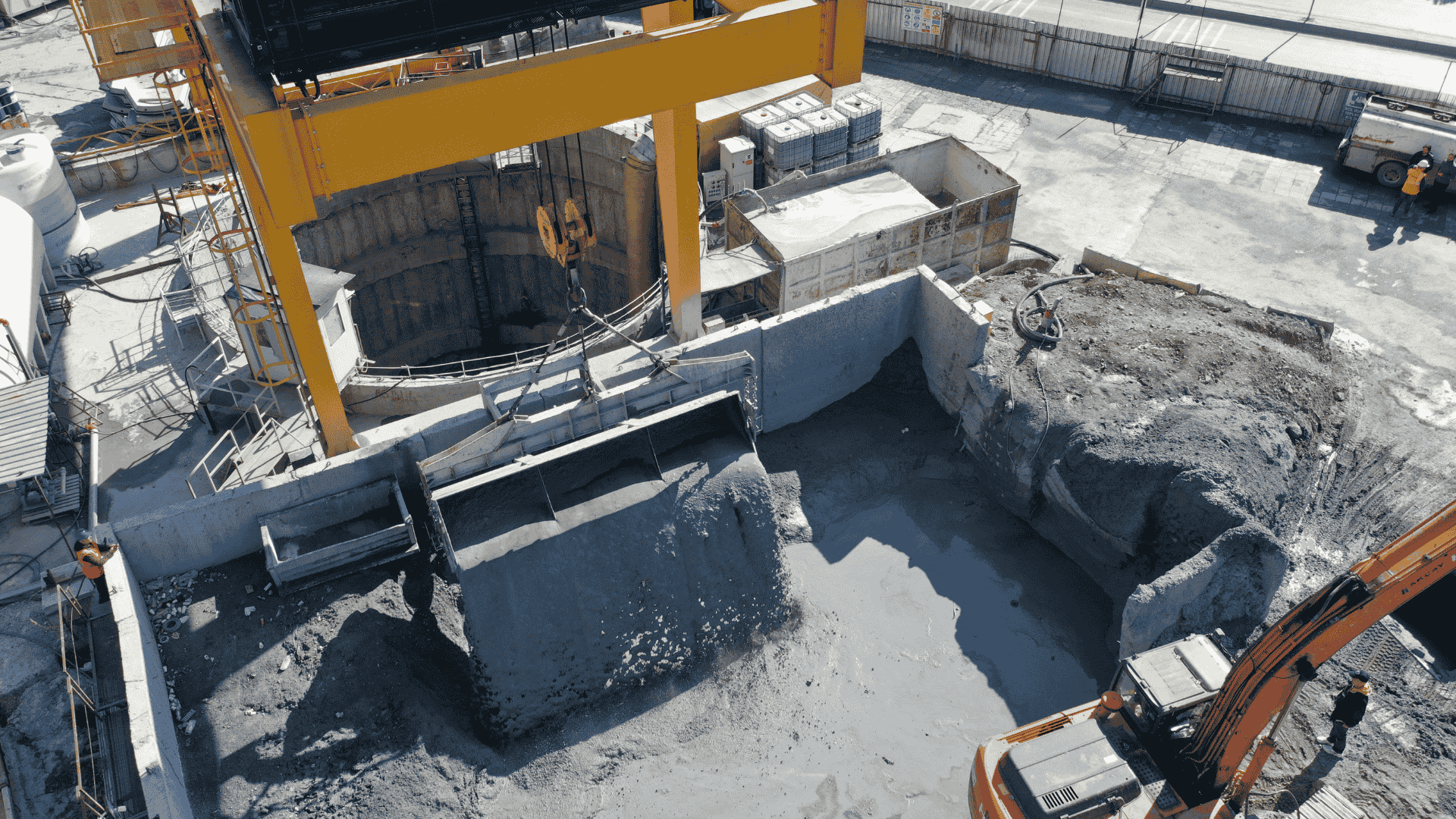
Foundation engineering is the process of converting uncertain ground conditions into predictable structural support. Foundations must perform within soil and rock systems that vary spatially, change over time, and respond differently to loading and construction methods.
Each step in the process directly influences long-term stability, serviceability, and risk:
Subsurface Investigation and Development of a Ground Model
Foundation engineering begins with defining what actually exists below grade. Borings, cone penetration tests, laboratory testing, and groundwater monitoring are used to identify soil layering, shear strength, stiffness, compressibility, and permeability.
For example, an industrial site may appear uniform at the surface but contain alternating layers of fill, soft clay, and dense sand. Without a reliable ground model, foundation capacity and settlement predictions become speculative rather than engineered. Foundation systems that can adapt to variable strata during installation reduce the consequences of subsurface uncertainty.
Evaluation of Structural Demands and Governing Load Cases
Structural loads are rarely static or uniform. Foundation engineers evaluate dead loads, live loads, equipment loads, wind, seismic forces, thermal effects, and cyclic loading.
A wind turbine foundation, for instance, is governed less by vertical load and more by cyclic overturning moments, while a tank or compressor foundation may be controlled by settlement tolerance and vibration limits rather than ultimate capacity.
Selection of Foundation Systems Based on Ground Constraints
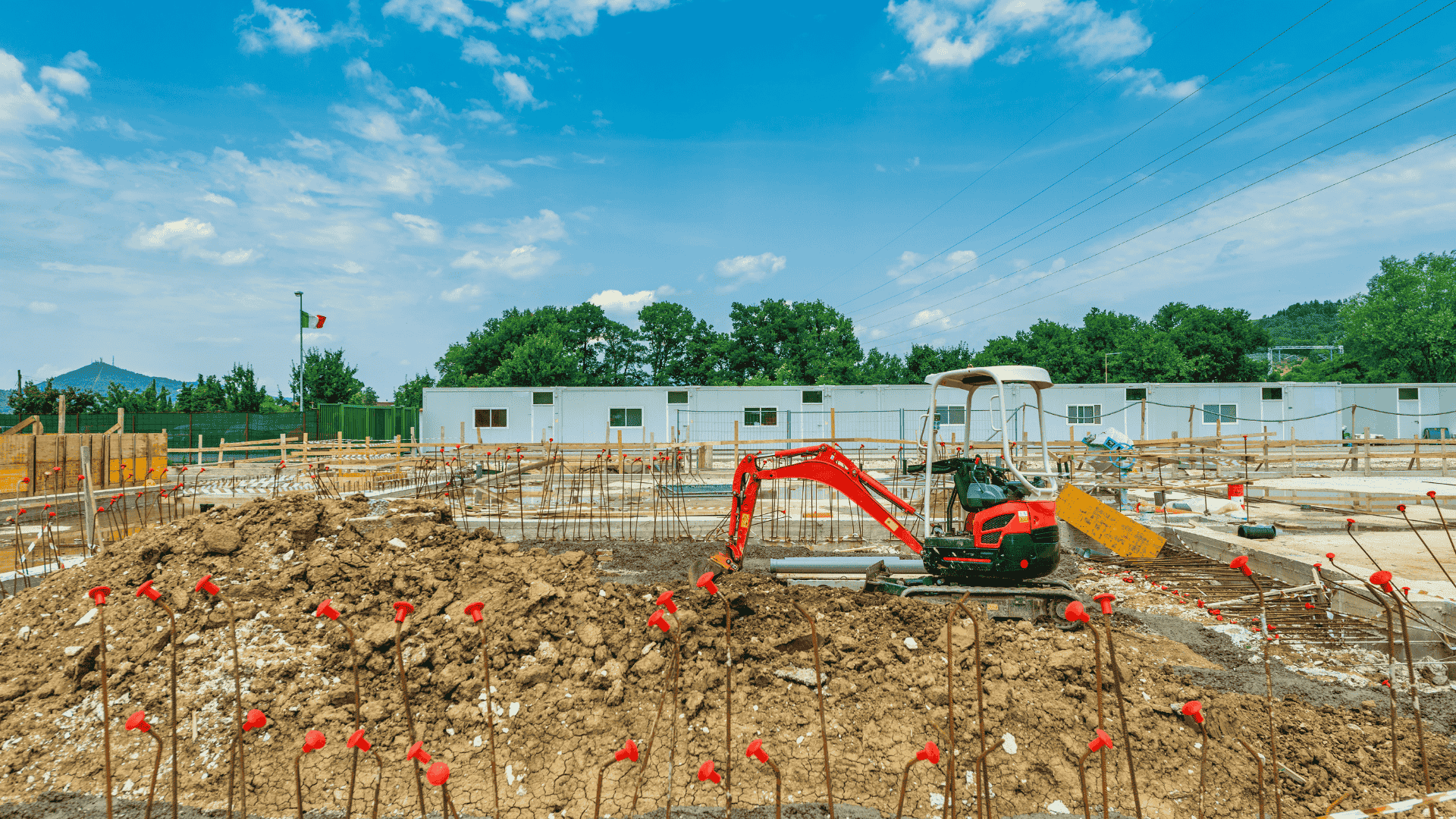
Foundation system selection is driven by how the soil behaves under load and how the site can be built. Shallow foundations may be effective on dense sands or rock but unsuitable on soft clays where consolidation settlement would exceed tolerances.
In contrast, deep foundations are often used to bypass weak layers or control differential settlement, particularly for bridges, marine structures, and energy infrastructure.
Load Transfer Mechanisms and Stress Reduction
A critical function of foundation engineering is reducing concentrated structural stresses to levels the ground can sustain. This is achieved through bearing area, embedment depth, shaft resistance, or end bearing.
In high-rise buildings, pile groups distribute loads across deeper strata to minimize differential settlement between heavily and lightly loaded columns, protecting the superstructure from distortion.
Settlement, Deformation, and Time-Dependent Behavior
Foundation performance is governed as much by deformation as by strength. Engineers evaluate immediate settlement, consolidation settlement in fine-grained soils, and long-term creep effects.
For example, a structure built on clay may remain stable initially but experience gradual settlement over years if consolidation is not properly accounted for.
Serviceability Limits and Operational Performance
Many structures fail not by collapse but by excessive movement. Industrial facilities, power generation equipment, and marine structures are sensitive to differential settlement, rotation, and vibration.
Foundation designs are refined to meet strict serviceability criteria that protect alignment, mechanical systems, and long-term usability.
Integration of Construction Methods and Field Verification
Foundation designs must be installable under real site conditions. Factors such as access, vibration limits, spoil handling, groundwater control, and load verification influence both design and construction sequencing. Displacement-based installation methods and rotational systems interact with soil differently, which can materially affect settlement behavior and vibration-sensitive performance.
Systems that allow capacity verification during installation—such as torque-correlated helical piles—reduce uncertainty compared to foundations that rely primarily on post-install testing.
A foundation system that performs in analysis but cannot be installed consistently introduces significant project risk.
Long-Term and Extreme Condition Performance
Foundations are designed to remain stable under changing conditions, including groundwater fluctuations, scour, seismic events, temperature cycles, and future load increases.
For example, foundations near rivers or coastlines must account for erosion and loss of lateral support during flood events, not just initial construction conditions.
Foundation engineering works by managing uncertainty at every stage, from ground investigation to long-term performance. When done correctly, it delivers foundations that remain stable, serviceable, and constructible under everyday loads and extreme events, long after construction is complete.
Want a foundation system validated in the field before loads are applied? Connect with an engineer at TorcSill.
Types of Foundation Systems and When to Use Each

Selecting a foundation system is not a matter of choosing between “shallow” or “deep” foundations in isolation. It is a performance-based decision that balances bearing capacity, settlement behavior, construction constraints, and long-term serviceability.
In many projects, the governing factor is not whether the ground can carry the load, but whether it can do so within acceptable movement limits.
Shallow Foundations
Shallow foundations such as spread footings, strip footings, and mat foundations are typically used where competent soils exist near the surface and structural loads are moderate. Their effectiveness depends less on ultimate bearing capacity and more on the ability of the soil to limit total and differential settlement.
For example, low-rise warehouses suit spread footings due to uniform loads and tolerant slabs, while storage tanks are highly settlement-sensitive; small differential movements can distort shells, making shallow foundations unsuitable despite adequate bearing capacity.
Deep Foundations
Deep foundations are selected when surface soils cannot reliably support loads within serviceability limits or when variable ground conditions would cause unacceptable differential settlement. Piles and drilled shafts transfer loads to deeper, more competent layers through end bearing, shaft resistance, or a combination of both.
Among deep foundations, helical piles are increasingly used where settlement control, access constraints, and constructability govern performance rather than ultimate capacity alone.
Importantly, pile systems are often controlled by settlement, not capacity. Pile groups under high-rise columns are designed to balance foundation stiffness and limit differential movement, not merely to increase load resistance.
Performance Tradeoffs
A common misconception is that higher bearing capacity equates to better foundation performance. In reality, many foundation issues arise from excessive deformation rather than failure. A foundation may meet strength requirements yet still cause operational problems due to settlement, rotation, vibration, or installation-induced ground movement.
Foundation engineers therefore evaluate:
Immediate and long-term settlement
Differential movement between adjacent foundations
Load redistribution effects within foundation groups
Sensitivity of the superstructure and equipment to movement
These considerations often outweigh pure capacity calculations in foundation selection.
Soil Improvement as an Alternative to Deep Foundations
In some cases, improving the ground itself is more effective than extending foundations deeper. Techniques such as compaction, grouting, or reinforcement can increase soil stiffness, reduce compressibility, and improve uniformity.
Soil improvement is often preferred where:
Loads are distributed over large areas
Settlement control is critical but depths are shallow
Access or environmental constraints limit deep foundation installation
For example, large industrial slabs or storage yards may benefit more from ground improvement than from numerous deep foundation elements that add cost and complexity.
Engineering Judgment Over Rules of Thumb
There is no universally “best” foundation system. The optimal solution depends on how the ground behaves, how the structure tolerates movement, and how the foundation can be built safely and economically.
Effective foundation engineering applies judgment informed by analysis, site conditions, and construction realities, not standardized assumptions.
Discover which foundation system is right for your site constraints and soil conditions. Our team can evaluate your project requirements.
Common Foundation Failures and How Engineering Prevents Them
Most foundation problems are not sudden collapses but gradual performance failures that develop when ground behavior, loading, or construction conditions are misunderstood or underestimated.
Effective foundation engineering focuses on identifying these risks early and designing systems that remain stable and serviceable under real operating conditions.
Excessive Total and Differential Settlement
Settlement is one of the most common causes of foundation distress. Excessive total settlement can impair drainage and access, while differential settlement—uneven movement between adjacent supports—can crack structural elements, distort frames, or misalign equipment.
Differential movement is often more damaging than settlement magnitude alone. Engineers mitigate this risk by evaluating soil compressibility, load distribution, and foundation stiffness, and by selecting systems that limit relative movement between structural elements. Foundation systems that adapt to variable strata and can be advanced to consistent bearing layers—such as helical piles—are often used where settlement control governs performance.
Bearing Capacity Failure Versus Serviceability Failure
Bearing capacity failure occurs when soil strength is exceeded, leading to shear failure and large displacements. Serviceability failures, by contrast, occur well before strength limits are reached and are far more common in practice.
A foundation may be structurally safe yet unusable due to excessive settlement or rotation. Proper design distinguishes between ultimate limit states and serviceability limit states, ensuring both strength and performance criteria are satisfied. This distinction has increased the use of foundation systems where stiffness and installation control are as important as nominal capacity.
Uplift and Overturning Under Lateral and Dynamic Loads
Foundations must resist more than vertical loads. Wind, seismic forces, wave action, and buoyancy can induce uplift, sliding, or overturning. These effects are critical for tall structures, wind turbines, marine facilities, and storage tanks.
Engineers address these risks by accounting for load reversals, embedment depth, foundation weight, and resistance mechanisms such as skin friction and lateral soil confinement. Helical piles are frequently applied in these conditions because their geometry provides measurable uplift resistance and predictable performance under cyclic and overturning loads.
Construction-Related Failures and Installation Effects
Many foundation issues originate during construction rather than design. Improper installation, inadequate load verification, uncontrolled excavation, or poor quality control can compromise foundation performance.
For example, excessive disturbance of bearing soils or inconsistent pile installation can reduce stiffness and increase settlement. Foundations that can be installed with minimal soil displacement and verified capacity during installation—such as torque-correlated helical piles—significantly reduce construction-related performance failures. Effective engineering integrates constructability, installation tolerances, and field verification into the design process.
Risk Mitigation Through Investigation and Design
Preventing foundation failures begins with thorough site investigation and realistic ground modeling. Designs incorporate appropriate safety factors, settlement analyses, and construction controls to manage uncertainty. When engineering judgment, site data, and construction practices align, foundation systems perform as intended throughout the structure’s service life.
As projects face tighter schedules, vibration limits, and operational constraints, foundation systems that reduce installation risk and provide real-time performance confirmation are increasingly favored. TorcSill works with engineers and contractors to deliver foundations that achieve immediate capacity with minimal site disruption.
How Modern Constraints Are Changing Foundation Engineering in 2026
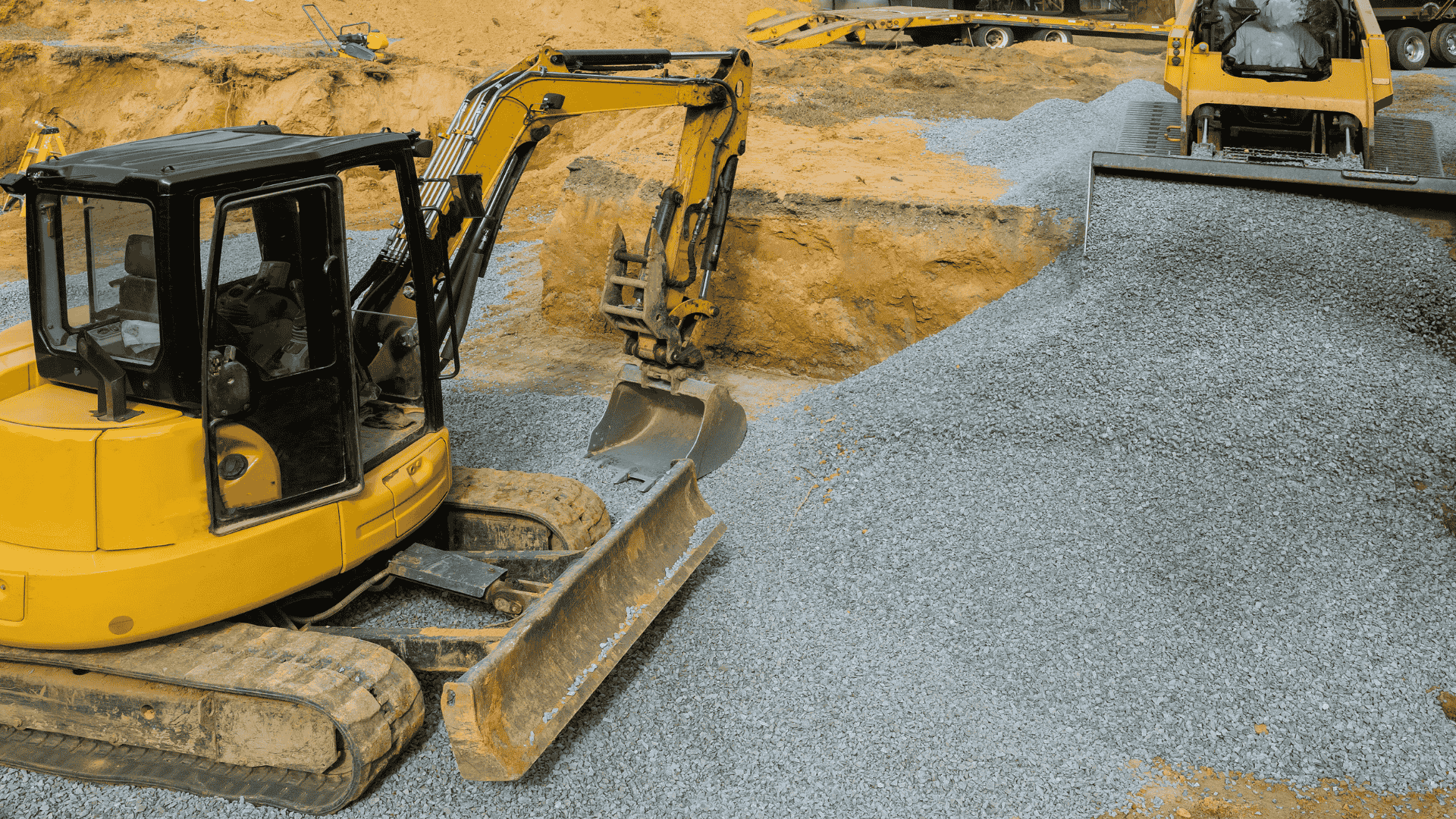
Foundation engineering principles have not changed, but the constraints under which they are applied have. Today, foundation systems are increasingly evaluated not only on structural performance, but on how efficiently, safely, and sustainably they can be delivered under real project conditions.
Schedule Compression and Immediate Load Requirements
Project timelines continue to tighten across energy, industrial, and infrastructure sectors. Foundations that require extended curing periods or staged loading can become critical path constraints.
As a result, engineers are favoring systems that provide immediate load capacity, allowing superstructures and equipment to be installed without delay. This is driving increased adoption of foundation systems that deliver verified capacity at installation rather than relying on time-dependent strength gain.
Reduced Tolerance for Site Disruption and Vibration
Many projects are now constructed within active facilities, environmentally sensitive areas, or adjacent to existing infrastructure. Traditional excavation-heavy or impact-driven foundation methods can introduce spoil management challenges, vibration risks, and safety concerns.
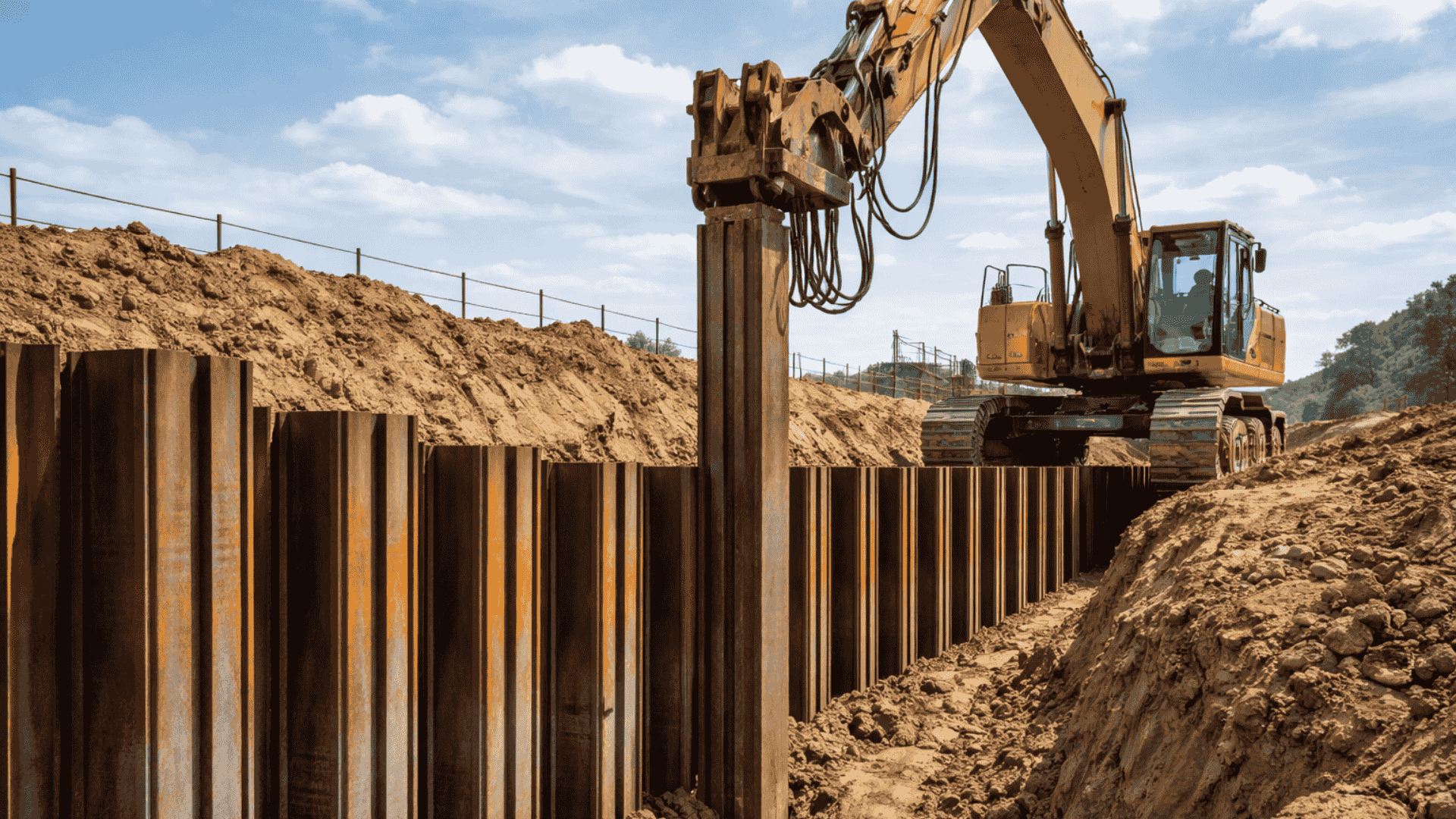
Modern foundation engineering increasingly prioritizes low-disturbance installation methods that minimize ground vibration, noise, and site disruption while maintaining predictable performance. This is shifting many projects away from impact-driven foundations in constrained environments.
Environmental and Carbon Considerations
Foundation selection is increasingly influenced by embodied carbon and environmental impact. Concrete-intensive systems contribute significantly to project emissions, particularly where large volumes are required or where removal is anticipated during decommissioning.
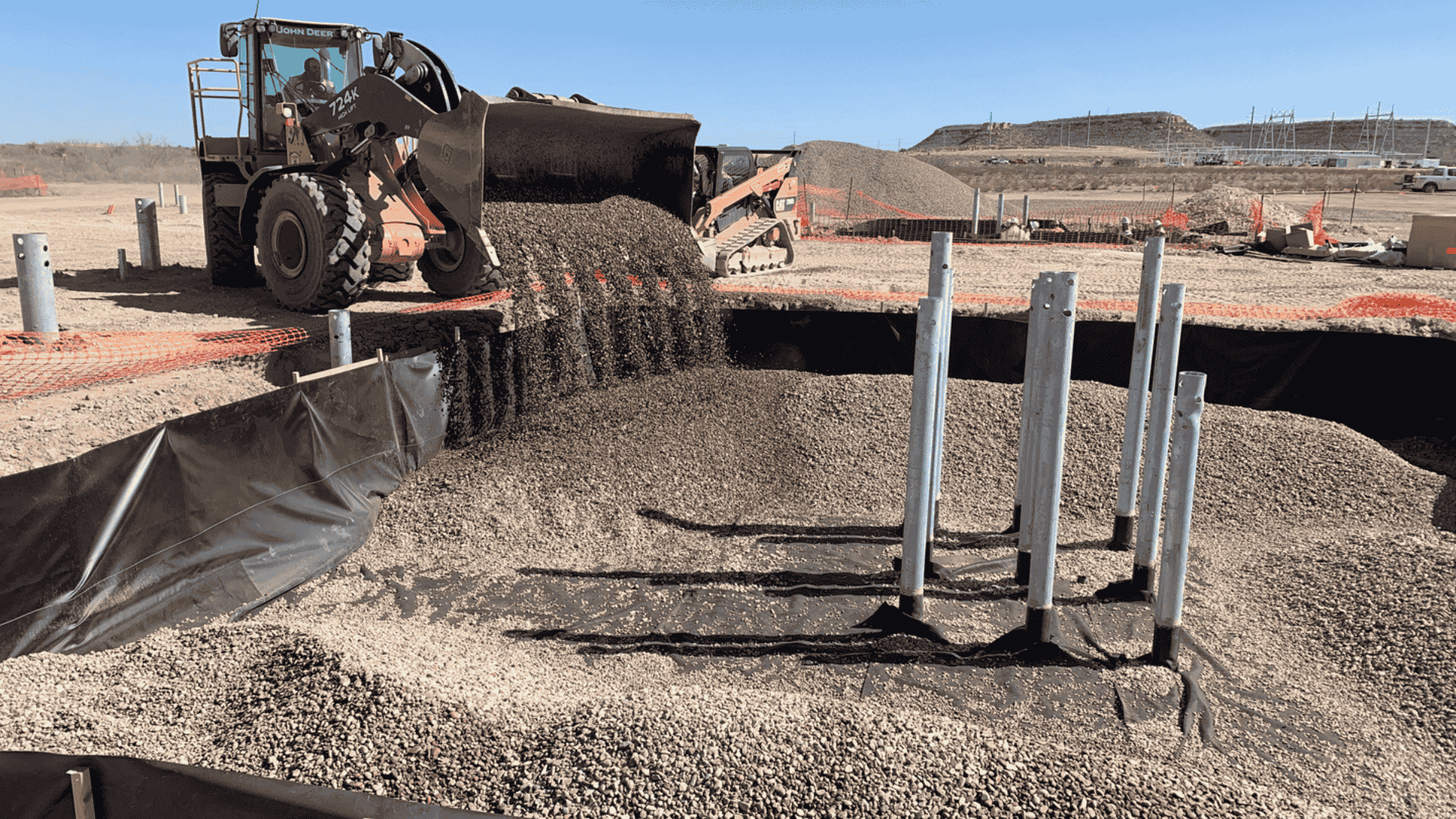
Engineers are now assessing foundation solutions based on material efficiency, reduced excavation, and the ability to meet performance requirements with a smaller environmental footprint. This is driving demand for foundations that achieve capacity with less concrete and minimal soil removal.
Reusability, Decommissioning, and Lifecycle Performance
Temporary and semi-permanent structures, such as renewable energy facilities and modular industrial installations, are driving a lifecycle-based approach to foundation design.
Foundations that can be removed, reused, or repurposed reduce long-term site remediation costs and environmental impact. This is increasing interest in foundation systems designed for reversibility rather than permanent embedment.
Increased Scrutiny on Constructability and Field Verification
Owners and regulators are placing greater emphasis on installation quality and performance verification. Foundation systems that allow direct correlation between installation parameters and load capacity provide greater confidence in field performance and reduce reliance on conservative overdesign.
Constructability, quality control, and traceability are now central design considerations, not afterthoughts. This is prioritizing systems that offer direct, measurable capacity verification during installation.
Nevertheless, the most effective foundation solutions are those that combine proven engineering principles with efficient installation, immediate performance, and reduced disruption. In 2026, foundation systems must deliver reliability not only in design calculations, but throughout construction, operation, and eventual decommissioning.
How TorcSill Addresses Foundation Risk in Modern Projects
Foundation risk today is driven less by theoretical capacity and more by uncertainty during installation. Variable ground conditions, vibration limits, restricted access, and compressed schedules all increase the likelihood of performance and sequencing issues if foundation systems are not engineered for constructability.
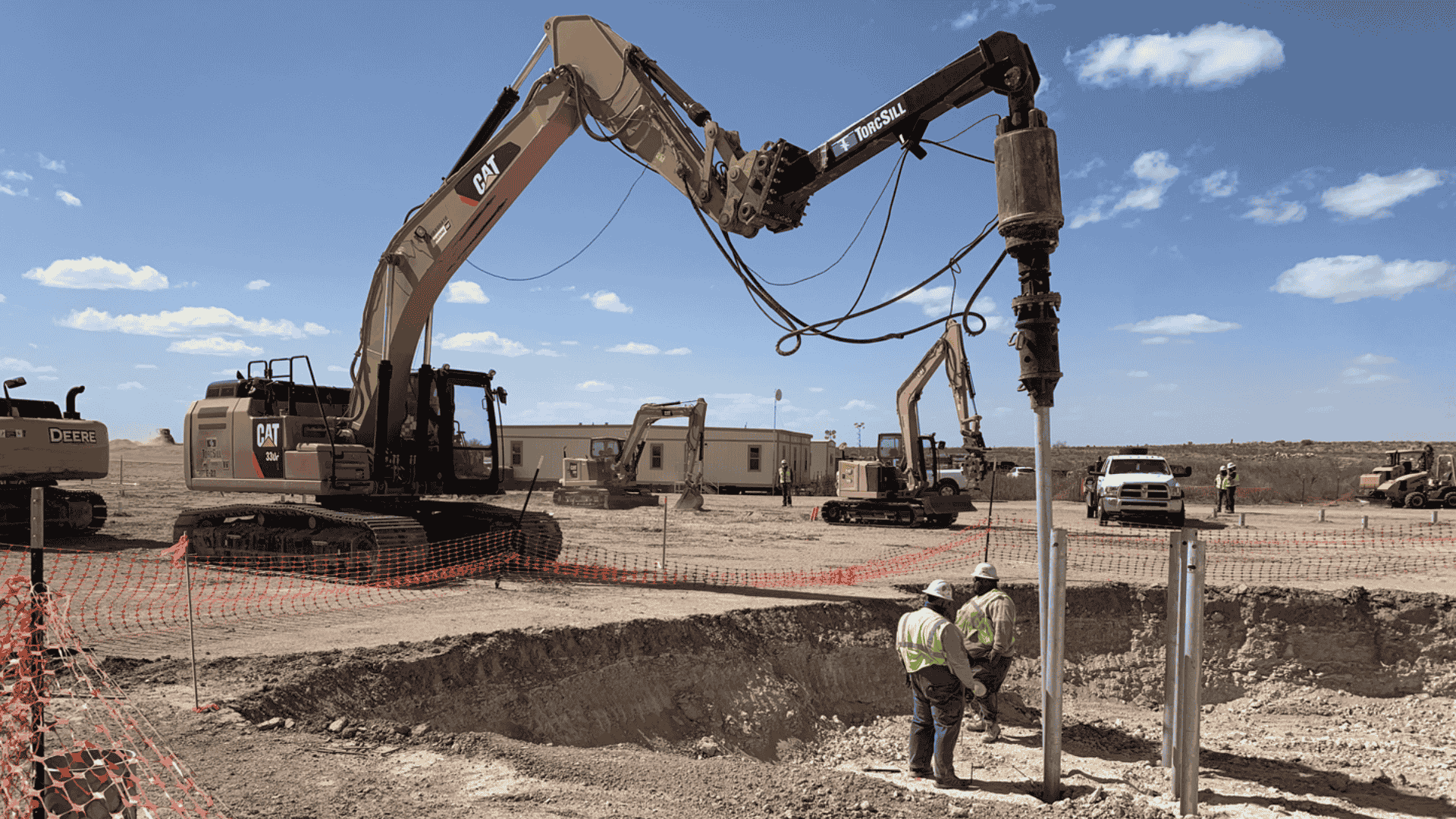
On complex energy and industrial sites, TorcSill helical piles have been used to meet strict vibration limits while achieving verified capacity under tight construction timelines. Controlled rotational installation and real-time torque monitoring allow foundation performance to be validated during installation, reducing reliance on post-install testing and conservative overdesign.
TorcSill delivers helical pile foundations through a fully integrated approach that reduces coordination risk across project phases:
Engineering and design: Site-specific foundation engineering based on soil behavior, loading demands, and serviceability limits
Manufacturing: ISO-certified production of helical piles and components to ensure consistency with engineered intent
Construction services: Dedicated installation teams executing controlled, low-disturbance foundation installation
Drilling services: Site preparation and access solutions for difficult ground or restricted conditions
By integrating design, manufacturing, installation, and verification, TorcSill provides foundation systems that are predictable, buildable, and validated in the field, before structural loads are applied.
Conclusion
Modern foundation projects are under pressure to deliver faster schedules, tighter cost control, and lower environmental impact, often on constrained or sensitive sites. Traditional foundation approaches can introduce delays, site disruption, and long-term performance risks when they are not aligned with these realities.
TorcSill helps address these challenges through engineered helical pile foundation solutions that provide immediate load capacity, predictable performance, and minimal site disturbance. By integrating engineering, manufacturing, and construction, TorcSill enables foundations that reduce risk, support modern construction constraints, and perform reliably over the full project lifecycle.
Talk to a TorcSill engineer to discuss the right foundation solution for your project.
Frequently Asked Questions (FAQs)
1. When is a helical pile foundation a better choice than concrete foundations?
Helical pile foundations are often preferred when projects require fast installation, immediate loading, minimal site disruption, or reduced environmental impact. They are especially effective on sites with access constraints, variable soils, or where excavation, curing time, or future removal of concrete foundations would introduce cost or schedule risk.
2. How does TorcSill ensure foundation performance across different soil conditions?
TorcSill designs foundations based on site-specific geotechnical data and load requirements rather than standardized assumptions. Load capacity is verified during installation through measured torque and embedment, allowing performance to be confirmed in the field and adjusted in real time if subsurface conditions vary.
3. Can TorcSill foundations handle uplift, lateral, and dynamic loads?
Yes. TorcSill helical piles are engineered to resist vertical, lateral, and uplift forces, making them suitable for applications exposed to wind, seismic activity, buoyancy, or cyclic loading. This makes them particularly effective for energy, marine, and industrial infrastructure where load reversals are common.
4. How does TorcSill reduce construction and long-term project risk?
By integrating engineering, ISO-certified manufacturing, and construction services, TorcSill reduces the disconnects that often occur between design intent and field execution. Minimal vibration, no spoil generation, and immediate load capacity also lower safety, schedule, and remediation risks during construction and decommissioning.
5. Is TorcSill suitable for both permanent and temporary structures?
Yes. TorcSill foundation systems are used for permanent infrastructure as well as temporary or relocatable installations. Their removability and reusability support lifecycle planning, site restoration, and evolving project needs without sacrificing structural performance.