Concrete and steel may dominate foundation budgets, but the real cost surprise often comes from verification, proving piles can safely carry their design loads. Pile load testing is essential, yet its price can vary widely based on test type, reaction system, site access, and scheduling demands.
This guide explains what pile load tests actually cost, why prices jump, and how to choose the right testing method without overspending. It also clarifies key differences between static and dynamic load tests, important because dynamic testing is commonly reported to cost roughly one-tenth as much as static testing.
Key Highlights
Pile load test costs vary sharply based on test method, reaction setup, site constraints, and labor rates, making them one of the most unpredictable foundation expenses.
Static load tests are the costliest at $15k–$150k+, while dynamic tests cost only $2.5k–$10k, offering fast, economical capacity verification. This price gap makes dynamic testing ideal for production piles.
Mobilization, reaction frames, instrumentation, and test duration are the biggest cost drivers. Tight urban, marine, or restricted-access sites can significantly inflate these costs.
Test programs become cheaper with smarter planning, such as early scheduling, grouping tests, and mixing static + dynamic methods. Most cost savings come from planning, not cutting test scope.
TorcSill helical pile systems reduce both testing and construction costs through predictable performance and minimal site disruption. Their integrated engineering and installation approach helps ensure cost
What Is a Pile Load Test?
A pile load test is a controlled field test that measures how a deep foundation element performs under applied loads. It provides real-world data on pile capacity and movement, helping confirm safety, serviceability, and design assumptions before full construction proceeds.
Pile load testing exists to replace uncertainty with measured performance, allowing engineers and owners to make informed foundation decisions based on actual behavior rather than estimates alone.
Confirms axial, tension, or lateral load capacity of piles.
Measures settlement and load–displacement response at working and ultimate loads.
Validates geotechnical assumptions derived from borings or CPT data.
Reduces overdesign and unnecessary construction costs.
Limits liability by documenting foundation performance.
Types of Pile Load Tests
Different testing methods are used depending on project risk, schedule, budget, and site constraints. Each approach balances accuracy, cost, and logistical complexity.
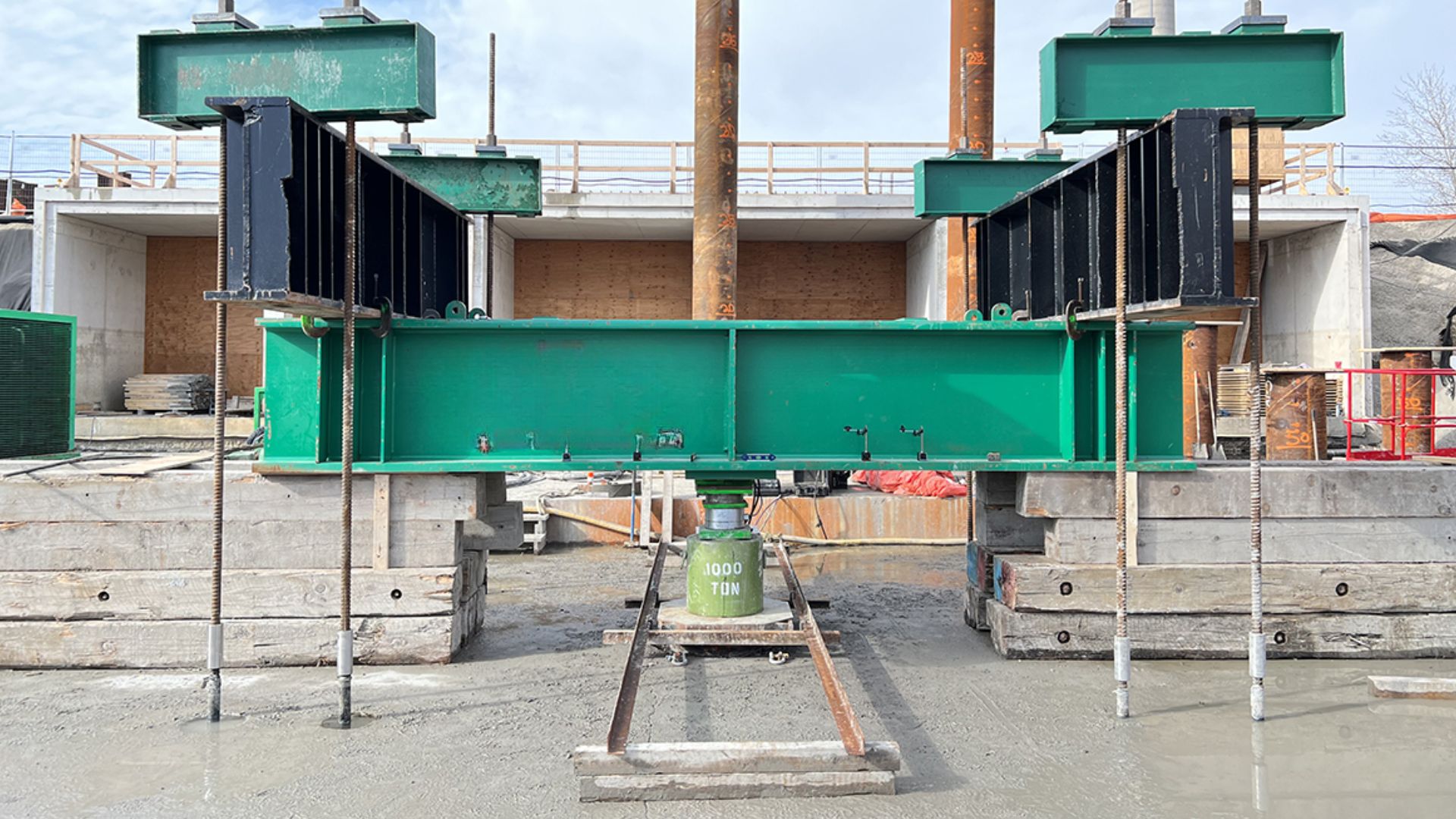
Static load test (maintained / axial): Applies load in increments with hold periods to directly measure settlement; highly reliable but time- and cost-intensive
Dynamic load test: Uses impact energy and stress-wave analysis to estimate pile capacity quickly and economically
Statnamic test: Applies a rapid, non-impact load that simulates static behavior without heavy reaction frames
Osterberg Cell (O-cell) test: Uses an embedded hydraulic jack to load the pile internally, allowing separation of shaft resistance and end bearing
When and Why It’s Required
Pile load testing is required when codes, project risk, or design uncertainty demand direct performance verification rather than reliance on prescriptive methods.
Required for code compliance under IBC, DOT, or local authority specifications
Used to mitigate risk on large, heavily loaded, or geotechnically complex projects
Requested to verify contractor installation quality and consistency
Mandatory when specified by the owner, engineer, or authority having jurisdiction
Optional, but often cost-effective, when testing can justify design optimization or reduced pile quantities
Cost Components: What You’re Really Paying For?
Pile load test pricing is not a single line item; it’s a combination of field operations, specialized equipment, engineering oversight, and site-specific constraints. Understanding these components helps explain why costs vary so widely between projects that may appear similar on paper.
1. Direct Service Costs
These are the core expenses tied directly to performing the load test in the field and typically make up the largest share of the total cost.
Mobilization & equipment: Transporting heavy reaction frames, kentledge, hydraulic jacks, cranes, or dynamic testing equipment to and from the site, often a major cost driver, especially for remote projects
Test crew labor: Skilled technicians, operators, and supervisors required for setup, monitoring, and test execution, with costs increasing for multi-day static tests or night/weekend work..
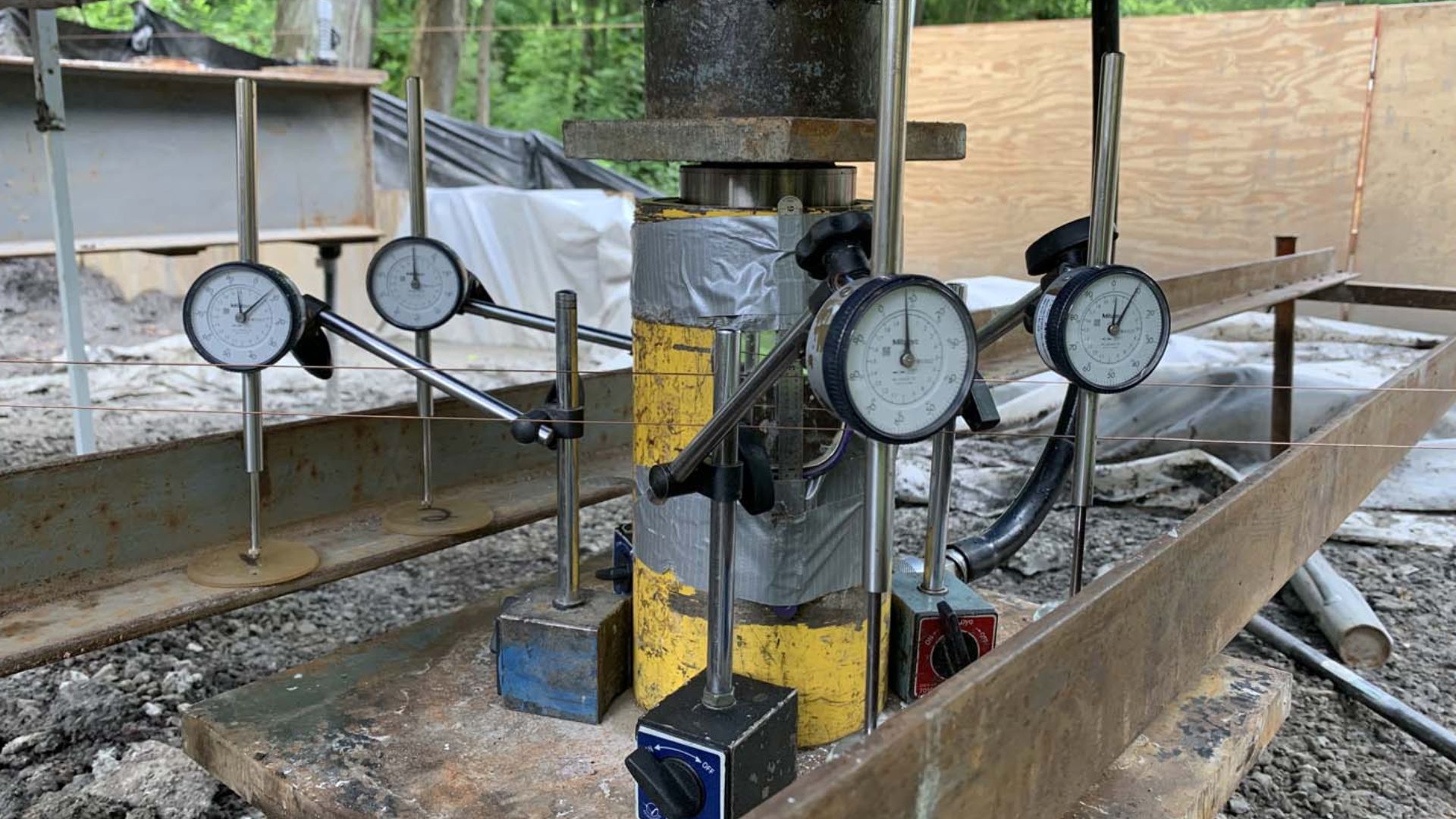
Instrumentation: Load cells, dial gages, displacement transducers, strain gages, and electronic data acquisition systems are needed to capture accurate load and movement behavior.
Pile reinforcement (if required): Additional steel or modified pile construction to withstand test loads that exceed normal design loads.
2. Indirect Costs
Indirect costs don’t apply load to the pile, but they are essential to executing and validating the test, and they can quietly add up.
Permits & site preparation: Temporary excavation, grading, working platforms, or local permits are required before testing can begin.
Traffic control: Lane closures, flaggers, or barriers when testing occurs near public roads or within active urban corridors.
Engineering review & reporting: Professional interpretation of test results, preparation of sealed reports, and coordination with designers and inspectors.
3. Geographic and Project Factors
Where and how the project is built often influences cost as much as the test method itself.
Local labor rates: Testing costs are typically higher in regions with elevated prevailing wages (e.g., California or the Northeast) compared to parts of Texas or the Midwest.
Regional soil conditions: Soft clays, loose sands, or variable fill may require higher test loads, longer durations, or specialized setups compared to dense soils or shallow rock.
Accessibility constraints: Limited site access, tight urban footprints, overhead utilities, or marine environments can significantly increase setup time and equipment needs.
Pile Load Test Costs (With Ranges)
Pile load testing budgets swing because you’re paying for mobilization + reaction system + time on site + instrumentation + engineering review, and those scale quickly with higher loads and tighter sites. The ranges below are budgetary (good for early estimating); final pricing should be confirmed with local geotech/testing firms and (where applicable) RSMeans-style cost databases.
A. Static load test costs (top-down axial) breakdown + ranges
Static tests are usually the most expensive option because they require a reaction system (kentledge/frames or reaction piles/anchors) and a longer on-site duration. FHWA guidance highlights mobilization as a major cost component in deep foundation static testing programs.
Static Load Test Budget Range (Per Test) | Typical Use Case | What’s Usually Included |
|---|---|---|
Low end: $15k–$30k | Lower-capacity piles, straightforward access, minimal instrumentation | Mobilization, jack/frame, basic deflection measurement, field crew, basic report |
Typical: $30k–$75k | Most building projects with moderate-to-high test loads | More robust reaction setup, more instrumentation, longer field time, sealed report |
High end: $75k–$150k+ | High loads, restricted access, complex reaction systems, and drilled shafts | Heavy lift needs, multi-day testing, complex setup, detailed engineering analysis |
What influences variation (big drivers)
Target test load (kips/tons): higher load → heavier reaction system and longer setup/hold times (cost scales nonlinearly at high loads).
Reaction method: kentledge handling vs. reaction piles/anchors (space, availability, and installation constraints change cost materially).
Duration on site: static tests can take multiple days once setup + loading/holds + demob are included; longer duration increases labor and equipment standby.
Instrumentation level: basic settlement gages vs. automated logging + strain instrumentation.
Site constraints: tight urban staging, overhead restrictions, limited crane access, marine/over-water work.
B. Dynamic load test (PDA) pricing and use
Dynamic testing is typically selected when teams need fast verification on production piles or want to test more piles without the time and logistics of static reaction setups. Literature commonly notes that dynamic methods deliver major cost advantages over static testing (often described as an order-of-magnitude lower, depending on scope).
Dynamic Load Test Budget Range | Typical Use Case | Notes |
|---|---|---|
Typical: $2.5k–$10k per pile | Production verification / QC on driven piles | Often performed with minimal delay to pile driving operations (real-time monitoring). |
Higher scope / test site programs: $25k–$45k per test site | When signal matching (e.g., CAPWAP-style analysis) + mobilization and broader scope are included | Reported in published research as a potential all-in range (scope-dependent). |
C. Statnamic test (typical range and fit)
Statnamic is a rapid-load method often used when traditional static reaction setups are difficult or disruptive. A Florida DOT report notes Statnamic cost can be comparable to Osterberg Cell testing for similar load magnitudes.
Typical budget range: $30k–$75k+ per test (varies strongly with required load and equipment availability)
Best fit: constrained sites, high-capacity elements, or projects seeking faster setup than conventional static methods
D. Osterberg Cell (O-cell) test
O-cell testing applies load internally (bi-directional), often reducing the surface reaction footprint; it becomes especially attractive at very high loads. A DFI paper notes O-cell testing was not competitive with conventional tests until very high test loads (e.g., exceeding ~1,000 tons).
O-Cell / High-Capacity Drilled Shaft Examples | Reported Costs (Context-Specific) |
|---|---|
Florida DOT research (large drilled shafts) | ~$108k per test for 42" shafts and smaller; ~$120k per test for 72" shafts (direct costs noted; indirect schedule impacts not included). |
O-cell can be cost-effective when reaction systems are massive, or the site footprint is limited, especially for large drilled shafts.
E. Rental vs. purchase scenarios for equipment
Most project teams rent testing equipment or hire turnkey testing services. Purchasing only pencils is out for organizations that test frequently (agencies, specialty contractors, large geotech firms).
Scenario | When It Makes Sense | Budget Reality |
|---|---|---|
Hire turnkey testing (most common) | You want a firm to handle equipment + crew + instrumentation + engineering report | Typically, the best value for one-off or occasional testing |
Rent equipment | You have internal capability and want to reduce markup on repeat work | Rental still requires calibration, logistics, and experienced staff |
Buy equipment | You run frequent load testing programs | You still carry ongoing costs: calibration, maintenance, storage, software, training |
Want accurate results without breaking the budget? TorcSill integrated helical pile solutions streamline installation and verification, saving both time and money. Learn more.
How to Reduce Pile Load Test Costs
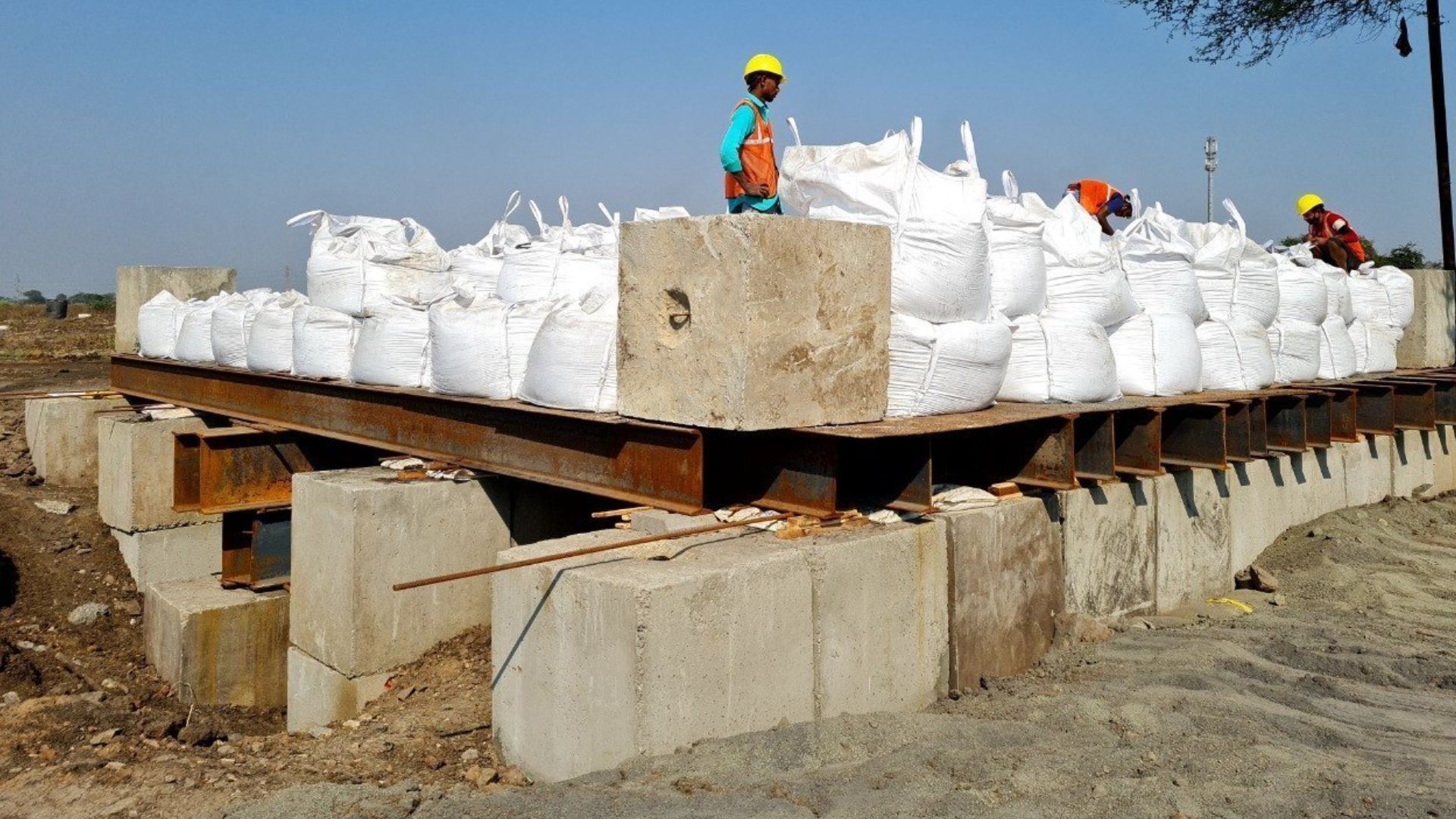
Pile load testing doesn’t have to be a budget shock. Costs are largely controllable when the test program is aligned with project risk, pile quantity, and construction sequencing, not treated as a last-minute requirement.
When to Choose Alternative Test Types
Not every project needs the most expensive testing method. Matching the test type to the project’s risk profile can cut costs significantly without compromising safety.
Use dynamic load testing for production pile verification when soil conditions are well understood
Reserve static load tests for calibration, code-mandated verification, or unusually high loads
Consider Statnamic or O-Cell testing when reaction frames, or kentledge, would drive costs up
Combine one high-quality static test with multiple lower-cost dynamic tests for balanced assurance
Efficient Planning & Scheduling
Poor timing is one of the biggest hidden cost drivers in pile load testing. Early coordination often saves more than negotiating unit prices.
Schedule testing early enough to influence design decisions, not just confirm them.
Avoid standby costs by aligning test dates with pile installation and equipment availability.
Plan for site access, working platforms, and utilities before mobilization.
Coordinate testing windows to avoid premium labor rates (night/weekend work).
Consolidated Tests vs. Individual Tests
Testing strategy matters as much as test selection. Consolidation can reduce both direct and indirect costs.
Use representative test piles instead of testing multiple similar piles individually.
Group testing activities to minimize repeated mobilization and demobilization.
Apply test results broadly when soil conditions and pile types are consistent.
Avoid redundant tests driven by unclear acceptance criteria.
The most effective way to reduce pile load test costs isn’t cutting scope, it’s designing a smarter testing program that fits the project’s risk, scale, and schedule. Early decisions almost always deliver the biggest savings.
How TorcSill’s Solutions Support Foundation Projects
TorcSill provides engineered helical pile foundation systems and integrated services that align well with cost-conscious foundation planning and performance verification. Their approach focuses on predictable load capacity, efficient installation, and reduced site disruption, key factors that influence testing scope and overall foundation costs.
Specializes in helical pile (screw pile) foundation systems used across energy, industrial, marine, power, and commercial projects in the U.S.
Helical piles deliver immediate load capacity, eliminating concrete cure time and helping compress construction schedules.
Systems install with minimal vibration, noise, and excavation spoils, reducing site preparation and environmental mitigation costs.
Provides in-house engineering and design services, with Professional Engineers licensed in 23 U.S. states, supporting optimized foundation layouts and testing strategies.
Operates a vertically integrated model (engineering, manufacturing, and installation), limiting coordination gaps that often increase redesign and testing costs.
Manufactures piles in an ISO 9001:2015 and AWS D1.1 certified facility, using new steel stock for consistent quality and predictable performance.
Offers installation, torque monitoring, and load verification support, helping translate field data into clear acceptance criteria.
Proven across renewable energy, oil & gas, power infrastructure, industrial, and marine projects, demonstrating adaptability to varied soil and load conditions.
For projects seeking a foundation system that supports predictable performance, efficient testing, and cost control, TorcSill’s helical pile solutions offer a practical alternative worth evaluating early in the design phase.
Conclusion
Pile load testing costs are driven less by the test itself and more by logistics, load demands, site access, labor rates, and how early testing is planned into the project. Static tests, dynamic tests, and alternative methods each serve a purpose, but choosing the wrong approach or timing can quickly inflate budgets without adding real value.
If you’re planning a foundation project and want to control costs while maintaining confidence in load performance, working with an experienced provider matters. TorcSill offers engineered helical pile solutions, in-house design, and installation support to help teams optimize foundations and testing strategies from the start.
Contact TorcSill to discuss your project requirements and explore a smarter path to foundation performance and cost certainty.
FAQs
1. Do all projects need a pile load test?
No. Load testing is typically required when mandated by code, the owner, or the authority having jurisdiction, or when soil conditions, loads, or foundation systems introduce higher risk. For smaller or low-risk projects with well-documented soils, testing may be optional but still beneficial for design optimization.
2. How long does a pile load test take?
Duration depends on the test type. Dynamic tests are usually completed in a few hours, while static load tests often take 1–3 days per pile, including setup, loading, hold periods, and demobilization. Site access and reaction system complexity can extend timelines.
3. What happens if a pile fails a load test?
A failed test does not automatically mean the project fails. Engineers review load–movement behavior to determine whether adjustments are needed, such as increasing pile length, diameter, or quantity, revising allowable loads, or modifying installation methods before production work continues.
4. Can load tests be used for design validation?
Yes. Load tests are commonly used to validate or refine design assumptions, confirm allowable loads, and reduce conservatism. When performed early, testing can directly influence pile sizing and layout, often leading to significant cost savings.
5. How many piles typically need to be tested?
Most projects test one or two representative piles to calibrate the design, then use lower-cost methods like dynamic testing to verify production piles. The exact number depends on soil variability, pile type, and project requirements.