Screw piles, also known as helical piles, have become a preferred foundation solution across energy, industrial, marine, and commercial projects where speed, load performance, and minimal site disruption matter. As construction timelines tighten and environmental constraints increase, screw pile installation offers a reliable alternative to excavation-heavy, concrete-based foundations.
More importantly, screw pile installation is now a foundation engineering decision as much as a construction method, directly influencing load transfer, settlement behavior, and long-term performance.
This guide explains how screw pile installation works, when it is used, the key steps involved, and the best practices that ensure predictable, engineering-led foundation performance in modern construction.
Key Takeaways
Screw piles provide immediate load capacity, adaptable design, and verified performance, making them ideal for energy, industrial, marine, and commercial projects with tight schedules.
Minimal excavation, no concrete, and low site disturbance help lower carbon emissions and allow construction in environmentally sensitive areas.
Installation torque is continuously monitored and correlated to soil capacity, ensuring each pile meets design requirements before construction proceeds.
Screw piles can be installed in constrained or remote locations, across variable soils, and can be reused for temporary structures, supporting both speed and long-term structural reliability.
TorcSill integrates site assessment, custom pile design, manufacturing, and installation coordination to reduce project risk, improve efficiency, and maintain consistent quality.
Why Are Screw Pile Foundations Gaining Relevance in 2026?
Screw pile foundations are becoming increasingly relevant as construction projects demand faster delivery, lower environmental impact, and greater predictability under real site conditions.
In many applications, they provide a practical alternative to concrete foundations, particularly where access constraints, soil variability, or schedule pressure limit traditional approaches.
Key factors driving adoption in 2026 include:
Faster installation and immediate loading: Screw piles can be installed and loaded the same day, eliminating delays associated with excavation, formwork, and concrete curing.
Reduced environmental impact: With no concrete, no spoil generation, and minimal ground disturbance, screw piles help reduce carbon emissions and simplify environmental permitting.
Improved performance in variable soils: Screw piles can be engineered for a wide range of soil profiles and adjusted during installation to achieve required capacity without overexcavation.
Lower schedule and cost risk: Predictable installation rates and reduced weather sensitivity help control costs on time-sensitive projects.
Adaptability to constrained or remote sites: Compact installation equipment allows screw piles to be installed in tight spaces, over water, or in locations with limited access.
Advances in engineering and quality control: Modern design methods and torque monitoring provide direct feedback during installation, improving confidence in as-built foundation performance.
Together, these drivers reflect a broader shift in foundation engineering: moving away from assumed performance toward systems that can be verified, adjusted, and validated during installation.
Rather than compensating for uncertainty with oversized concrete foundations, engineers are increasingly specifying screw piles to reduce settlement risk, confirm load transfer in the field, and improve predictability under modern construction constraints.
When Are Screw Pile Foundations Most Effective?
Screw pile foundations are used when projects require a fast, reliable foundation solution with minimal site disturbance.
They are commonly specified where traditional concrete foundations introduce schedule delays, access challenges, or environmental constraints that increase construction risk.
Typical use cases include:
Projects with tight construction schedules: Screw piles are ideal where immediate loading is required and foundation work cannot delay downstream activities.
Sites with limited access or space constraints: Compact installation equipment allows screw piles to be installed in confined areas, around existing infrastructure, or in remote locations.
Environmentally sensitive or regulated areas: Screw piles are frequently used in wetlands, coastal zones, waterways, and protected sites where excavation, spoil handling, and concrete use are restricted.
Variable or challenging soil conditions: Screw piles can be engineered to bypass weak or compressible layers and transfer loads into competent strata.
Temporary or relocatable structures: Screw piles can be removed or reused, making them suitable for modular installations, phased developments, and temporary facilities.
Energy, industrial, and marine applications: Common uses include solar arrays, battery storage systems, equipment foundations, pipeline supports, docks, boardwalks, and seawall-related structures.
In these scenarios, foundation performance is governed less by ultimate capacity and more by settlement control, uplift resistance, and installation predictability.
Screw pile systems allow engineers to manage these behaviors directly through design and torque-verified installation, making them a controlled solution under modern site and schedule constraints.
From Planning to Load: How Screw Piles Are Installed
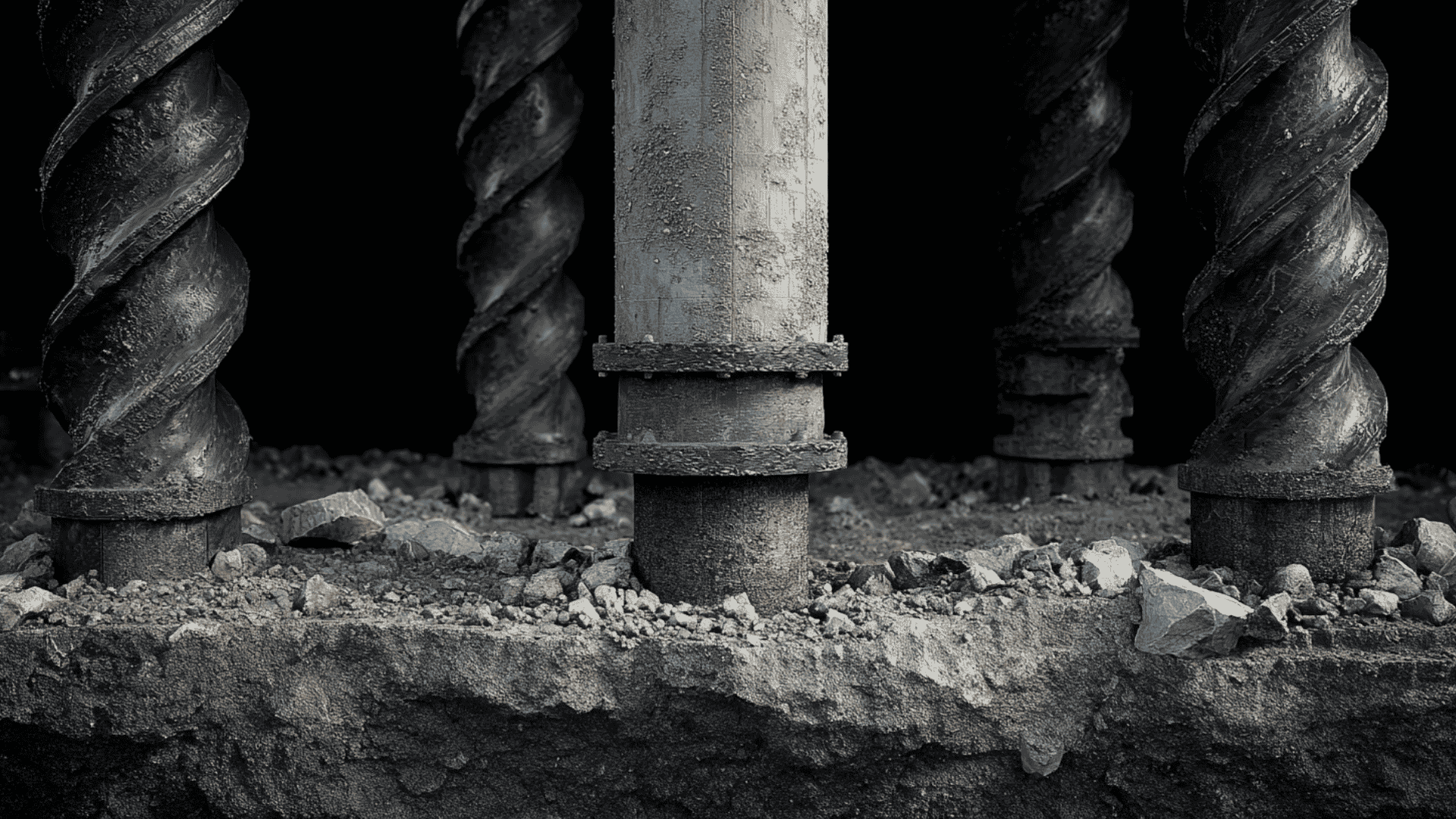
Screw pile or helical pile installation is a precision-driven foundation method that combines engineered design, controlled installation, and real-time verification.
Unlike traditional foundations that rely on excavation and curing, screw piles develop capacity through soil displacement and bearing resistance, allowing performance to be confirmed during installation.
Site Review and Layout
Before installation begins, the site is reviewed to confirm access, soil conditions, and pile locations. Surveyed layout points are marked to ensure accurate placement and alignment with the foundation design.
Review geotechnical data and load requirements
Confirm pile spacing, elevations, and tolerances
Identify underground utilities or obstructions
Equipment Setup and Pile Positioning
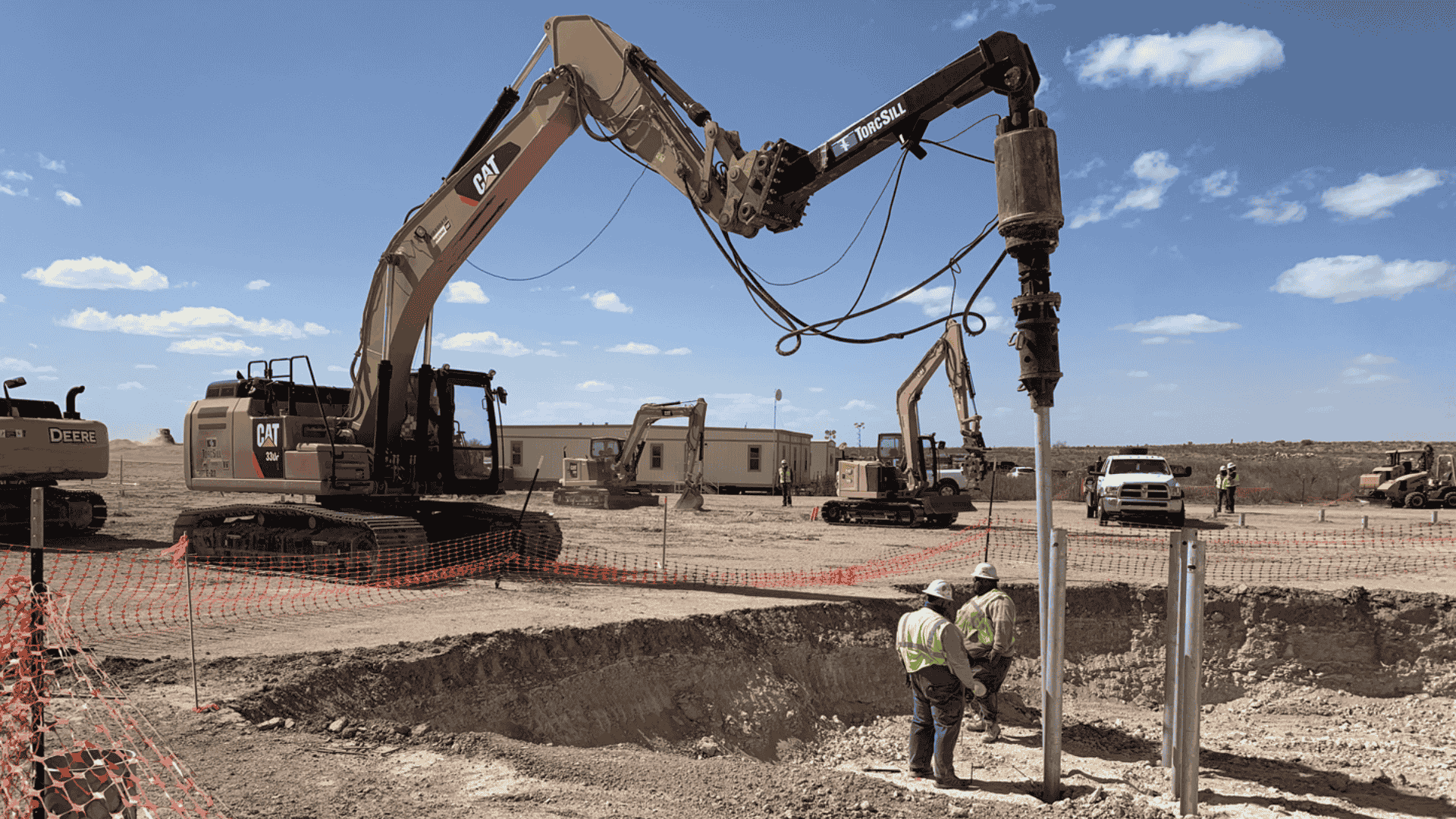
Installation equipment is positioned over the marked location, and the screw pile is aligned vertically or to the specified batter angle.
Select installation rig based on pile size and access constraints
Verify verticality or design angle
Attach drive head and torque monitoring system
Screw Pile/Helical Pile Installation
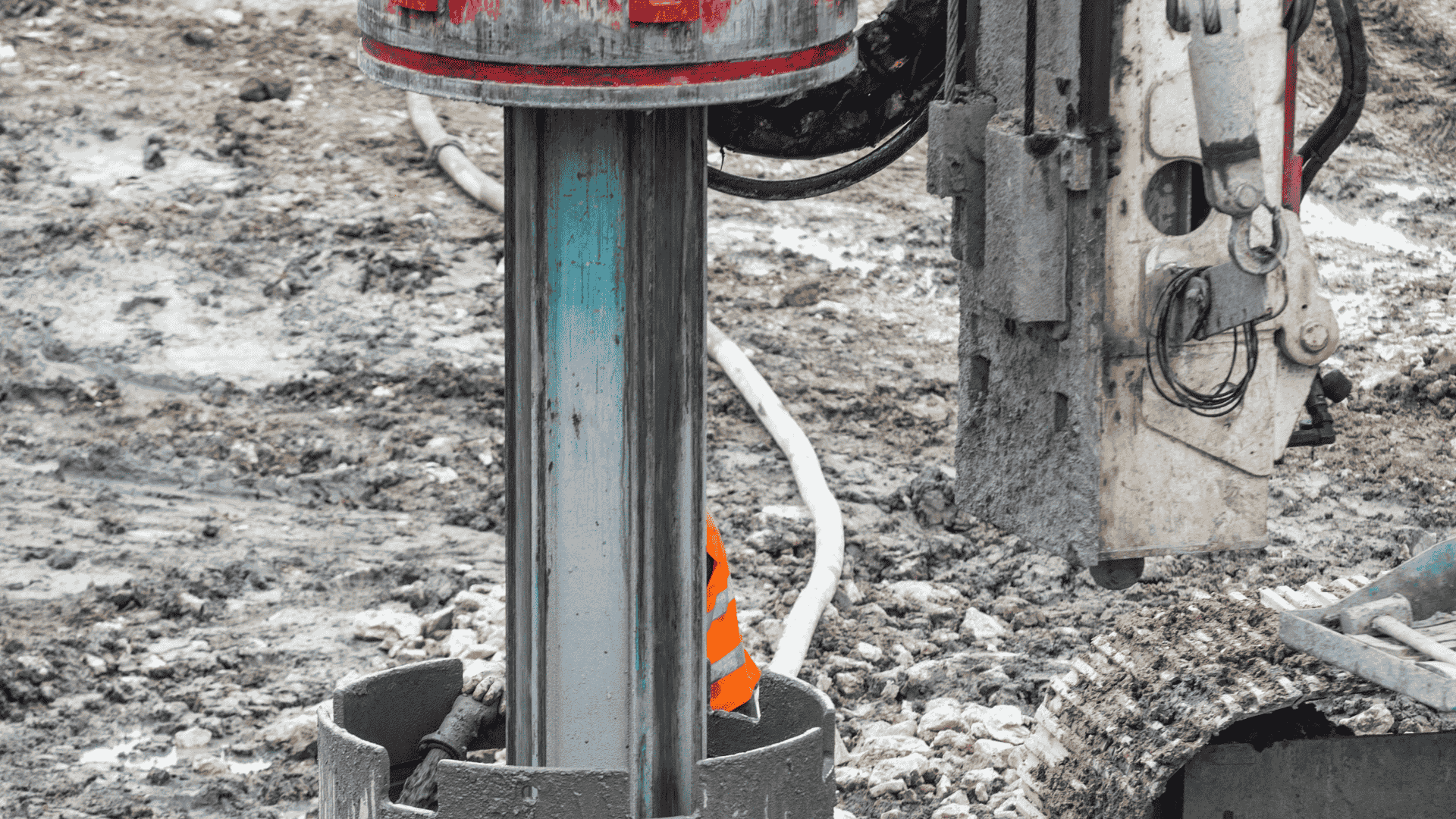
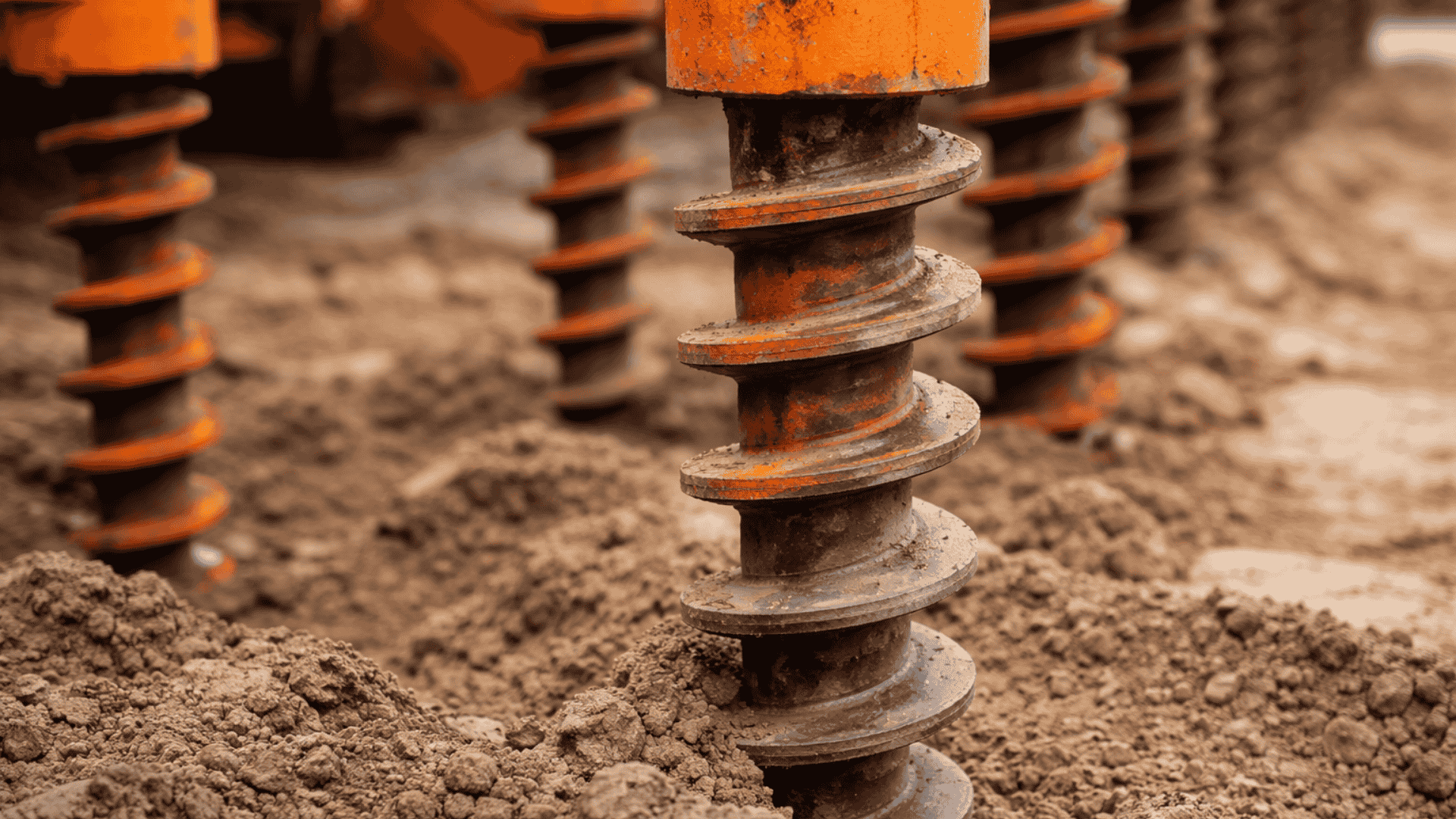
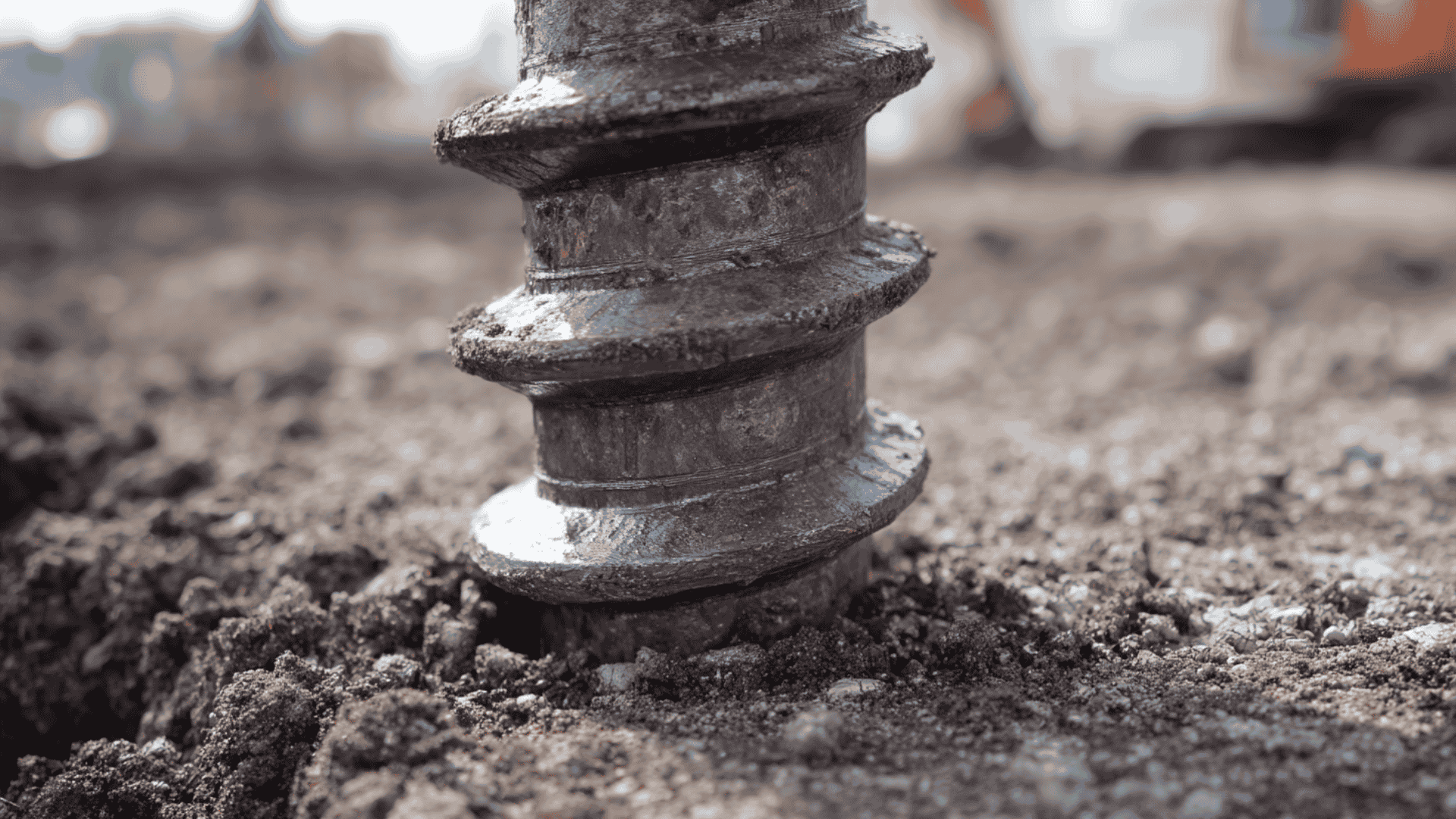
The pile is rotated into the ground using hydraulic torque. The helical plates advance the pile while displacing soil laterally rather than excavating it.
Apply controlled rotational force
Maintain alignment throughout installation
Advance pile to design depth or target torque
Load Capacity Verification
Installation torque is continuously monitored and recorded. Torque values are correlated to soil resistance to confirm that each pile meets its design requirements.
Monitor torque in real time
Verify minimum design torque is achieved
Adjust embedment depth if required
This transforms installation from a construction activity into a foundation verification step, allowing engineers to confirm load transfer and capacity as the foundation is installed, not after the fact.
Cut-Off and Connection Preparation
Once installed, the pile is cut to the specified elevation and prepared for the required connection detail.
Cut pile shaft to design height
Install brackets, caps, or pile heads
Confirm elevation tolerances
Immediate Loading and Construction
Unlike concrete foundations, screw piles can be loaded immediately after installation, allowing construction to proceed without delay.
Begin superstructure installation the same day
Reduce idle time between foundation and framing
Maintain consistent construction flow
This reduces foundation-driven schedule risk, particularly for prefabricated or modular structures where alignment and sequencing are critical.
By integrating verification directly into installation, screw pile foundations deliver predictable performance while minimizing site disruption, schedule uncertainty, and downstream construction risk.
Best Practices for Screw Pile Installation in 2026
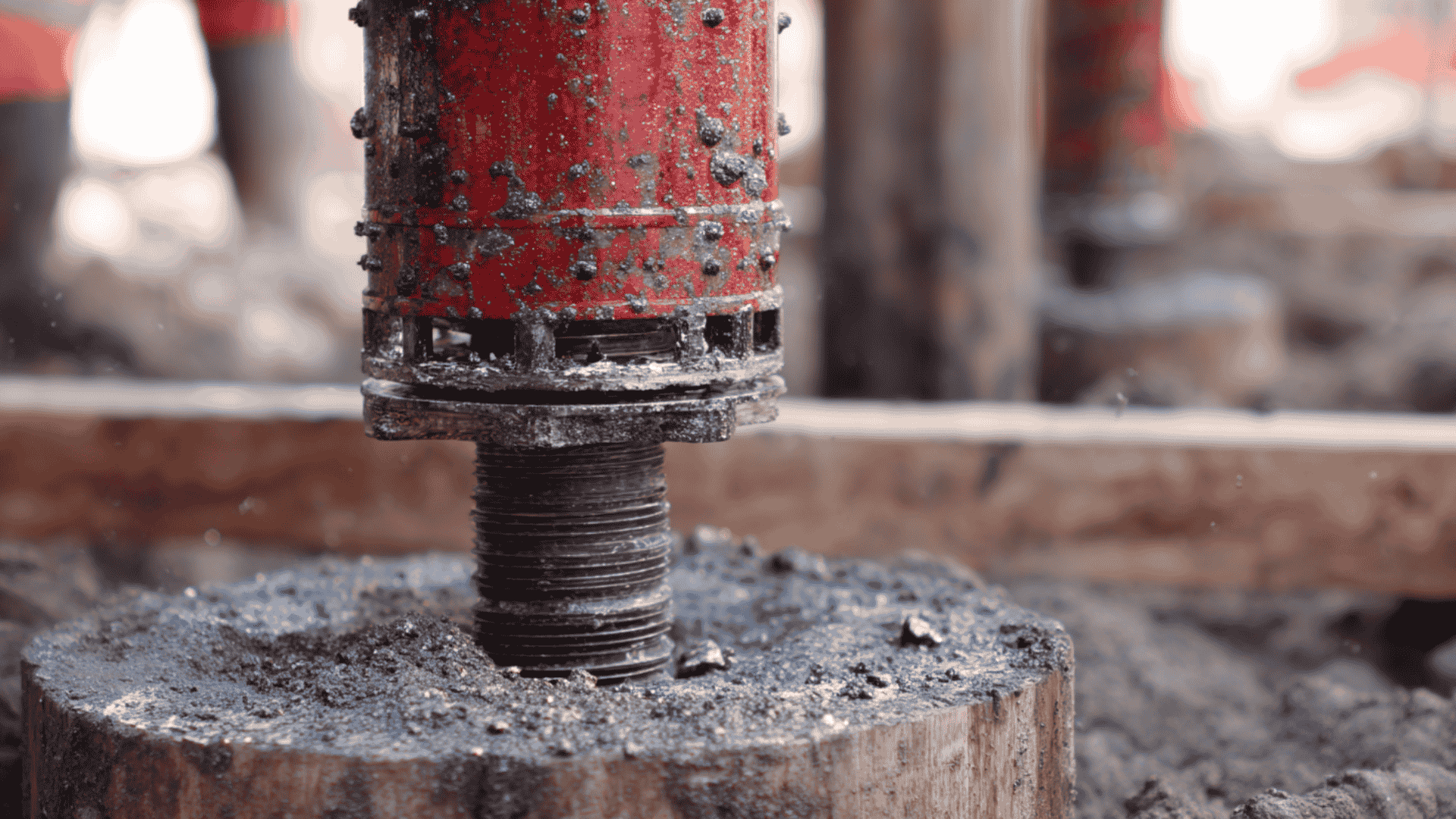
Following best practices for screw pile or helical pile installation is essential for achieving reliable load performance, predictable schedules, and long-term foundation stability.
As projects become more time-sensitive and environmentally constrained, installation success depends on engineering alignment, manufacturing quality, and disciplined field execution.
Start With Site-Specific Engineering
Screw pile design should be based on project-specific geotechnical data and defined load requirements. Engineering-led selection of pile size, helix configuration, and target torque helps avoid overdesign while ensuring performance across variable soil conditions.
Use Purpose-Built, Quality-Controlled Piles
Consistent installation outcomes depend on pile manufacturing quality. Screw piles produced under controlled, certified processes provide uniform geometry, weld integrity, and predictable behavior under load, particularly important on large or multi-location projects.
Verify Capacity During Installation
Modern screw pile installation relies on real-time torque monitoring to confirm load capacity. Recording and correlating torque values during installation provides immediate verification and reduces reliance on post-installation testing or conservative assumptions.
Maintain Installation Alignment and Discipline
Proper verticality or specified batter angles must be maintained throughout installation to ensure correct load transfer. Controlled rotation speed and downforce help prevent misalignment, loss of capacity, or installation-induced variability.
Integrate Engineering, Manufacturing, and Installation
Projects perform best when engineering intent is carried directly through pile manufacturing and field installation. When engineering, manufacturing, and installation are integrated under a single provider, foundation performance is controlled rather than coordinated, reducing handoff risk, improving accountability, and enabling faster field adjustments when subsurface conditions vary.
Plan for Immediate Loading and Sequencing
Screw piles deliver maximum value when construction sequencing takes advantage of immediate load readiness. Coordinating follow-on trades allows projects to compress schedules and reduce idle time between foundation and superstructure phases.
Projects that follow these best practices achieve faster installation, verified performance, and greater construction certainty, making screw pile foundations a dependable, engineering-controlled solution for complex foundation requirements in 2026.
Want to reduce foundation risk through engineering-led screw pile/helical pile installation? Connect with a TorcSill engineer to evaluate soil conditions, load requirements, and installation strategy before construction begins.
How TorcSill Facilitates Screw Pile Installation in 2026
Screw pile installation success depends on more than equipment and torque values. It requires alignment between foundation engineering, manufacturing quality, and disciplined field execution, especially on sites with variable soils, tight schedules, or environmental constraints.
TorcSill supports project teams by evaluating screw pile installation as a foundation engineering decision, not just a construction activity. This approach helps ensure that load paths, settlement behavior, and installation verification are addressed together, reducing uncertainty before construction begins.
On energy, industrial, and marine projects with compressed timelines and mixed subsurface conditions, TorcSill has supported screw pile installations that allowed immediate structural loading while avoiding excavation-driven delays and post-installation remediation.
TorcSill’s Integrated Approach to Screw Pile Installation
1. Engineering & Design for Tailored Foundation Engineering: TorcSill engineers analyze geotechnical data, groundwater conditions, and structural loads to define pile geometry, helix configuration, embedment depth, and target torque. This ensures screw piles are designed around actual soil behavior rather than conservative assumptions.
2. Manufacturing for Quality Helical Piles & Components: All piles and components are produced in TorcSill’s ISO-certified facilities using new steel and controlled fabrication processes. This ensures consistent geometry, weld integrity, and repeatable performance across projects and locations.
3. Construction Services for Site Execution & Installation: Installation teams execute screw pile installation with controlled rotation, alignment discipline, and real-time torque monitoring. Capacity is verified during installation, providing immediate confirmation that foundations meet design intent.
4. Drilling Services for Site Preparation & Soil Access: Where dense soils, debris, caliche, or obstructions are present, TorcSill’s drilling capabilities support pre-boring or access preparation to maintain installation accuracy and performance.
5. Integrated Engineering Through Installation: Design intent is carried through manufacturing and field installation under a single delivery model. This reduces handoff risk and ensures foundations perform as engineered, not just as designed.
By combining foundation engineering, manufacturing, installation, and drilling under one coordinated approach, TorcSill acts as a foundation engineering partner, helping project teams reduce risk, improve predictability, and maintain schedule control in 2026 construction environments.
Conclusion
Effective screw pile installation requires more than simply driving piles into the ground. Foundations must reliably support structural loads, accommodate variable soil conditions, and integrate smoothly with construction schedules—all while minimizing site disturbance. Choosing the right foundation strategy is essential to ensure predictable performance and long-term stability.
TorcSill supports these challenges through engineering-led assessment of soil behavior, load requirements, and installation conditions. This approach provides confidence that screw piles are installed correctly, verified in real time, and ready to carry structural loads immediately.
For projects where foundation reliability, efficiency, and site-sensitive construction are critical, engineered screw pile solutions offer a proven path forward.
Consult a TorcSill engineer to determine the installation approach best suited to your project’s soil conditions, load demands, and construction constraints.
Frequently Asked Questions (FAQs)
1. What makes TorcSill screw piles more reliable than generic alternatives?
TorcSill screw piles are manufactured under ISO 9001:2015-certified processes, ensuring consistent geometry, weld integrity, and material quality. Combined with engineering-led design and torque-verified installation, this delivers predictable performance across variable soils and project types.
2. How does TorcSill help reduce project risk during installation?
By integrating site assessment, custom pile design, and real-time torque monitoring, TorcSill identifies potential soil or load issues before they affect construction. This proactive approach minimizes delays, prevents underperformance, and reduces the likelihood of rework.
3. Can TorcSill handle large-scale or multi-site screw pile projects?
Yes. TorcSill’s full-service model—from engineering and manufacturing to installation—supports multi-location projects with consistent quality. Teams can rely on coordinated logistics, standardized piles, and verified installation practices to meet tight schedules and volume requirements.
4. How does TorcSill support environmentally sensitive installations?
TorcSill screw piles minimize site disturbance by eliminating the need for excavation, concrete, or spoil removal. Their low-impact installation is particularly suitable for wetlands, coastal zones, and other environmentally regulated areas, ensuring compliance without compromising structural integrity.
5. Why is TorcSill preferred for complex foundation applications?
TorcSill combines engineering-led analysis, custom pile configurations, and verified installation to provide tailored solutions for challenging soil conditions, heavy loads, or restricted sites. This integrated approach delivers foundations that are not only reliable but also efficient and cost-effective.