Sea level rise is projected to place more than 100 million buildings at risk of regular flooding in the Global South under mid-range scenarios, even with moderate emissions reductions. And, roughly 3 million buildings could be inundated with just 0.5 m of sea level rise.
These numbers reflect the magnitude of exposure that civil and structural engineers now must account for in coastal planning and foundation design.
Coastal foundations are a distinctly specialized branch of foundation engineering, far beyond what’s typical in inland construction. They demand tailored design strategies to ensure performance, resilience, and longevity.
This guide helps make informed decisions about coastal foundation systems, from identifying risks to selecting solutions that meet performance, regulatory, and environmental requirements.
Key Takeaways:
Coastal foundations must resist waves, tides, storm surge, scour, and corrosion, significantly different from inland conditions due to dynamic marine forces.
Geotechnical investigation is essential; loose sands, silts, and organics require deep foundation systems for stability and long-term performance.
Driven piles, drilled shafts, and helical piles each offer distinct advantages; selection depends on soil, loads, environment, and access.
Corrosion protection, using coatings, galvanization, and cathodic protection, is critical to durability in saltwater and splash zones.
Integrated design, installation planning, and regulatory compliance reduce risk and improve outcomes for complex coastal and marine projects.
What Are Coastal Foundations?
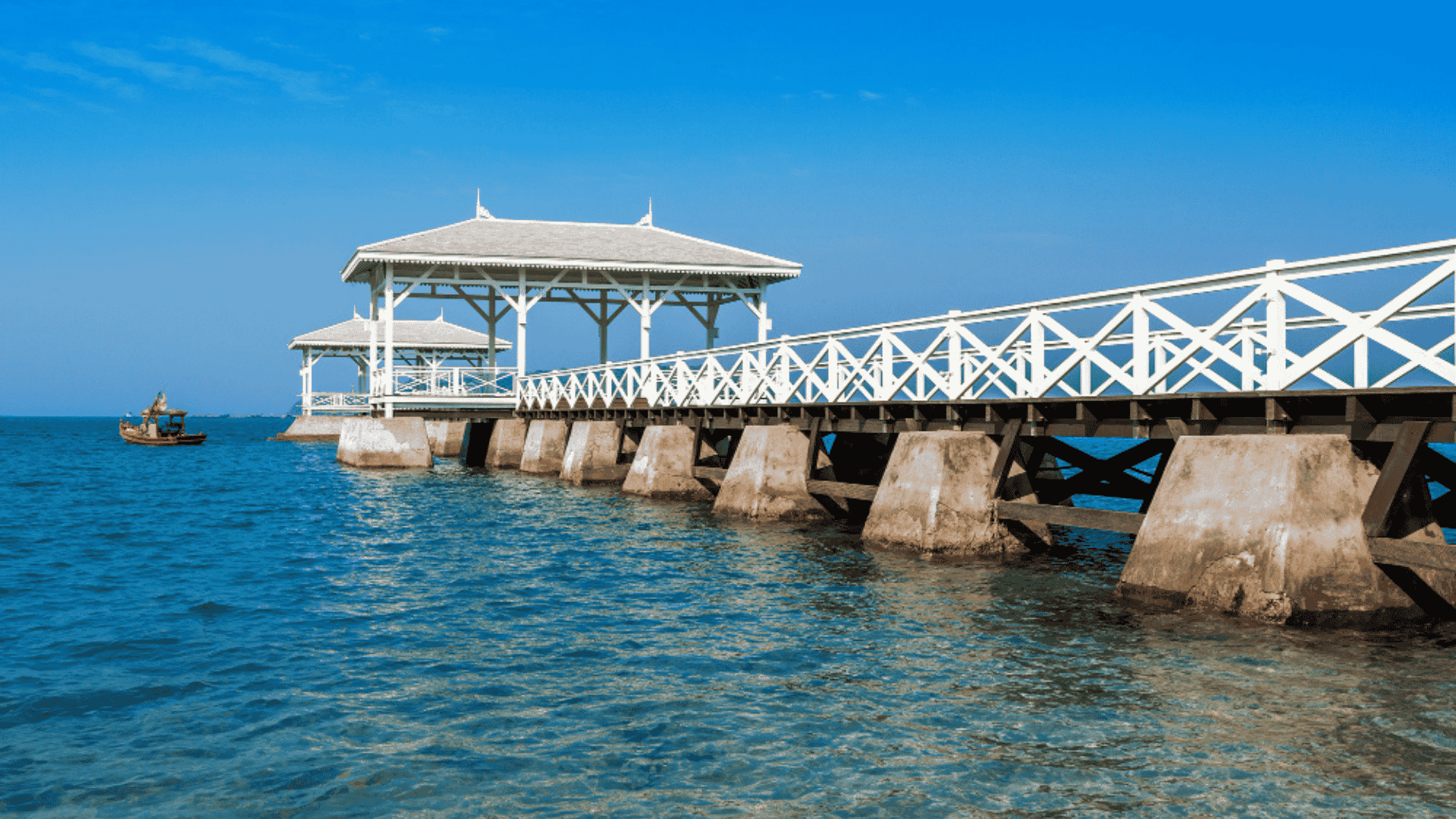
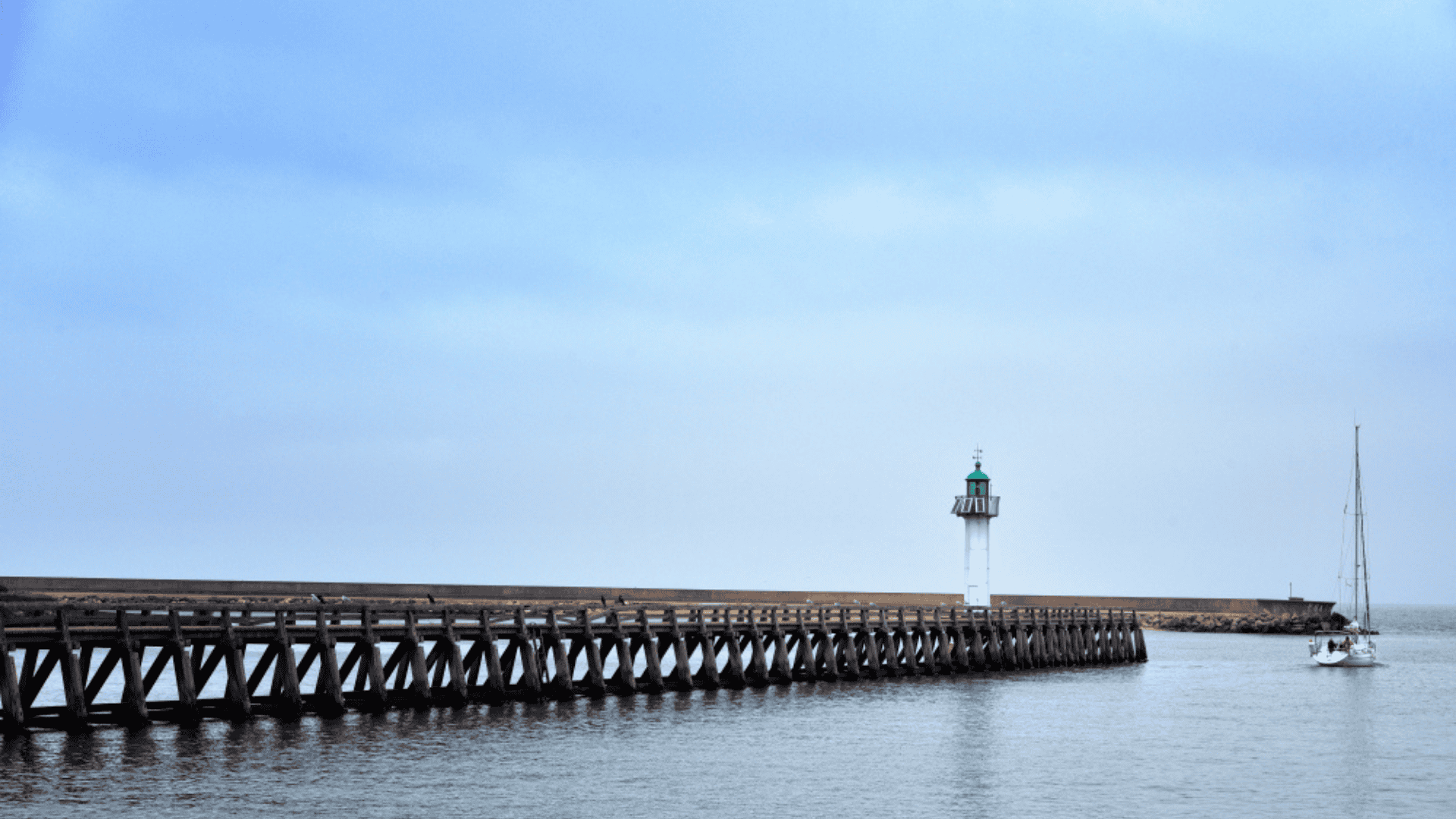
Coastal foundations are engineered support systems for structures located along shorelines, over water, or in marine environments, where traditional inland foundation approaches aren’t adequate.
These systems must transfer structural loads safely into the subsurface while also withstanding unique coastal forces like wave action, storm surge, tides, and saline corrosion.
At their core, coastal foundations serve the same fundamental purpose as all foundations. However, they are designed with additional criteria in mind, including:
Resisting dynamic water forces such as waves, currents, and tidal fluctuations.
Managing soil conditions common to shorelines, where loose sands, silts, and organic layers are frequent, and bearing capacity is often low.
Minimizing corrosion and material degradation from prolonged exposure to saltwater environments.
Rather than simply anchoring a structure, coastal foundations integrate geotechnical analysis with structural and environmental design to ensure resilience and performance under harsh marine conditions.
Key Environmental Risks in Coastal Construction
Coastal construction sites are exposed to a complex interplay of environmental forces that can jeopardize both foundation performance and overall structural integrity. Unlike inland projects, shoreline and over-water environments present dynamic risks from water, weather, soil, and climate systems.
1. Soil Variability and Low Bearing Capacity
Coastal soils are often heterogeneous and unpredictable, with loose sands, silts, and organic materials dominating nearshore profiles. These soils can exhibit:
Low bearing capacity
High compressibility
Susceptibility to rapid change from tidal and storm action
Variability between boreholes, quicksand pockets, and shifting beach sediments can challenge even detailed geotechnical investigations, making foundation performance less certain without specialized design and deep support systems.
2. Saltwater Corrosion and Material Degradation
Saltwater and salt-laden air dramatically accelerate corrosion of:
Steel
Rebar
Fasteners
Other metal components
Chloride ions from seawater penetrate concrete and protective layers, breaking down passive films and promoting rust, spalling, and structural weakening over time. In the coastal splash and tidal zones, alternate wetting and drying cycles intensify corrosion rates, making material selection and protective systems critical for durability.
3. Wave Loading, Tidal Forces, and Storm Surge
Foundations in coastal zones must resist dynamic hydrodynamic forces not encountered inland. Wave action applies cyclic lateral and uplift loads, while tidal fluctuations and storm surge can inundate sites unexpectedly.
These forces increase design complexity and require that foundations be engineered for both vertical and significant lateral load resistance, often with elevated or deep foundation systems to protect against flooding and buoyant uplift.
4. Scour and Erosion Over Time
Designers should account for localized scour depths around piles and foundation elements by embedding foundations below the depth of predicted maximum scour, as recommended in FEMA coastal guidelines.
Localized scour depths for piles can be several times the pile diameter, and foundations must be sized and spaced to resist both scour‑induced loss of soil and increased lateral loads. Compliance with ASCE/SEI 24‑2025 and FEMA P‑646 ensures designs properly incorporate scour and erosion effects
Foundation Design Options for Coastal Environments
Designing foundations for coastal and near-shore environments requires choosing systems that can safely transfer structural loads through weak, often saturated soils to deeper, more competent strata while resisting lateral forces, scour, and corrosion.
Common Coastal Foundation Systems
Driven Piles
Driven piles are prefabricated deep foundation elements, typically steel H-piles, pipe piles, concrete, or timber, that are hammered or vibrated into the ground using impact or vibratory equipment.
Because they are installed by displacement, they mobilize both end-bearing and skin friction resistance, and are widely used for piers, docks, and waterfront structures where lateral loads and scour resistance are critical.
Key Advantages
High lateral and axial load capacity
Proven performance in marine and tidal environments
Good quality control using driving records
Considerations
Vibrations from the installation may affect nearby structures
Corrosion protection is essential in saltwater environments
Drilled Shafts (Caissons)
Drilled shafts, also known as bored piles or caissons, are cast-in-place concrete foundations formed by drilling a cylindrical hole into the ground, reinforcing it, and filling it with concrete.
These large-diameter elements are ideal for heavy loads and variable soils common in coastal zones.
Key Advantages
High load capacity for heavy structures
Minimal vibration during installation
Can penetrate through weak or compressible soils to reach competent layers
Considerations
Requires drilling equipment and careful casing or slurry control in saturated soils
Typically, more time-intensive than driven piles
Concrete Caissons
Caissons are large hollow structures that may be constructed onshore and floated to the site or formed in place for heavy marine structures like bridge piers and waterfront buildings.
They function similarly to drilled shafts but at much larger scales, often with greater diameter and buoyancy management considerations.
Key Advantages
Excellent for high-capacity vertical loads
Can serve as integral parts of the structure (e.g., bridge piers)
Considerations
Complex construction logistics
Requires careful design for water pressures and installation sequencing
Helical Piles and Screw Foundations
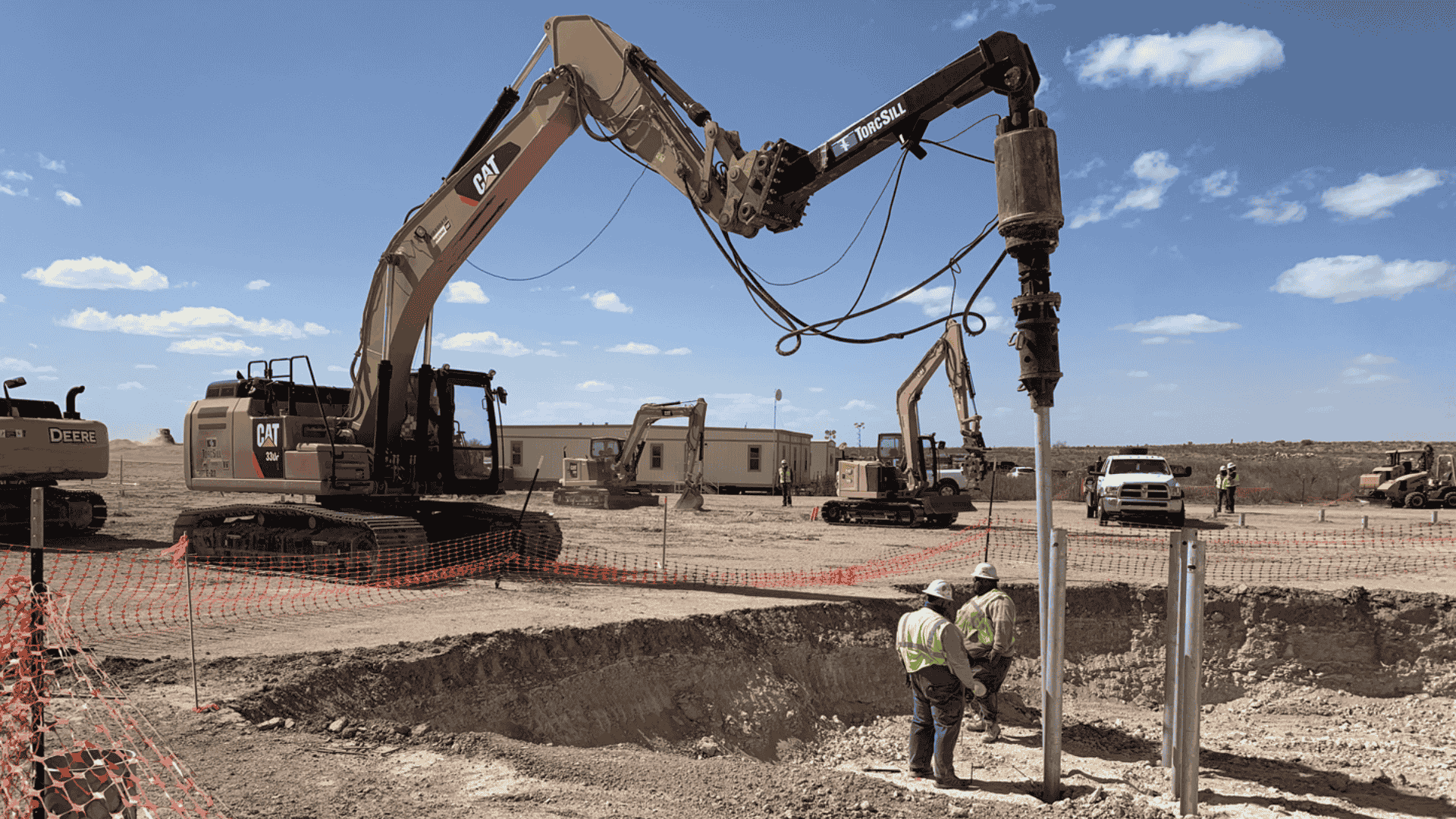
Helical piles (also called screw piles or screw foundations) consist of steel shafts with helical bearing plates that are rotated into the ground much like a giant screw. The plates transfer loads through the soil via torque and bearing resistance, making them versatile in weak and variable coastal soils.
Key Advantages
Minimal soil disturbance and no spoil removal
Immediate load capacity, no concrete curing time
Excellent for sensitive coastal sites and restricted access conditions
Installable in a wide range of soil types
Considerations
Requires properly calibrated torque monitoring during installation to confirm capacity
The selection of plate size and spacing must be tailored to soil conditions
Comparison: When to Use Each System
Foundation Type | Best Application in Coastal Settings | Strengths | Typical Challenges |
|---|---|---|---|
Driven Piles | Piers, docks, seawalls, heavy lateral loads | High capacity, well-tested | Vibration, corrosion risk |
Drilled Shafts / Caissons | Large buildings, heavy loads | High vertical and lateral capacity | Time-intensive, hazardous drilling |
Helical Piles | Variable soils, sensitive sites | Quick installation, low disturbance | Soil profiling and torque interpretation critical |
Concrete Caissons | Major marine infrastructure | Very high capacity | Complex construction and installation |
Design Standards & Code References
In coastal foundation design, engineers follow established design codes and standards to define loads, material requirements, and safety criteria:
ASCE/SEI 24‑2025 — Flood Resistant Design & Construction: Provides minimum requirements for foundations in flood hazard areas, accounting for scour, liquefaction, and soil instability during design flood conditions.
FEMA P‑646 — Guidelines for Design in Coastal Hazard Areas: Details design criteria for structures subject to high‑velocity wave action and storm surge, including requirements for foundation embedment below potential scour depths.
FEMA Coastal Construction Manual (FEMA P‑55 / P‑550): Offers guidance on coastal flood, wave, and scour loads that affect foundation sizing and configuration.
ASCE 7 (Minimum Design Loads & Associated Criteria): Used in conjunction with flood‑resistant standards to determine the magnitude of flood and hydrodynamic forces that foundations must resist.
Why Helical Piles Are Well-Suited for Coastal Foundations
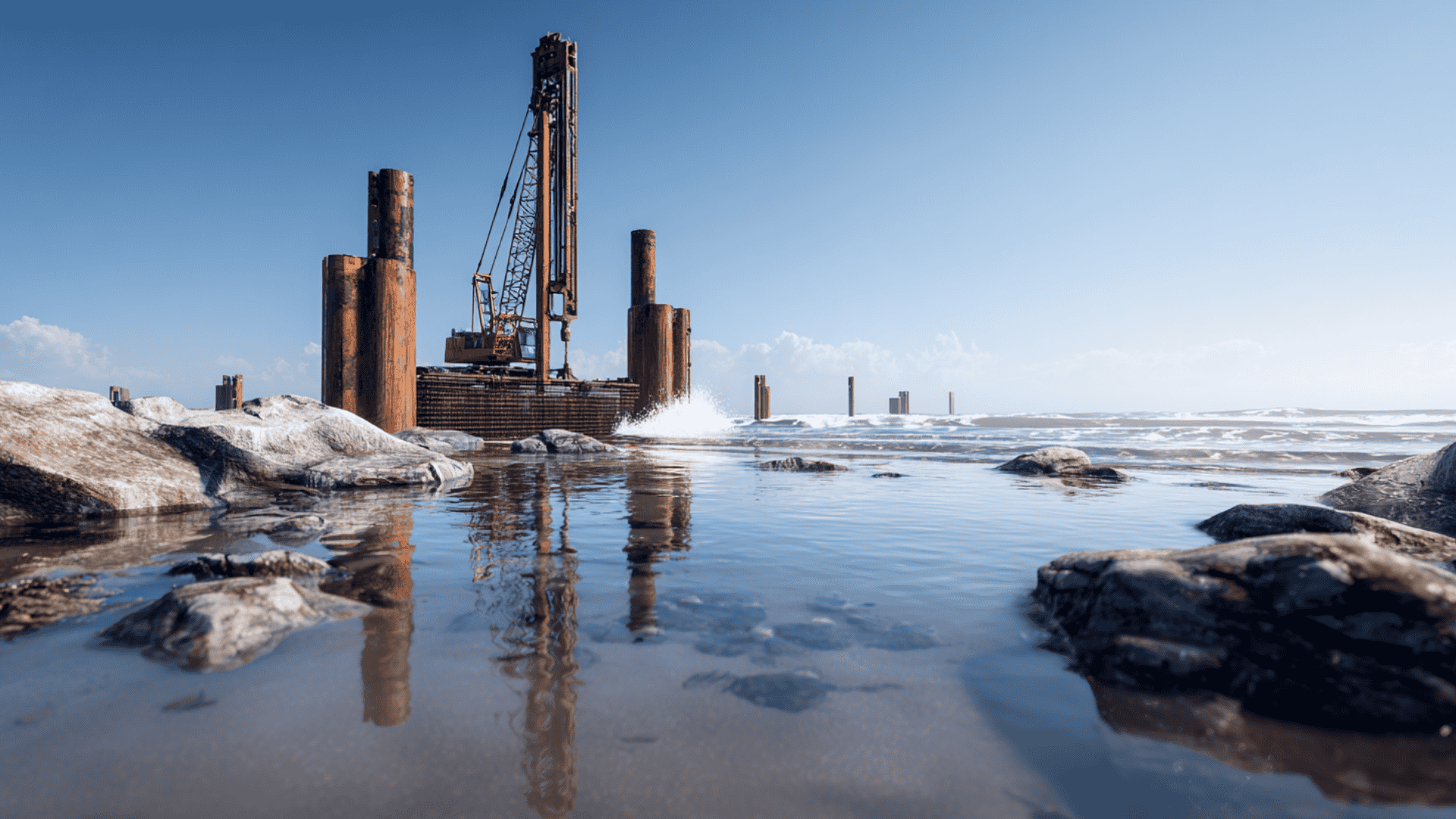
Helical piles, also known as screw piles or helical piers, have become a highly effective foundation solution for coastal and near-water construction because their unique design and installation method directly address many of the challenges that shoreline environments present.
Minimal Soil Disturbance and Quick Installation
One of the biggest benefits of helical piles in coastal environments is their low-impact installation. Unlike driven piles or cast-in-place concrete systems, helical piles are rotated into the ground like giant screws, requiring no large excavations, spoil removal, or concrete curing times. This translates into:
Minimal disturbance to sensitive shoreline soils and vegetation, reducing the risk of accelerating erosion during construction.
Faster project timelines, important where tidal windows or weather limits site access.
A reduced footprint of machinery on site, which helps preserve existing site conditions and lessens environmental impact.
Because helical piles can be installed quickly and with smaller equipment, they are especially suitable for coastal sites with limited access, soft marshy soil, or regulatory constraints on heavy disturbance.
Superior Performance in Weak, Saturated Soils
Coastal soils are frequently loose, water-saturated, or subject to seasonal shifts and scour, making load-bearing conditions highly variable. Helical piles perform well in these settings because:
They are designed to penetrate through weak surface soils and anchor into deeper, more stable strata.
The installation process itself provides real-time feedback (via torque monitoring), which helps engineers estimate ultimate load capacity and adjust the design accordingly.
Because they resist both vertical and horizontal forces, helical systems offer stability in soils prone to movement under tidal or wave action.
This makes helix foundations especially effective for structures like docks, piers, seawalls, and seaside buildings where traditional shallow footings or surface foundations would be unreliable.
Immediate Load-Bearing Capacity
Unlike cast-in-place concrete that must cure before carrying design loads, helical piles are immediately load-bearing once installed. This means:
Construction on the supported structure can begin without delays for curing.
Project schedules are less susceptible to weather interruptions or wet conditions, a major advantage in coastal zones where rainy seasons and tidal cycles can constrain work windows.
Corrosion Resistance and Durability in Marine Conditions
Marine and coastal environments are highly corrosive due to saltwater and humid conditions, which can shorten the lifespan of unprotected steel and concrete. Helical piles address this by:
Being made from galvanized or coated steel engineered to withstand chloride exposure and reduce long-term corrosion.
Allowing for additional corrosion-protection systems (e.g., specialized coatings or cathodic protection) depending on project design life and aggressiveness of the environment.
This enhances durability and reduces maintenance needs over the life of the structure, critical for coastal applications where future access for repairs can be limited and costly.
Lower Environmental Impact and Site Flexibility
Because installation of helical piles involves no large excavations, minimal vibration, and smaller equipment, they are frequently preferred in environmentally sensitive coastal zones where preserving habitat and minimizing regulatory hurdles is essential.
Additionally, helical pile systems can be used:
From shorelines or barges,
Around existing structures and utilities,
Even in tight or difficult-to-access areas.
This flexibility makes them highly adaptable for a wide range of coastal foundation needs, from residential waterfront builds to commercial marine infrastructure.
Best Practices for Coastal Foundation Installation
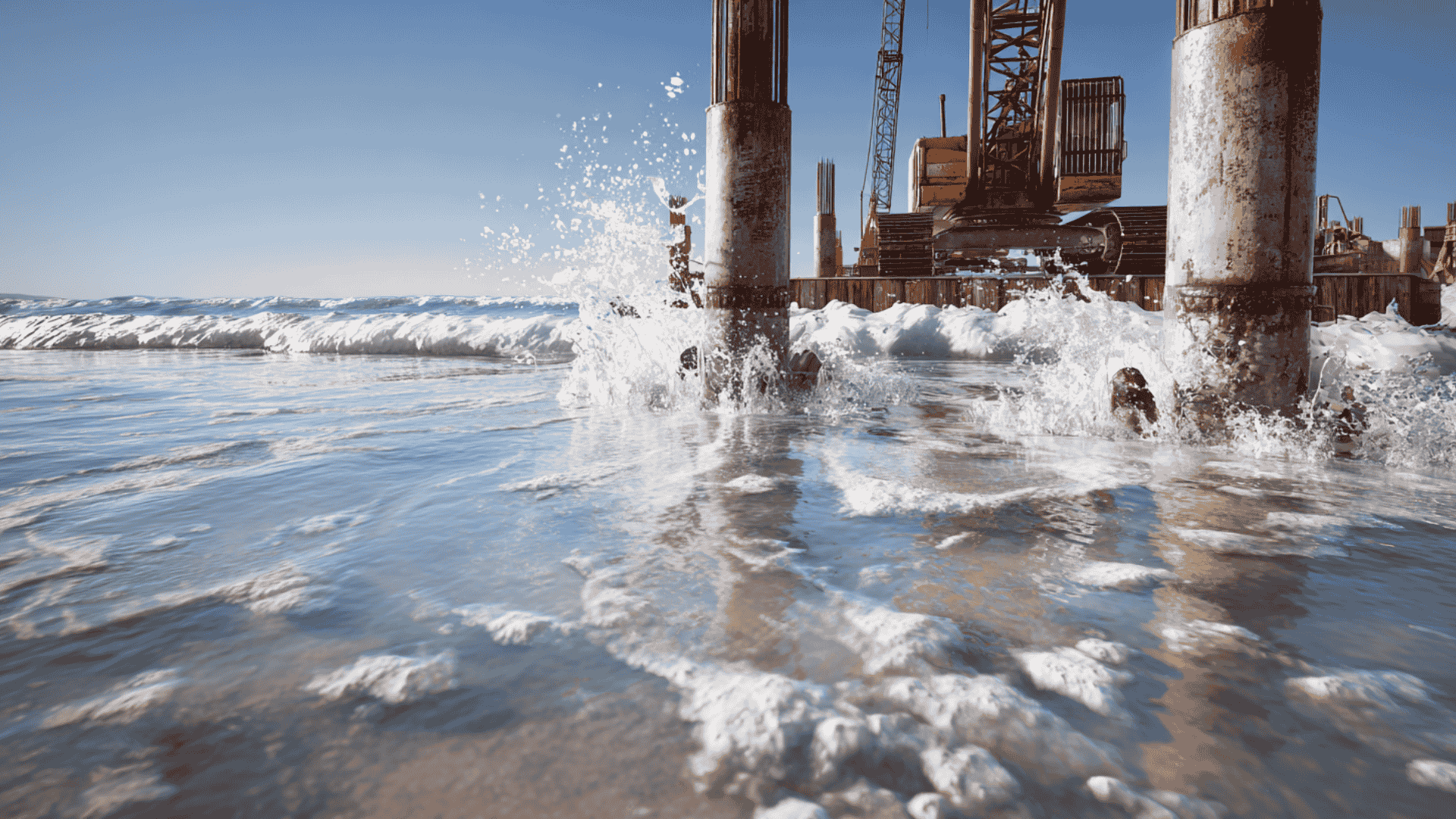
It’s not enough to select the right system on paper. The installation must be carefully planned and executed to ensure structural performance, regulatory compliance, and environmental protection.
Thorough Pre-Construction Assessment: Before breaking ground (or water), it’s essential to understand site conditions in depth. Advanced site data, including boreholes, sediment cores, and tidal influence studies, improves confidence in design decisions and predicts potential scour and settlement behavior.
Tidal Variability Considerations: Tidal cycles directly affect when and how work can be performed. Foundation installations, from piles to helical systems, should be scheduled around predictable low-tide windows when soils are accessible, and equipment can operate safely.
Reliable Installation Methods: In helical pile installations, calibrated torque monitoring provides real-time insight into capacity, a critical feedback loop that confirms designs are performing as expected without waiting for later tests.
Integrated Team Communication: Coastal projects often involve multiple contractors, marine specialists, geotechnical engineers, structural designers, and environmental monitors. Frequent coordination meetings ensure all parties understand constraints, schedule shifts, and installation feedback.
Common Coastal Foundation Mistakes to Avoid
Avoiding these common pitfalls is key to long-term performance, budget control, and safety.
1. Underestimating Soil Variability and Skipping Detailed Geotechnical Work
Failing to conduct comprehensive soil investigations or relying on too few borings often leads to inaccurate foundation designs. Coastal soils are highly variable, even over short distances, and assumptions can result in under-designed piles or unexpected settlement issues.
Avoid: Rushing or skimping on soil investigation.
Do: Invest in high-resolution subsurface data and integrate it early into design decisions.
2. Ignoring Scour, Erosion, and Water-Related Forces
Neglecting scour and erosion effects around foundation elements, particularly piles, can undermine embedment and stability over time. Coastal hydrodynamics can remove supporting soil, increasing stress on piles and even leading to failure. Effective scour analysis and erosion control are essential foundation design elements.
Avoid: Assuming soils will remain static under tidal and storm action.
Do: Incorporate scour mitigation (e.g., filters, armoring) and design foundation depths that account for long-term erosion.
3. Choosing the Wrong Foundation System for Site Conditions
Not all foundation systems perform equally in coastal environments. Selecting a system based on cost or familiarity, rather than site-specific load and soil conditions, often leads to underperformance.
Avoid: One-size-fits-all foundation designs.
Do: Match foundation type to soil characteristics, loads, and environmental constraints.
4. Poor Corrosion Protection Planning
Saltwater and coastal humidity accelerate corrosion of steel components. Installing piles or rebar without adequate corrosion protection, such as galvanization, coatings, or cathodic systems, shortens service life and increases maintenance costs.
Avoid: Relying on generic materials in marine environments.
Do: Specify marine-grade materials and long-term corrosion mitigation strategies.
TorcSill: Integrated Coastal & Marine Foundation Expertise
TorcSill is a premier provider of engineered helical pile and anchoring solutions, delivering vertically integrated foundation services that span engineering, design, manufacturing, and construction, all under one roof.
What TorcSill offers:
Full‑service delivery: From soil assessment and structural design to fabrication and nationwide installation.
ISO 9001:2015 certified manufacturing: High‑quality helical piles and components produced in an AWS D1.1 certified facility using new steel stock.
Experienced engineering team: Expertise in torque profile analysis, custom pile design, corrosion life planning, and P.E.‑stamped documentation across 23 licensed states.
Nationwide construction footprint: Skilled crews operating from 14 strategic locations, capable of delivering foundation solutions in water, land, and challenging site conditions.
TorcSill’s commitment to safety, quality, and innovation ensures projects are delivered to spec, on schedule, and with long‑term performance in mind, making them a trusted partner for developers, engineers, and asset owners facing complex coastal foundation challenges.
Contact an engineer to get started.
Conclusion
Designing and building coastal foundations demands a level of engineering rigor and strategic planning far beyond that of inland projects. At the core of effective coastal foundation solutions is a deep understanding of site conditions and environmental forces, which guides the selection of systems, all designed to transfer loads to stable soil while resisting lateral forces, scour, and corrosion.
Ready to engineer coastal foundations that stand up to the toughest marine conditions?
Partner with TorcSill for proven helical pile solutions, from design and manufacturing to installation, that save time, cut costs, and reduce environmental impact on even the most demanding coastal and marine projects.
Talk to an engineer at TorcSill today.
FAQs
1. How often should coastal foundations be inspected after installation?
Annual professional inspections are recommended to check for corrosion, decay, scour, and structural issues in foundations and framing exposed to harsh coastal conditions. Document findings and schedule repairs promptly.
2. Can foundation degradation be detected before visible damage appears?
Yes, non‑destructive testing (e.g., ultrasonic thickness measurements) and condition assessments help detect early corrosion and deterioration of buried or hidden foundation elements before visible issues emerge.
3. How does corrosion affect coastal foundation materials differently from inland sites?
Saltwater and high humidity accelerate chloride penetration and corrosion in steel and reinforced concrete, leading to faster material degradation and cycle‑dependent weakening in coastal environments.
4. Are there special inspections required by coastal building codes?
Yes, some regions (e.g., Florida) require milestone structural inspections at defined ages for coastal buildings, often starting earlier than inland requirements due to corrosive exposure.
5. What proactive steps extend the lifespan of coastal foundation systems?
Routine visual inspections, corrosion management (e.g., coatings and cathodic protection), debris removal, and professional assessments can catch issues early and extend foundation life.