Consider a utility-scale solar project that breaks ground on schedule, only to stall within days. Soft surface soils cannot support equipment loads, concrete pours are delayed by weather, and redesigns begin to stack up. This scenario is common on energy, industrial, and marine sites where subsurface conditions do not match early assumptions.
Foundation piering exists to solve this exact problem. By transferring structural loads to competent soil at depth, piering provides predictable support where shallow foundations fail, keeping projects moving and settlement under control.
In 2026, piering decisions are increasingly shaped by how capacity is developed and verified during installation, not just by theoretical design. This guide explains how foundation piering works, the systems used today, and how modern, performance-driven approaches, such as helical piering, are reducing risk under real-world site constraints.
Key Takeaways
Foundation piering transfers loads to competent soils at depth, providing predictable performance where shallow foundations fail, particularly in soft, variable, or fill-prone ground.
Helical piering combines shaft friction and bearing at depth, allowing immediate load capacity, minimal soil disturbance, and real-time capacity verification—ideal for fast-track or constrained projects.
Piering reduces environmental impact and material usage compared to traditional concrete, lowering embodied carbon while maintaining structural integrity.
Applicable across sectors: energy, industrial, power, and marine projects benefit from controlled settlement, lateral stability, and flexible foundation options.
TorcSill provides engineering-led guidance to determine when helical piering offers a lower-risk alternative to traditional pier systems.
What Is Foundation Piering?
Foundation piering is a deep foundation approach used when near-surface soils cannot safely support structural loads. Instead of relying on shallow bearing, piers transfer loads through weak or compressible soils and into deeper, more competent layers where capacity and long-term performance are predictable.
In practical terms, piering is often used on sites with soft clays, loose sands, fill material, or fluctuating groundwater. These are conditions where conventional footings would require over-excavation, soil replacement, or oversized concrete designs.
Once installed, piers function as structural elements that resist multiple load types:
Compression loads, such as dead and live loads from equipment, racks, or structures
Uplift forces, commonly caused by wind, buoyancy, or thermal expansion
Lateral loads, including wind, wave action, flowing water, or seismic movement
For example, a pipeline support installed on flood-prone ground may rely on piering to prevent both settlement during dry conditions and uplift during high-water events.
Modern piering systems increasingly favor methods that limit soil disturbance and allow load capacity to be confirmed during installation, reducing uncertainty compared with assumption-based designs.
Foundation piering is widely used across energy, industrial, marine, and infrastructure projects where soil uncertainty, load intensity, or site constraints make shallow foundations unreliable or inefficient.
How Foundation Piering Works in Real Site Conditions
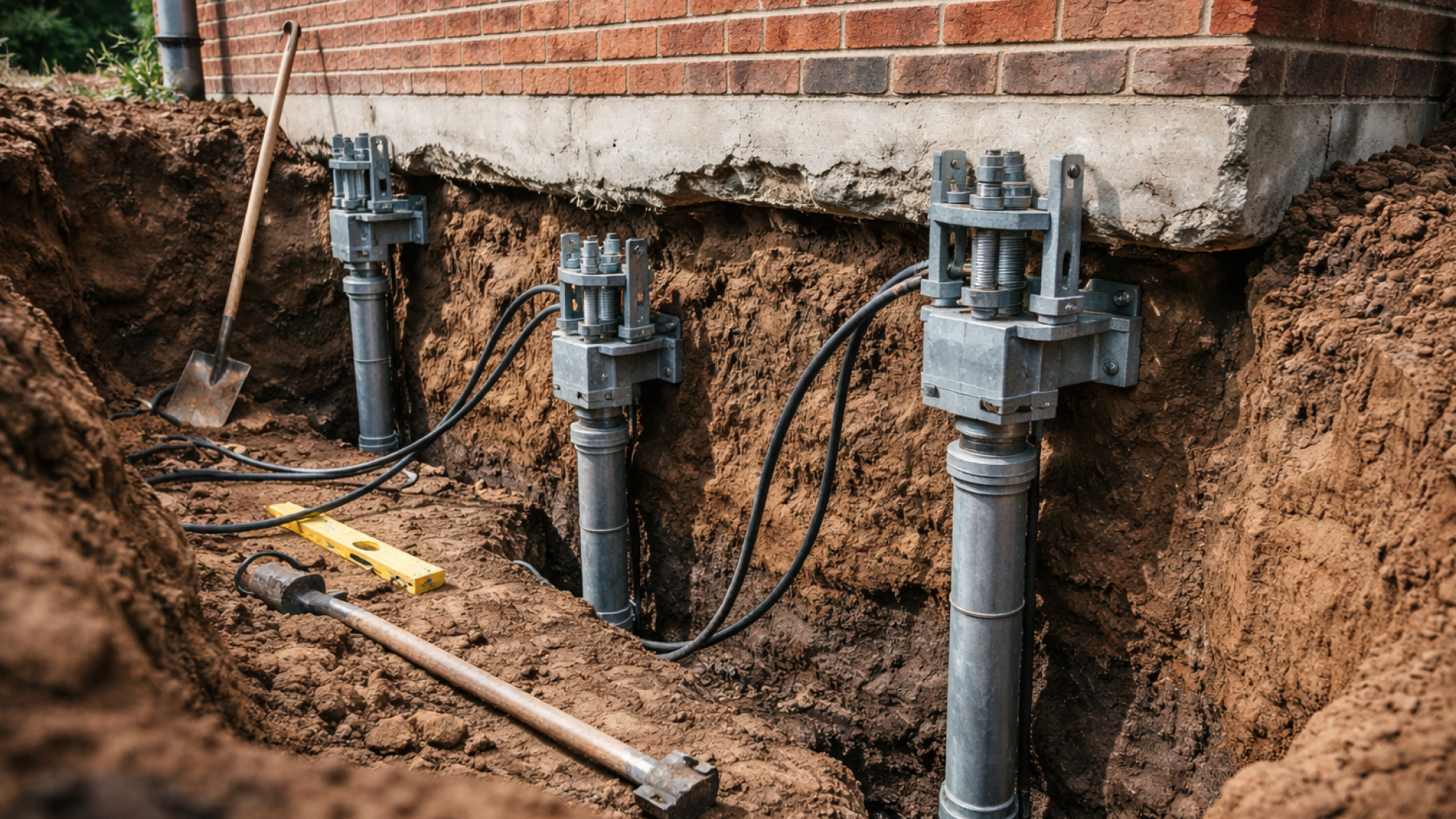
Foundation piering is not simply about installing a deep element. It is about controlling how structural loads move through soil under real operating conditions, accounting for variability, uncertainty, and long-term behavior.
Most pier systems rely on one or both of the following load-transfer mechanisms:
End bearing: Load is transferred directly to a dense soil layer or bedrock at the pier tip. This approach is effective where a competent bearing stratum is well defined and settlement tolerances are tight.
Skin friction: Load is resisted along the pier shaft through friction and adhesion between the pier and surrounding soil. This mechanism is common in deeper installations or layered soil profiles where no single bearing layer governs performance.
Combined behavior: In many field conditions, piers are designed to share load between end bearing and shaft resistance, improving redundancy and tolerance to subsurface variability.
For example, on a site with uncontrolled fill over native soils, a pier may rely on friction through upper layers while engaging deeper strata to limit long-term settlement.
Effective piering design is guided by geotechnical data, load requirements, and verification during installation. Systems that allow engineers to observe soil resistance during installation reduce reliance on conservative assumptions, improving confidence that the installed foundation will behave as intended rather than merely meeting theoretical design capacity.
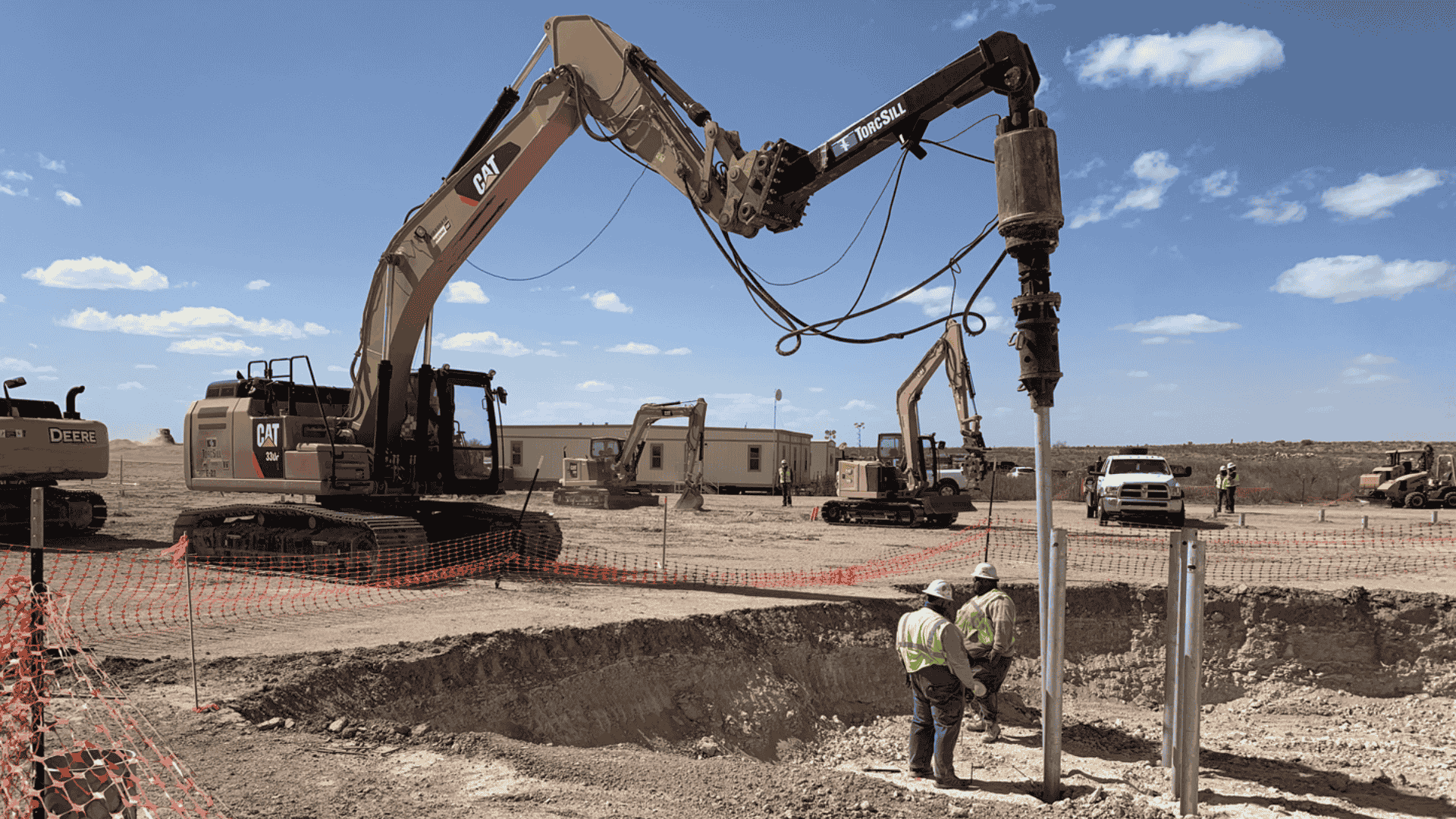
This is where installation method becomes critical. Helical piles are frequently used as a piering solution because rotational installation allows soil resistance to be measured in real time through torque, providing direct insight into embedment and load capacity as the pier is installed.
By developing capacity through both shaft interaction and bearing at the helical plates, helical piering offers a controlled, low-disturbance way to transfer loads to competent soils under variable site conditions.
For projects where soil uncertainty, access constraints, or schedule risk drive foundation decisions, TorcSill engineers help evaluate whether helical piering provides a more predictable alternative to traditional pier systems.
Installation Method and Capacity Verification
Installation method has a direct influence on pier performance, particularly in variable or uncertain soil conditions. Different piering systems interact with the ground in fundamentally different ways, which affects both load development and the reliability of capacity verification.
Driven and drilled pier systems typically rely on indirect indicators of performance. Driven piles use blow counts or penetration resistance as proxies for capacity, while drilled piers depend on excavation observations, concrete quality, and post-installation testing to confirm performance. These approaches can introduce uncertainty, especially where soil conditions vary laterally or groundwater affects construction.
Helical piles differ in that capacity is developed and measured during installation. As the pier is advanced by rotation, installation torque reflects soil resistance encountered by the shaft and helical bearing plates. This torque can be correlated to axial capacity using established engineering relationships, allowing embedment depth and performance to be verified in real time.
Because rotational installation disturbs surrounding soils minimally, measured resistance more closely represents in-situ conditions. Engineers can adjust depth, helix configuration, or installation parameters immediately if target capacity is not achieved, rather than discovering deficiencies after construction is complete.
This ability to verify capacity during installation reduces reliance on conservative assumptions, minimizes the need for post-install load testing, and accelerates construction sequencing, particularly on fast-track projects where foundation readiness governs downstream work.
For project teams evaluating piering options, TorcSill engineers help interpret installation data and determine whether helical pile systems provide the level of verification and schedule certainty required for site-specific conditions.
Types of Foundation Piering Systems Used in 2026
Foundation piering is not a one-size-fits-all solution. The appropriate system depends on soil conditions, load demands, access limitations, environmental sensitivity, and construction sequencing. Understanding how each pier type behaves in the field is essential to selecting a system that performs reliably under real site conditions.
Drilled Concrete Piers (Caissons)
Drilled piers are constructed by excavating a shaft, placing reinforcement, and pouring concrete in place. Load resistance is achieved through end bearing, skin friction, or a combination of both.
They are commonly used where large diameters are required or where rock bearing is shallow and well defined. However, drilled piers introduce several construction challenges:
Excavation spoils must be managed and removed
Groundwater control may be required during drilling
Concrete placement and curing introduce schedule risk
Load capacity cannot be fully verified until after installation
In variable soils or environmentally sensitive areas, these factors can increase cost, risk, and uncertainty.
Driven Piles
Driven piles are installed by impact or vibratory hammers and can be made of steel, precast concrete, or timber. Capacity is developed through shaft friction, end bearing, or both.
Driven systems perform well in uniform soils and can achieve high load capacities, but installation generates vibration and noise. This limits their suitability near operating facilities, buried utilities, marine structures, or sites with strict vibration limits.
Micropiles
Micropiles are small-diameter drilled and grouted piles reinforced with steel. They are often used for retrofits, underpinning, or restricted-access locations.
While micropiles can perform well under high loads, they require specialized equipment, grout quality control, and curing time. These factors can complicate sequencing and extend construction schedules, particularly on fast-track projects.
Push Piers and Resistance Piers
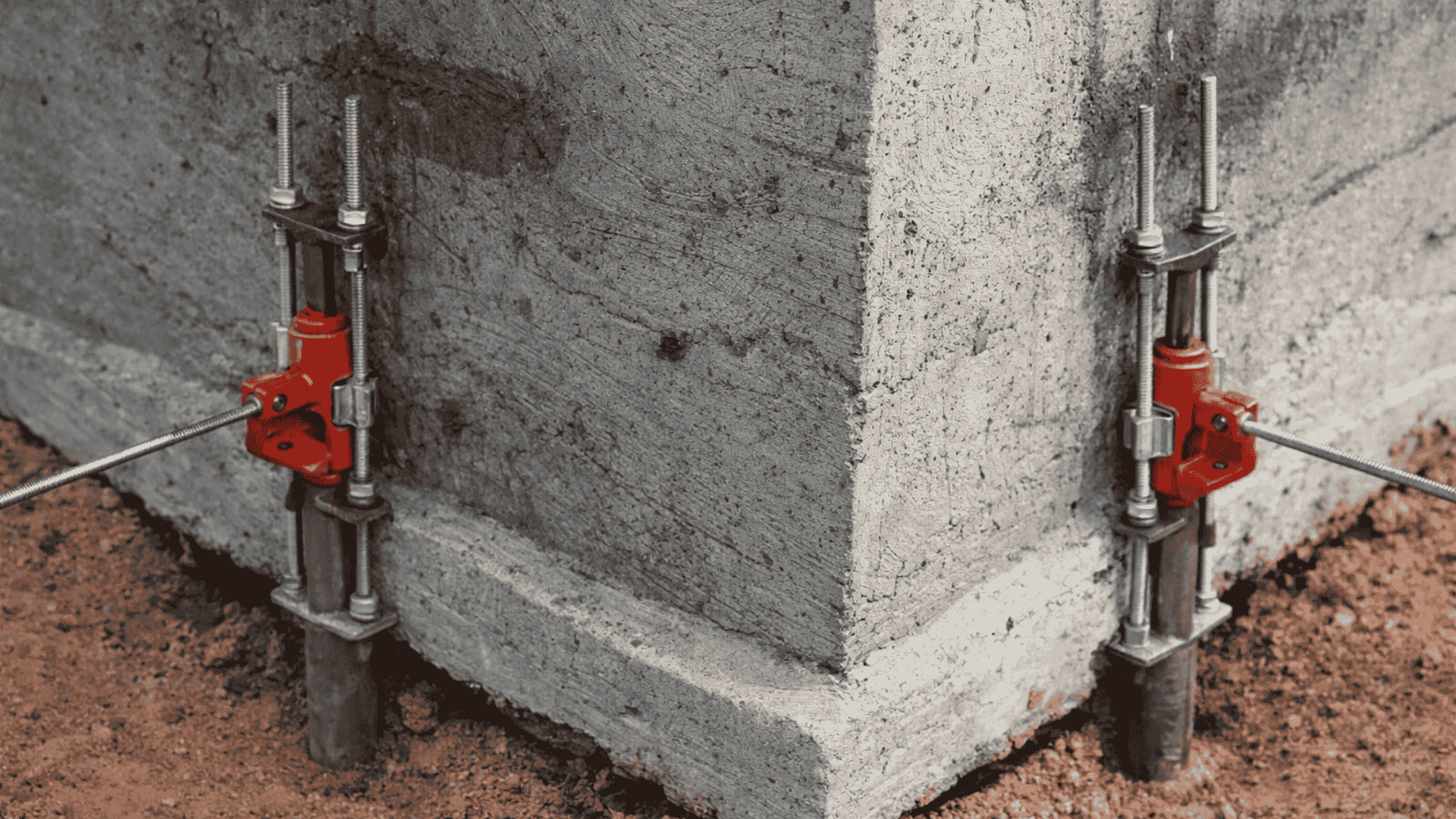
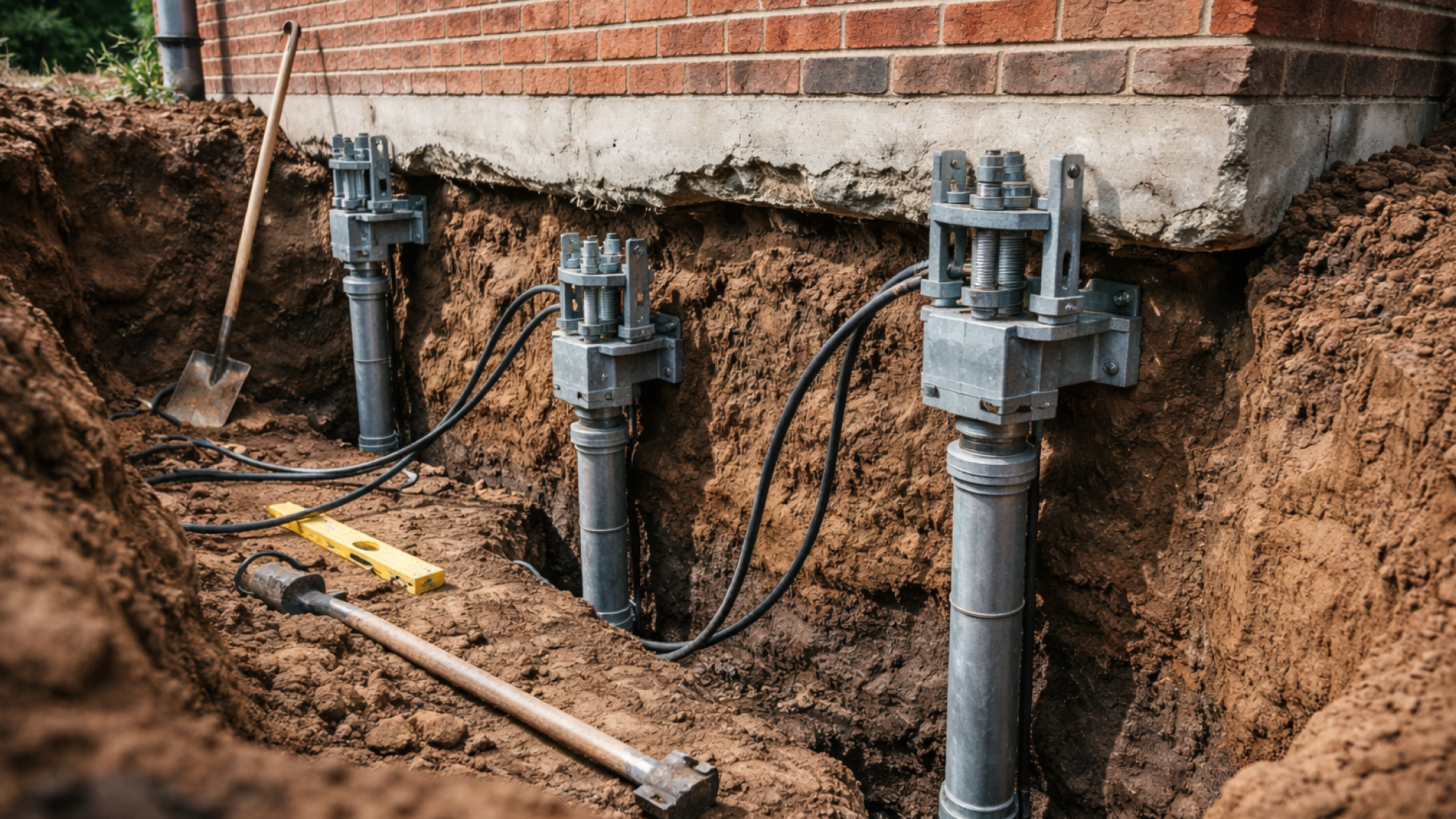
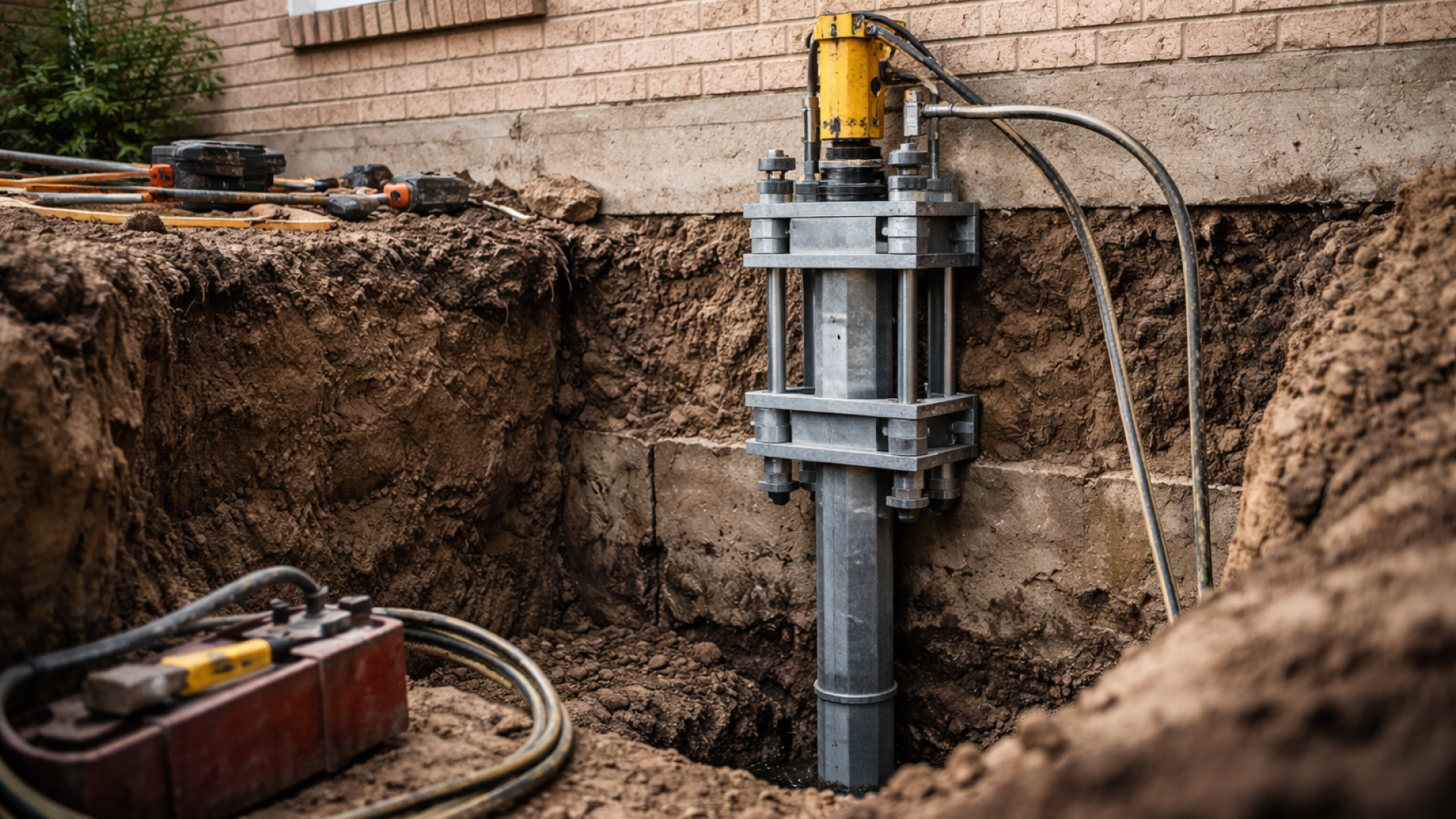
Push piers are hydraulically installed using the weight of an existing structure as reaction force. They are primarily used for foundation remediation rather than new construction.
Their application is limited to situations where sufficient reaction load is available and is less common for large-scale industrial, energy, or infrastructure projects.
Helical Piers (Screw Piles)
Helical piers consist of steel shafts with one or more helical bearing plates that are rotated into the ground. Load resistance is developed through a combination of bearing at the helices and friction along the shaft.
Unlike drilled or driven systems, helical pier capacity can be correlated directly to installation torque, allowing embedment depth and performance to be verified during installation. Rotational installation minimizes soil disturbance, eliminates excavation spoils, and provides immediate load capacity with no curing delays.
Key advantages include:
Installation-time capacity verification
Minimal vibration and soil disturbance
Precise depth control in variable soils
Immediate readiness for structural loading
For projects with restricted access, environmental sensitivity, variable subsurface conditions, or tight schedules, helical piering is increasingly selected as the preferred piering solution rather than a specialty alternative.
Choosing the right piering system starts with understanding your soil, loads, and construction constraints. Talk to a TorcSill engineer to evaluate site conditions and determine the most practical foundation approach.
When Foundation Piering Is Used for Structures
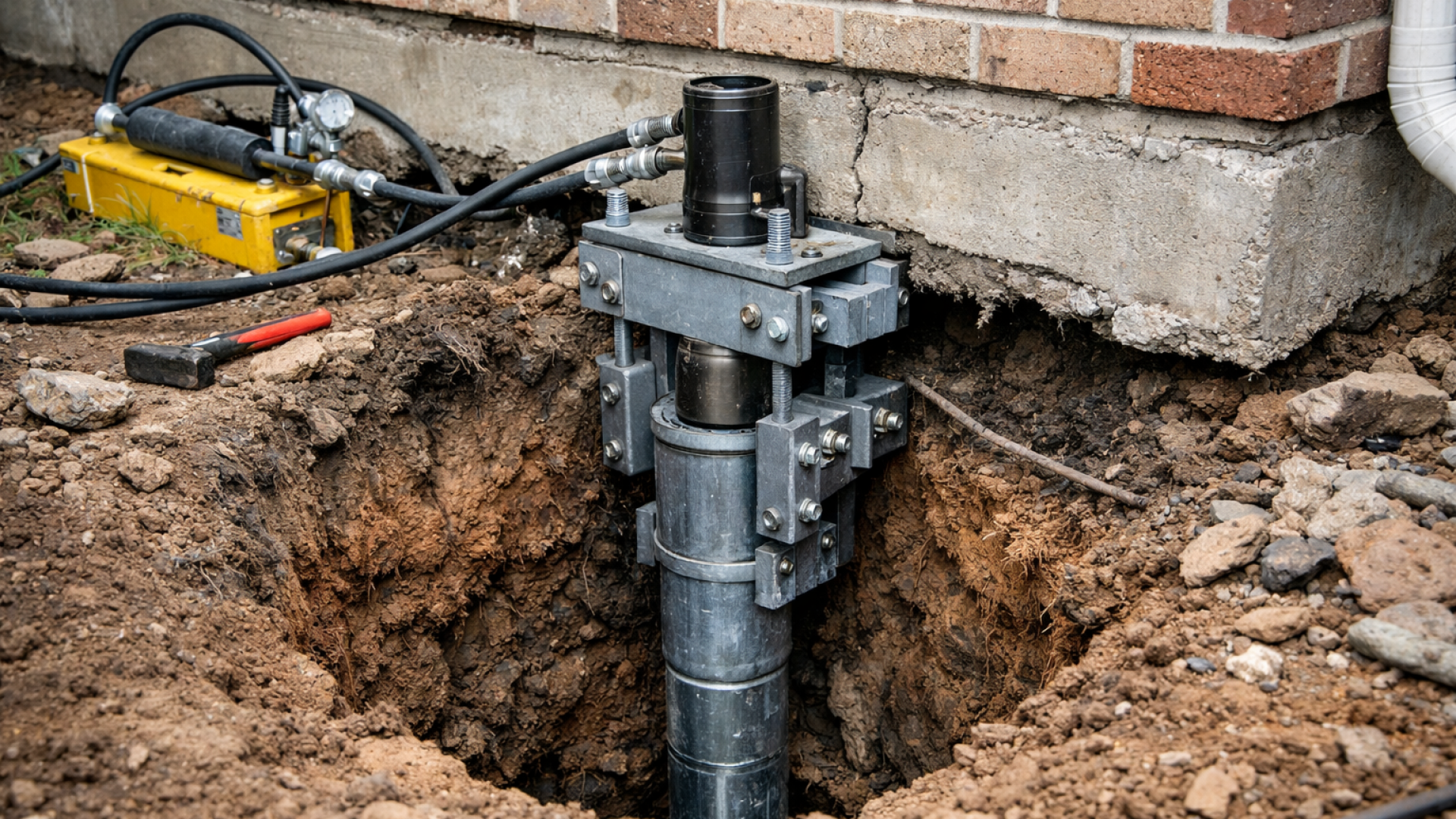
Foundation piering is typically specified when surface conditions make shallow foundations unreliable, inefficient, or risky over the life of the structure. This is less about “poor soil” in general and more about how soil behaves under load over time.
Piering is commonly used when:
Surface soils lack bearing capacity: Soft clays, loose sands, or fill may appear stable initially but compress or shift under sustained loads. Piering bypasses these layers and transfers load to competent soils at depth.
Differential settlement must be controlled: Uneven settlement between supports can cause cracking, misalignment, or equipment damage. Piering standardizes load transfer and limits relative movement.
Projects require fast installation and immediate loading: Energy and infrastructure projects often cannot absorb delays associated with concrete curing or staged loading.
Sites restrict excavation or vibration: Operating facilities, pipeline corridors, and marine environments may limit open excavation, noise, or ground disturbance.
Environmental impact must be minimized: Reducing excavation, spoil handling, and groundwater disruption is critical near waterways, wetlands, or reclaimed land.
Many of these conditions favor mechanically installed systems, such as helical piering, that limit soil disturbance and support immediate loading while maintaining predictable performance.
Typical applications include:
Solar racking, wind components, and battery storage systems
Industrial equipment foundations and pipe racks
Transmission structures and electrical infrastructure
Marine crossings, shoreline stabilization, and riparian repairs
Temporary or relocatable foundations where removal is required
For example, a solar project built on agricultural land may use piering to avoid large concrete pads, preserve soil conditions, and allow future site restoration.
Engineering Considerations in Foundation Piering
Selecting the appropriate piering system is a design and construction decision, not simply a product choice. Engineers evaluate how the foundation will behave during installation, initial loading, and long-term service to ensure performance aligns with project requirements.
Key considerations include:
Soil stratigraphy and groundwater conditions: Soil layers, density, moisture content, and seasonal variability influence settlement behavior and installation feasibility. Groundwater affects excavation stability and long-term performance, often making low-disturbance piering systems more attractive.
Axial, uplift, and lateral load requirements: Foundations must resist more than vertical loads. Wind, water, thermal movement, and seismic forces introduce uplift and lateral demands that must be controlled without excessive movement.
Installation access and equipment constraints: Tight sites, remote locations, or marine environments limit available equipment and staging areas, influencing which piering systems can be installed safely and efficiently.
Schedule and sequencing requirements: Foundations that support immediate loading help maintain construction flow and reduce idle time for follow-on trades.
Long-term serviceability and removability: Some projects require foundations to be modified, removed, or reused. Steel piering systems, including helical piles, are often selected where future adaptability matters.
Interpreting these factors requires coordination between geotechnical data, structural demands, and installation capability, an evaluation typically led by foundation engineers. Early, engineering-led assessment helps ensure piering systems are both technically sound and practical to construct under real site constraints.
Foundation Piering vs. Traditional Concrete Foundations
Traditional concrete foundations rely on mass and surface bearing to achieve stability. While effective in many conditions, they introduce construction and performance tradeoffs that piering systems are designed to address.
Differentiator | Foundation Piering | Traditional Concrete Foundations |
Installation speed | Ready to support load immediately after installation; no curing delays | Requires excavation, formwork, concrete placement, and curing time before loading |
Site disturbance | Minimal excavation, no spoil piles, low environmental impact | Large excavations, soil displacement, and site restoration required |
Material usage & emissions | Steel elements use less material and lower embodied carbon | Large concrete volumes increase material use and CO₂ emissions |
Performance verification | Capacity can often be confirmed during installation | Load capacity verification typically occurs after construction |
Adaptability & removal | Piers can be modified, relocated, or removed | Concrete foundations are permanent and difficult to alter |
These advantages are especially meaningful in industrial, marine, and energy environments where downtime, remediation, or rework can quickly outweigh initial construction savings.
Among piering systems, helical piles amplify these advantages by combining steel efficiency with installation-time verification, allowing engineers to reduce uncertainty while maintaining predictable performance under real site conditions.
Why Helical Piering Is Increasingly Specified
This shift is most evident on energy, industrial, and marine projects where schedule certainty and access constraints leave little tolerance for rework. In these environments, foundation systems must perform as intended the first time, under real site conditions.
Helical piering is being specified more frequently because it reduces uncertainty in both design and construction. Traditional deep foundation systems often rely on conservative assumptions to account for soil variability, curing time, and post-installation verification. Helical systems address these challenges by allowing capacity to be developed and observed during installation.
From a constructability standpoint, rotational installation minimizes soil disturbance and eliminates excavation, which is critical on congested sites, operating facilities, and environmentally sensitive areas. Immediate load capacity removes curing delays and simplifies sequencing, especially on fast-track energy and infrastructure projects.
Helical piering also performs well under mixed loading conditions. The combination of shaft friction and bearing at the helical plates provides reliable resistance to compression, uplift, and lateral forces. For engineers balancing schedule, access, and long-term performance, these characteristics make helical piering a practical, repeatable foundation solution rather than a specialty option.
How TorcSill Supports Foundation Piering Decisions in 2026
Foundation piering decisions are increasingly shaped by variable subsurface conditions, tight schedules, and the need to verify performance early rather than correcting issues after installation. On sites with mixed soils, constrained access, or critical infrastructure, selecting the wrong piering system can introduce unnecessary excavation, overbuilt foundations, or long-term settlement risk.
On energy and industrial projects with mixed soils and tight schedules, TorcSill has supported designs where helical piering reduced excavation scope, simplified construction sequencing, and delivered verified capacity under real installation conditions. In these cases, early engineering involvement helped align foundation behavior with constructability before work began in the field.
TorcSill supports project teams by evaluating when traditional shallow or deep foundations are appropriate and when engineered helical piering offers a more controlled alternative. Rather than promoting a single method, TorcSill assesses how structural loads, soil behavior, access constraints, and sequencing interact at the foundation level.
Key ways TorcSill adds value include:
Foundation system suitability: Reviewing geotechnical data, groundwater conditions, and load demands to determine whether drilled piers, driven systems, or helical piering best meet performance requirements.
Load path and settlement control: Designing piering systems that deliver verified capacity at depth with predictable settlement, often avoiding conservative overdesign.
Constructability in constrained environments: Minimizing soil disturbance, vibration, and excavation where site conditions limit conventional installation methods.
Sequencing and schedule efficiency: Leveraging immediate-load systems to eliminate curing delays and reduce reliance on temporary works.
Clear separation of temporary and permanent systems: Distinguishing excavation support from permanent load-carrying foundations to reduce unnecessary complexity.
This approach positions TorcSill as a foundation engineering partner, not simply a pier installer. By integrating engineering, manufacturing, and installation insight early in design, TorcSill helps project teams select piering solutions that are easier to build, simpler to verify, and aligned with long-term structural performance.
Conclusion
Modern projects require foundation systems that deliver predictable performance, verified load capacity, and constructability, often under tight schedules and challenging site conditions. Variable soils, constrained access, and the need to control settlement make selecting the right foundation method critical.
TorcSill supports these needs by providing engineering-led guidance on foundation piering, helping teams evaluate soil behavior, structural loads, and site constraints early in the design process. Performance-based analysis ensures that pier systems meet technical requirements while remaining practical to construct.
For projects where reliability, schedule, and long-term performance cannot be compromised, engineered piering solutions offer a controlled, proven approach.
Consult a TorcSill engineer to identify the foundation strategy best suited to your site and structural demands.
Frequently Asked Questions (FAQs)
1. Can foundation piering be used on sites with limited access?
Yes. Unlike large drilled concrete piers, helical piles can be installed in areas with restricted access, minimal staging room, or proximity to existing structures. TorcSill’s engineers design and install systems that minimize soil disturbance and equipment footprint, making piering practical for congested industrial sites, marine crossings, and renewable energy farms.
2. How do foundation piers handle changes in soil moisture?
Piering transfers loads to competent soils below compressible surface layers, reducing settlement risk caused by seasonal moisture changes. Helical piles, in particular, anchor into deeper strata and maintain predictable performance, even in areas prone to wetting, drying, or minor soil shifts.
3. Are foundation piers reusable or relocatable?
Certain piering systems, including helical piles,can be removed and reinstalled if project requirements change. TorcSill’s engineered solutions make temporary or modular foundations feasible, offering flexibility for evolving energy sites, plug-and-abandon locations, or relocatable industrial equipment.
4. How is lateral stability addressed in piering systems?
Piers resist lateral loads through a combination of shaft friction and, in some systems, bearing elements. Helical piles provide additional lateral resistance because the helices act like anchors embedded in stable soil layers. This makes them well-suited for sites exposed to wind, wave, or current forces, as well as seismic activity.
5. Can piering reduce overall project carbon footprint?
Yes. By avoiding large concrete pours, extensive excavation, and soil removal, piering minimizes both material usage and emissions. TorcSill’s helical pier systems, in particular, achieve immediate load capacity with steel elements, reducing embodied carbon while maintaining long-term structural performance.