Choosing between helical piles vs driven piles is a critical foundation decision that affects constructability, schedule, and long-term performance. Both systems are used to transfer structural loads to competent soil at depth, but they behave very differently during installation and in variable ground conditions.
Driven piles rely on impact energy and soil displacement, which can introduce vibration, noise, and uncertainty in sensitive or constrained sites. Helical piles, by contrast, are installed through controlled torque, allowing load capacity to be developed and verified as installation progresses. This makes them particularly well suited for projects where soil variability, access limitations, or performance verification are key concerns.
This guide compares helical piles and driven piles across installation method, soil interaction, capacity control, and practical site considerations to help determine which foundation system is right for your project.
Key Takeaways
As sites become more constrained, the ability to manage uncertainty during installation is a primary differentiator between systems.
How a pile is installed affects vibration, access requirements, and construction sequencing—often more than final load capacity.
Foundations that can adjust depth and configuration during installation reduce reliance on conservative assumptions.
Systems that confirm performance as they are installed support better decision-making and reduce post-installation surprises.
Aligning engineering, manufacturing, and installation improves continuity from design intent to field execution.
Driven Piles: How They Work and Where They’re Used
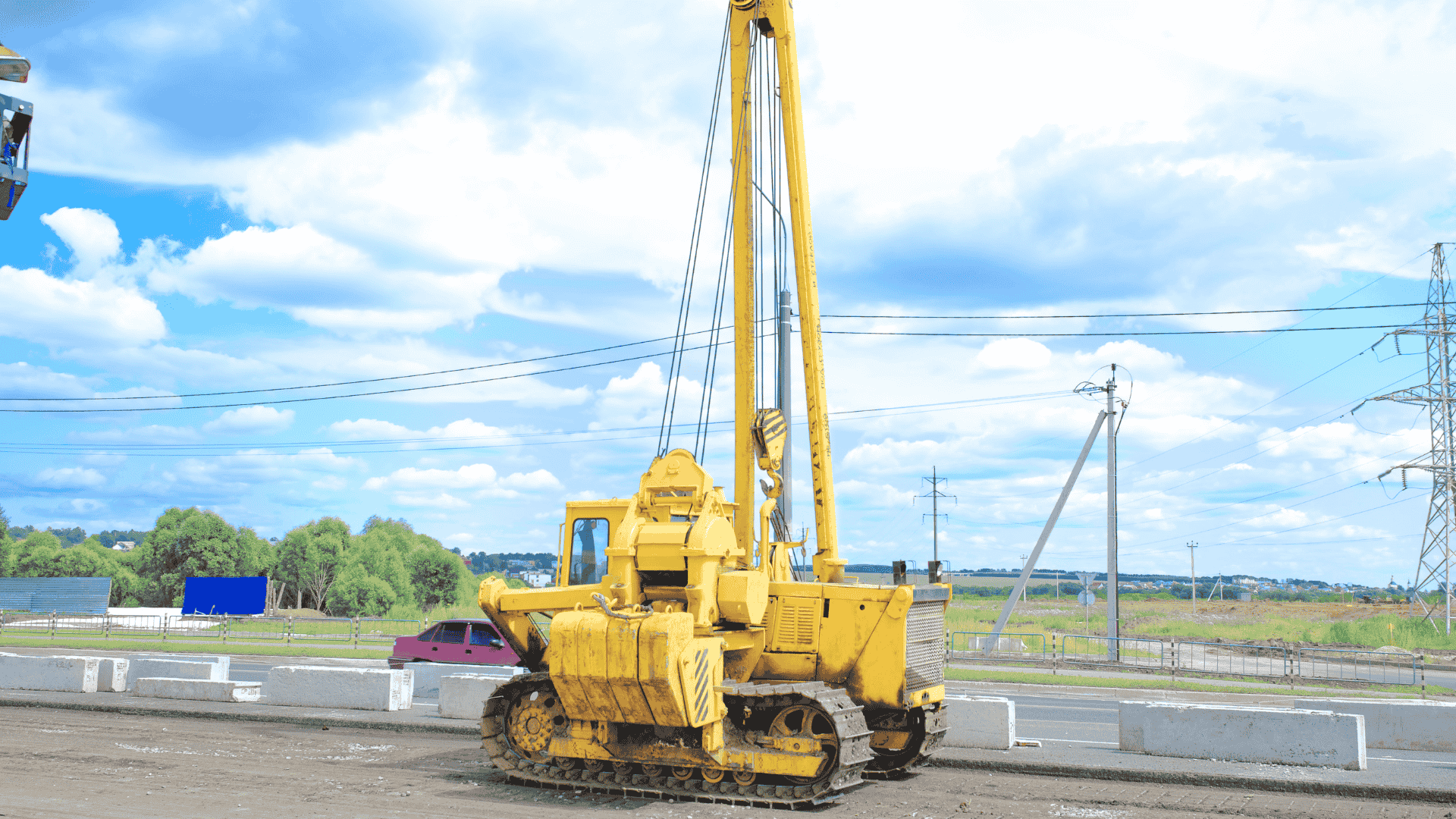
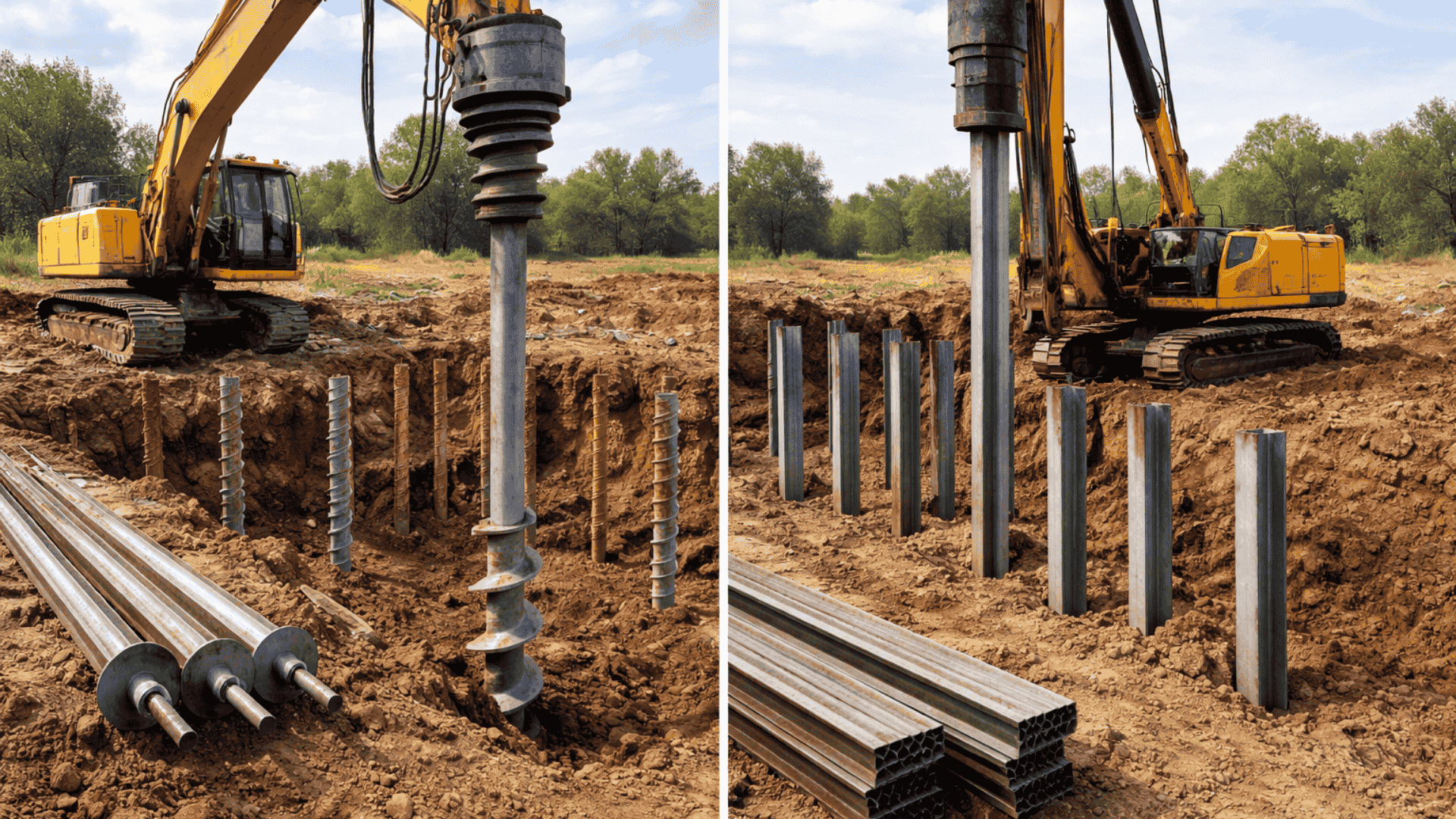
Driven piles are deep foundation elements installed by applying impact or vibratory energy to force the pile into the ground. Common pile materials include steel, precast concrete, and timber. Load transfer is achieved through a combination of end bearing at the pile tip and friction along the pile shaft as surrounding soils are displaced and densified.
During installation, driven piles alter the in-situ soil conditions. In granular soils, driving can increase density and stiffness, while in cohesive soils it may cause remolding and excess pore pressure. Capacity is typically inferred from driving resistance, blow counts, or post-installation testing rather than directly measured during installation.
Key features of driven piles include:
Impact or vibratory installation: Piles are driven using hammers or vibratory equipment, relying on repeated energy input rather than rotational torque.
Soil displacement behavior: Installation displaces surrounding soils, which can improve bearing in some conditions but may also affect adjacent structures.
Capacity estimated indirectly: Load capacity is commonly evaluated using driving criteria, dynamic testing, or static load testing after installation.
Equipment and access requirements: Installation requires heavy equipment, adequate headroom, and stable working platforms.
Sensitivity to vibration and noise constraints: Driven piles may be unsuitable for urban, marine, or operational sites where vibration, noise, or ground movement must be limited.
Driven piles remain a proven foundation solution for large-scale projects with uniform soil conditions and minimal site restrictions. They are commonly used on projects where site conditions allow for heavy equipment access and where vibration and noise are not major constraints.
They are frequently applied in large infrastructure works such as bridges, ports, marine structures, industrial plants, and waterfront developments, where uniform soil profiles and high load demands make impact-driven installation practical.
However, their reliance on impact energy and indirect capacity verification can introduce challenges on constrained or variable sites, setting up important contrasts with helical pile systems.
Helical Piles: How They Work for Foundation Construction
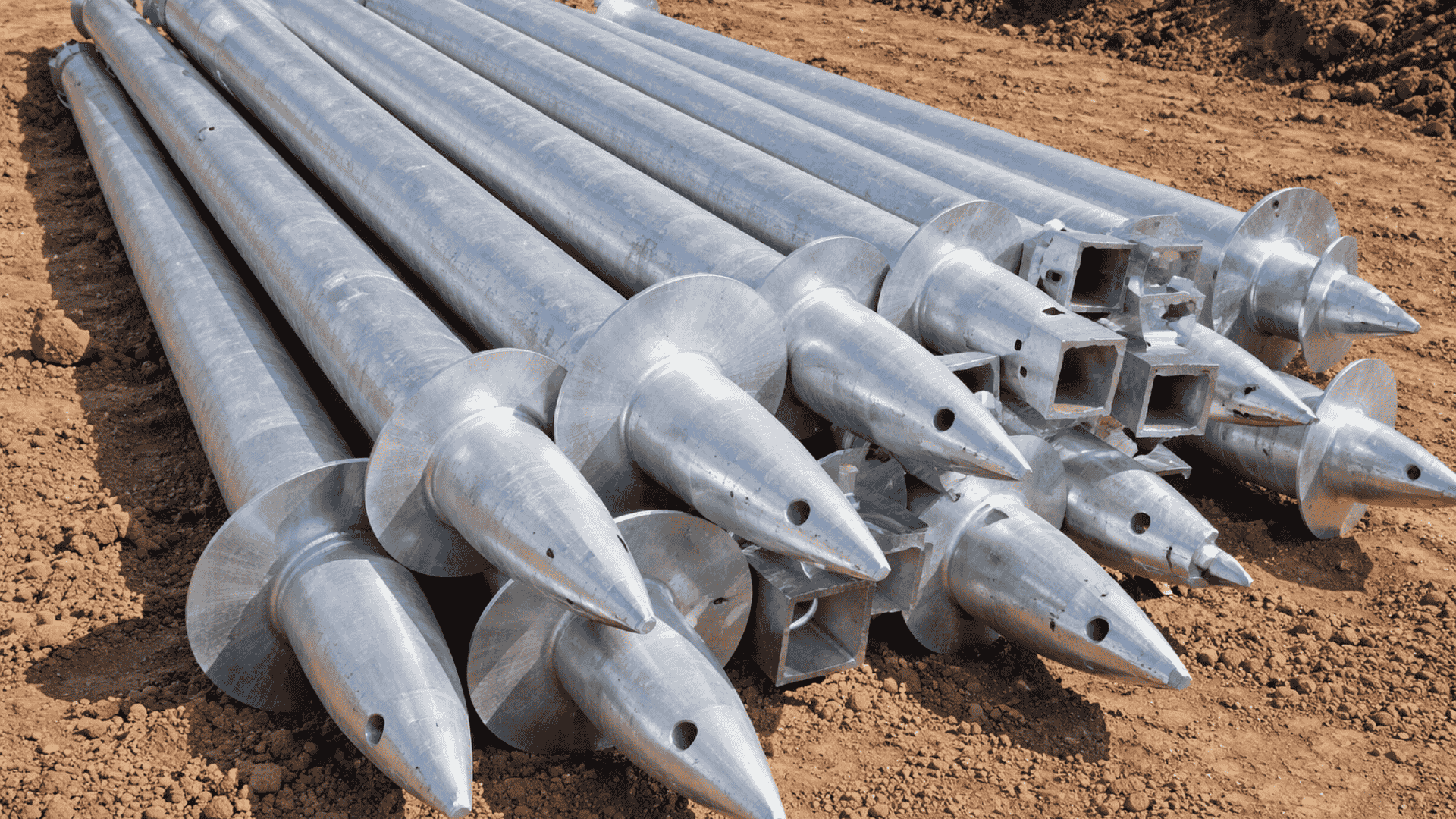
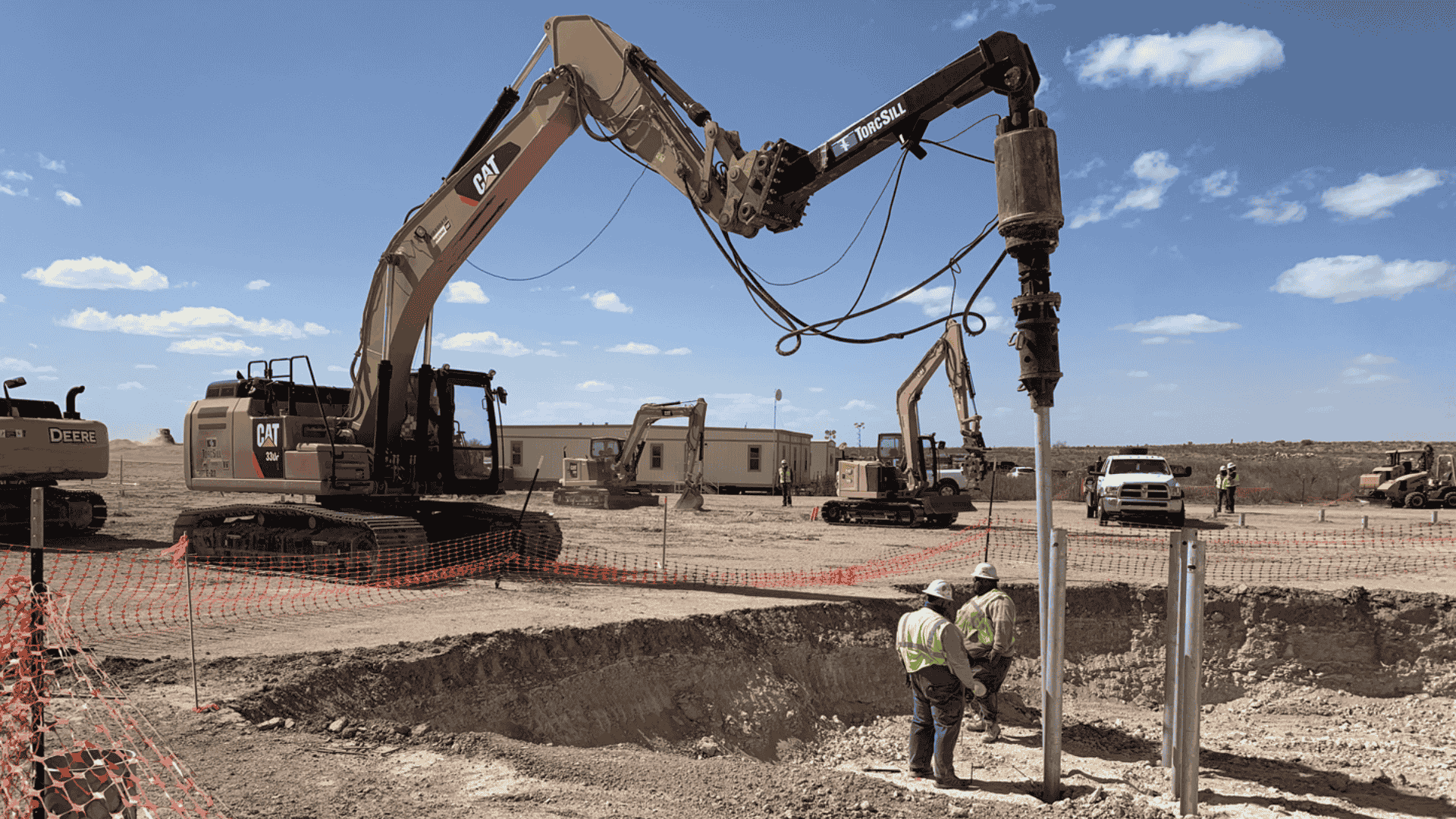
Helical piles are deep foundation elements installed by rotating steel shafts with one or more helical plates into the ground. Instead of relying on impact energy, load capacity is developed through controlled torque as the helices advance into competent bearing strata. This installation method allows soil resistance to be measured continuously, providing immediate feedback on pile performance.
A defining advantage of helical piles is their adaptability to variable subsurface conditions. Because piles can be advanced, extended, or reconfigured during installation, they are well suited for sites with inconsistent soils, restricted access, or strict vibration and noise limits. Capacity is verified during installation using torque correlations, reducing reliance on post-installation testing.
Key features of helical piles include:
Torque-based installation: Controlled rotational installation minimizes vibration and ground disturbance.
Direct capacity verification: Installation torque provides real-time confirmation of load capacity.
Adaptability in variable soils: Pile depth and configuration can be adjusted as actual conditions are encountered.
Reduced site impact: Suitable for urban, marine, retrofit, and operational sites with access or sensitivity constraints.
Immediate load capacity: Helical piles can often be loaded immediately after installation.
Helical piles are widely used in commercial, industrial, energy, and marine applications where construction control, predictability, and minimal site disruption are critical.
Their ability to combine installation efficiency with verified performance makes them a strong alternative to driven piles in many modern foundation projects.
Consult a TorcSill engineer to assess whether helical piles are the right foundation solution for your site conditions, loads, and construction constraints.
Driven Piles vs Helical Piles: Which Is Better for You?
Choosing between driven piles and helical piles is less about absolute capacity and more about how risk, verification, and constructability are managed on a given site. As project environments become more constrained and subsurface conditions less predictable, the foundation system must support informed decision-making during construction, not just meet design loads on paper.
Driven piles are typically suited to projects where site conditions are consistent and construction impacts are acceptable. Helical piles, on the other hand, support a more controlled and responsive foundation approach, allowing performance to be confirmed and adjusted as ground conditions are encountered.
At a higher level, the distinction comes down to predictability and control. Where minimizing uncertainty, accommodating variability, and maintaining installation oversight are priorities, helical piles offer a foundation system better aligned with modern construction demands.
Key differences between driven piles and helical piles:
Criteria | Driven Piles | Helical Piles |
Installation method | Impact or vibratory driving | Rotational installation using torque |
Noise and vibration | High noise and vibration levels | Minimal noise and vibration |
Soil disturbance | Displaces and alters surrounding soil | Minimal soil displacement |
Capacity verification | Indirect (blow counts, testing after installation) | Direct, real-time via installation torque |
Adaptability to variable soils | Limited; changes may require redesign | High; depth and configuration adjusted during installation |
Access and headroom needs | Requires large equipment and clear access | Suitable for restricted access and low headroom |
Immediate load application | Often requires curing or testing period | Can typically be loaded immediately |
Risk in sensitive environments | Higher risk near structures or utilities | Lower risk in urban, marine, and retrofit sites |
Construction predictability | Dependent on soil uniformity | High predictability with torque feedback |
Consult a TorcSill engineer to determine whether driven piles or helical piles are the best fit for your site, loads, and construction constraints.
Factors to Consider When Choosing Between Driven Piles vs Helical Piles
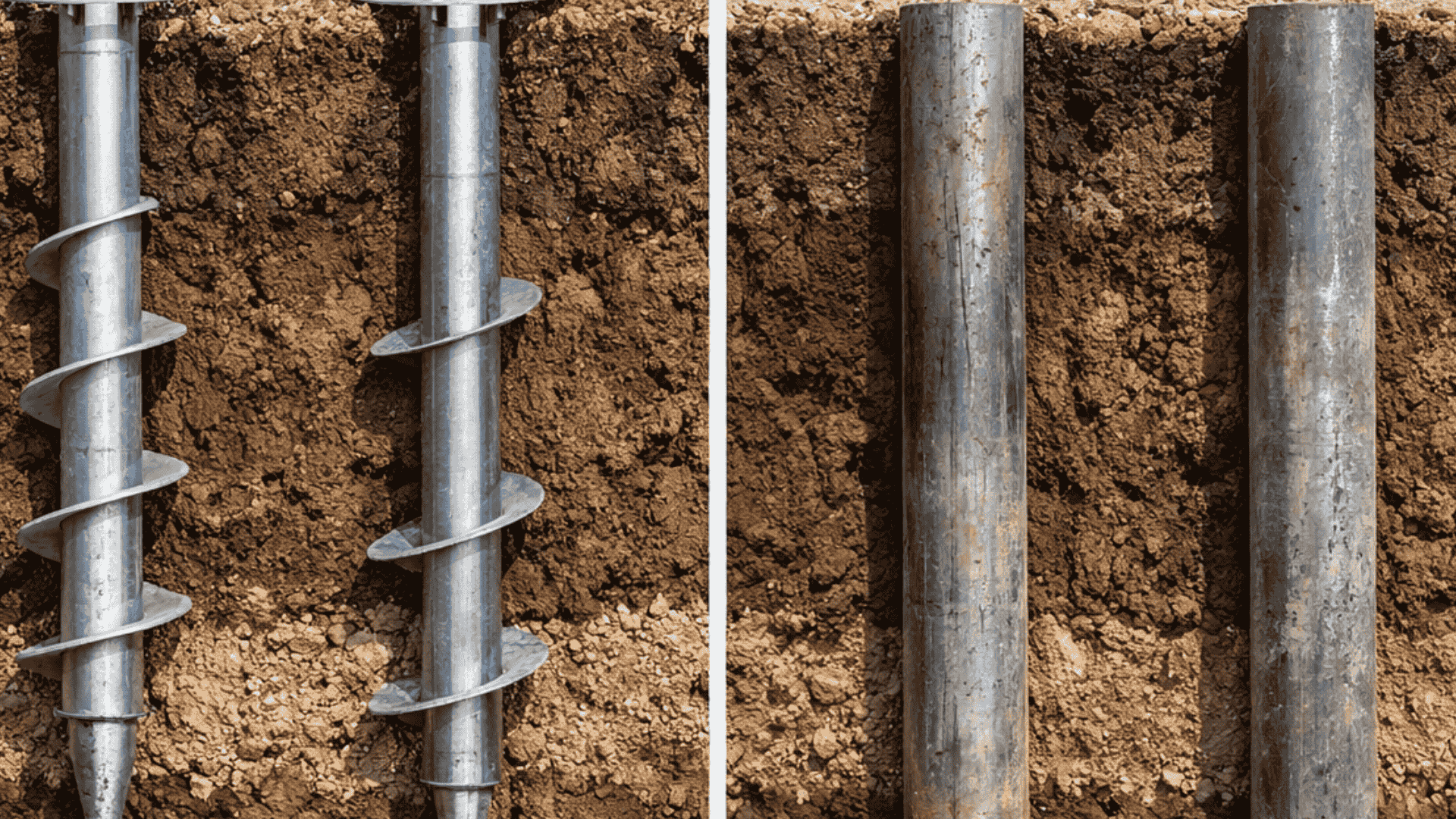
Selecting the right deep foundation system requires more than comparing load capacity. Site conditions, construction constraints, and performance verification all play a role in determining whether driven piles or helical piles are the better option.
Here are some things to keep in mind when choosing between the two:
Site Access and Construction Constraints
Driven piles require large equipment, overhead clearance, and stable working platforms. Helical piles can be installed with smaller rigs, making them better suited for restricted access, low headroom, or operational sites.
Noise, Vibration, and Environmental Impact
Impact driving generates noise and vibration that may affect nearby structures, utilities, or ongoing operations. Helical piles are installed with minimal vibration, reducing risk in urban, marine, and sensitive environments.
Soil Variability and Subsurface Uncertainty
Driven piles perform best in uniform soil profiles. Helical piles are more adaptable in variable ground conditions, as pile depth and configuration can be adjusted during installation based on actual soil resistance.
Installation Control and Capacity Verification
Driven pile capacity is often inferred after installation using indirect methods. Helical piles provide real-time capacity verification through installation torque, improving confidence in foundation performance.
Schedule and Load Application
Driven piles may require additional time for testing or setup. Helical piles can typically be loaded immediately after installation, supporting faster construction sequencing.
Risk Management and Predictability
Where subsurface conditions are uncertain or access is limited, helical piles offer greater predictability by combining installation and verification into a single, controlled process.
For open sites with uniform soils and minimal constraints, driven piles remain a viable option. However, when projects demand adaptability, reduced site impact, and verified performance, helical piles are often the more practical and reliable foundation choice.
How TorcSill Helps You Execute the Right Foundation System
Selecting between driven piles and helical piles requires more than a technical comparison, it demands continuity from engineering intent through field execution.
TorcSill supports this decision-making process with an integrated delivery approach that prioritizes constructability, verification, and risk control.
1. Engineering & Design for Tailored Foundation Engineering: TorcSill’s engineering team evaluates site conditions, loading requirements, and project constraints to determine whether helical piles or alternative deep foundation systems are best suited for the application. Designs are developed to reflect actual subsurface behavior and installation realities, supporting predictable performance rather than theoretical capacity.
2. Manufacturing for Quality Helical Piles & Components: Where helical piles are selected, TorcSill manufactures project-specific pile components aligned with engineered requirements. This ensures consistency between design assumptions and field performance, particularly where installation control and verification are critical differentiators.
3. Construction Services for Site Execution & Installation: TorcSill’s construction teams execute foundation installation with a focus on control and verification. Installation data is used to confirm performance in real time, allowing informed adjustments where site conditions differ from expectations and reducing downstream risk.
4. Drilling Services for Site Preparation & Soil Access: For sites with access constraints, obstructions, or challenging surface conditions, TorcSill’s drilling services support foundation execution without compromising performance. Drilling is coordinated with design and installation strategy to maintain continuity across the project lifecycle.
By integrating engineering, manufacturing, drilling, and installation, TorcSill helps project teams move beyond theoretical comparisons and deliver foundation systems that perform reliably under real site conditions, particularly where control, adaptability, and verification matter most.
Conclusion
Choosing between driven piles and helical piles has a direct impact on constructability, risk management, and foundation verification. While both systems can deliver deep foundation capacity, their suitability depends on site constraints, subsurface variability, and the level of installation control required.
Projects with uniform soils and minimal restrictions may accommodate driven piles, but as conditions become more constrained or unpredictable, the ability to verify and adapt performance during installation becomes increasingly important.
A brief consultation with a TorcSill engineer can help assess site conditions and determine which foundation system best supports reliable performance and execution.
Frequently Asked Questions (FAQs)
How early should the foundation system be decided in a project lifecycle?
Foundation selection should begin during early site evaluation, before layouts and construction sequencing are finalized. Early alignment helps avoid downstream redesign, access conflicts, and schedule compression.
How do foundation choices affect construction sequencing?
Foundation type influences equipment mobilization, work area planning, and follow-on trades. Systems that allow faster verification and immediate load transfer can simplify sequencing on tight schedules.
Can foundation selection impact adjacent structures or operations?
Yes. Some installation methods introduce ground movement or vibration that may affect nearby assets. Selecting a foundation system aligned with site sensitivity helps reduce unintended impacts.
How does subsurface uncertainty influence foundation risk?
When soil conditions are inconsistent or poorly defined, foundation systems that allow in-field adjustment and confirmation reduce reliance on conservative assumptions and improve outcome certainty.
What role does contractor capability play in foundation performance?
Execution quality matters as much as design. Integrated engineering, manufacturing, and installation support help ensure the selected foundation system performs as intended under real site conditions.