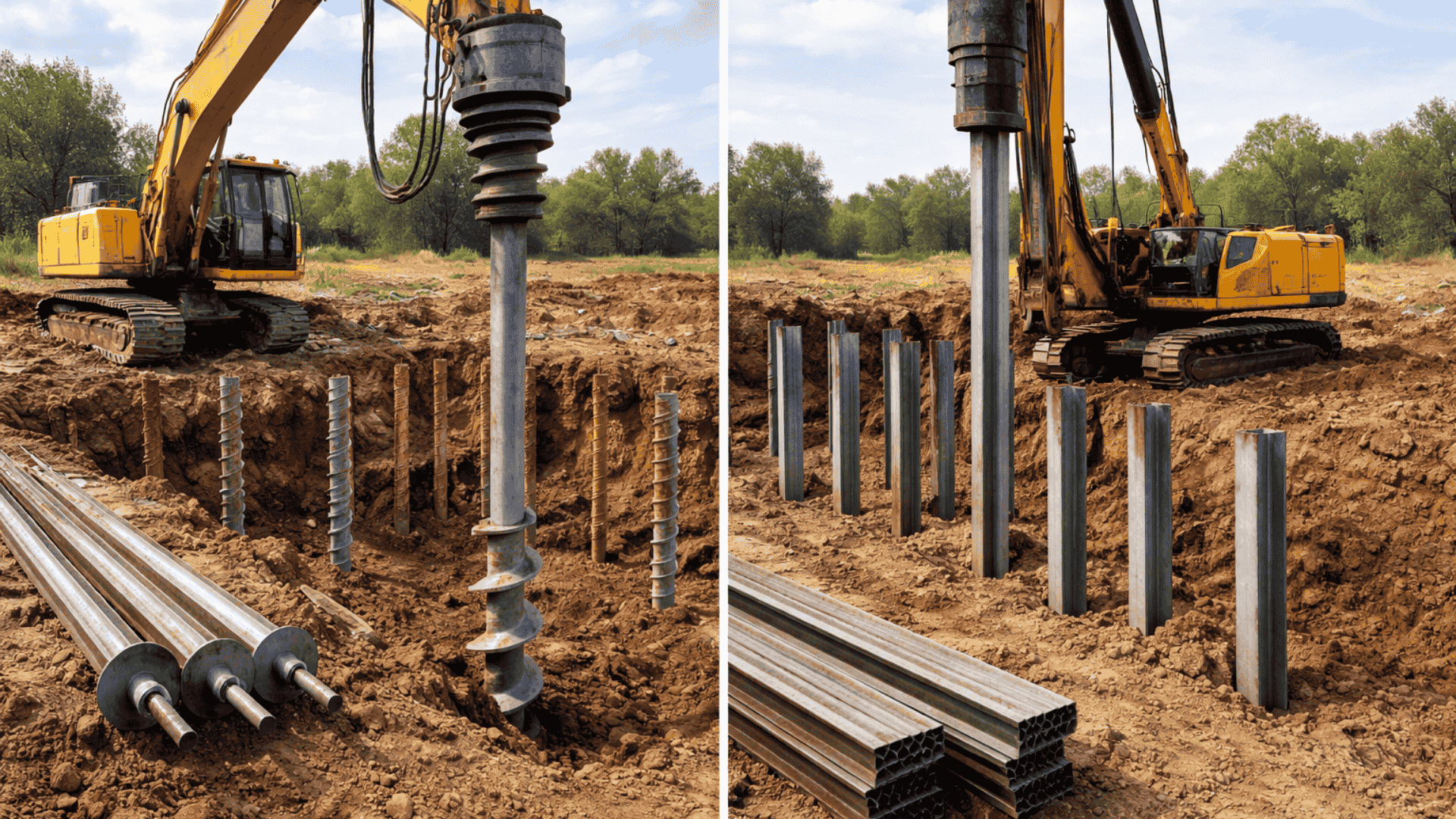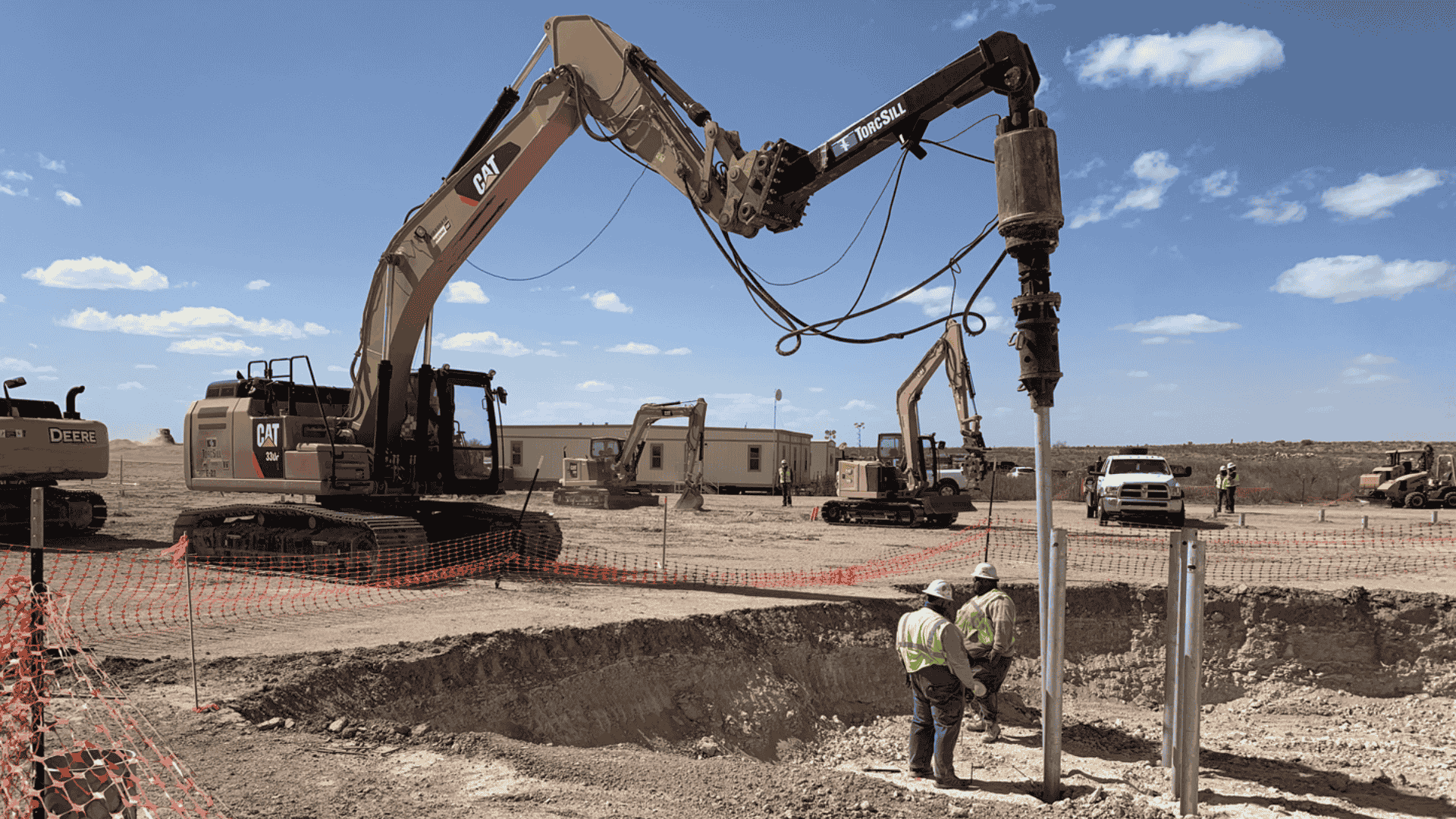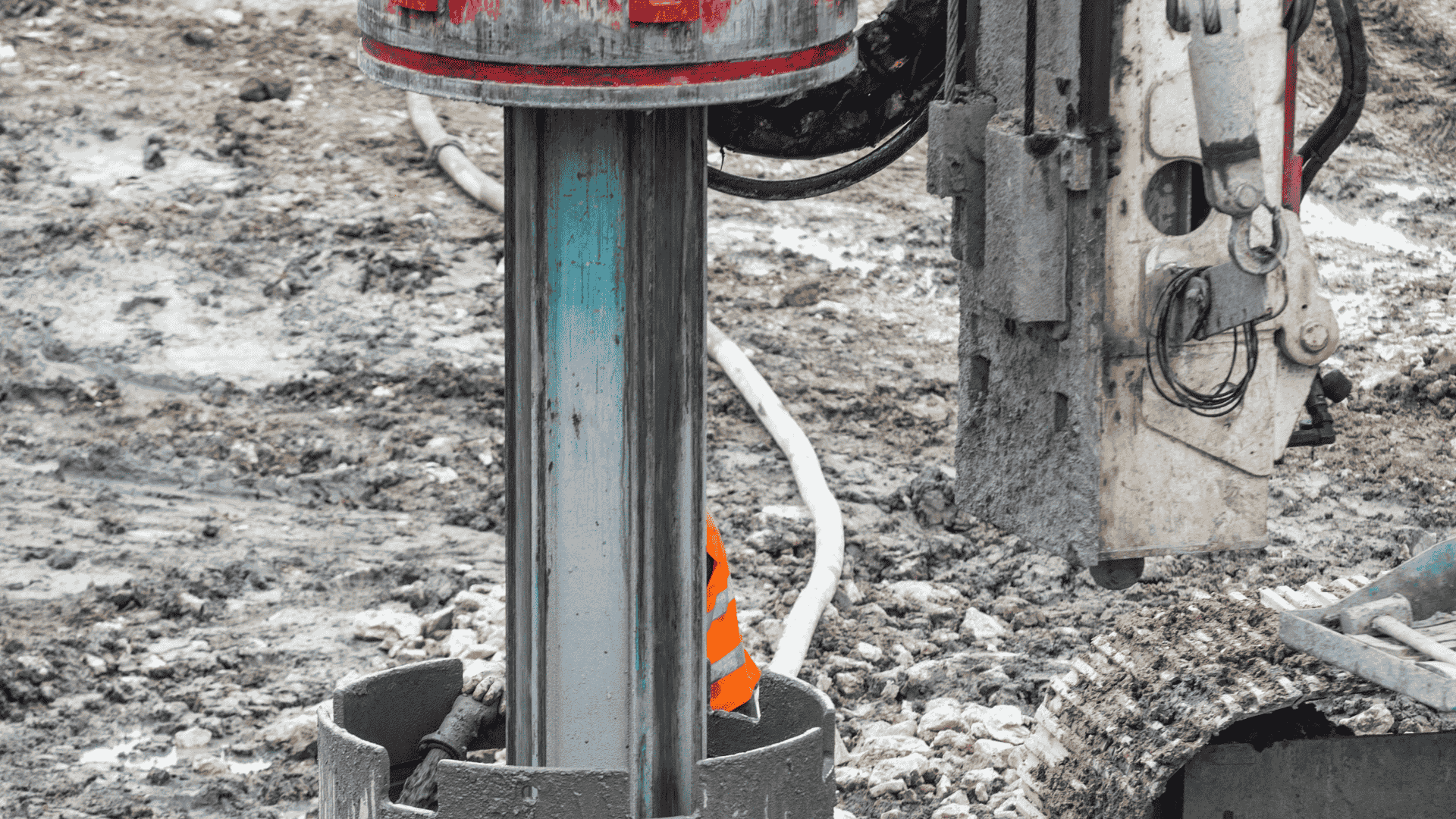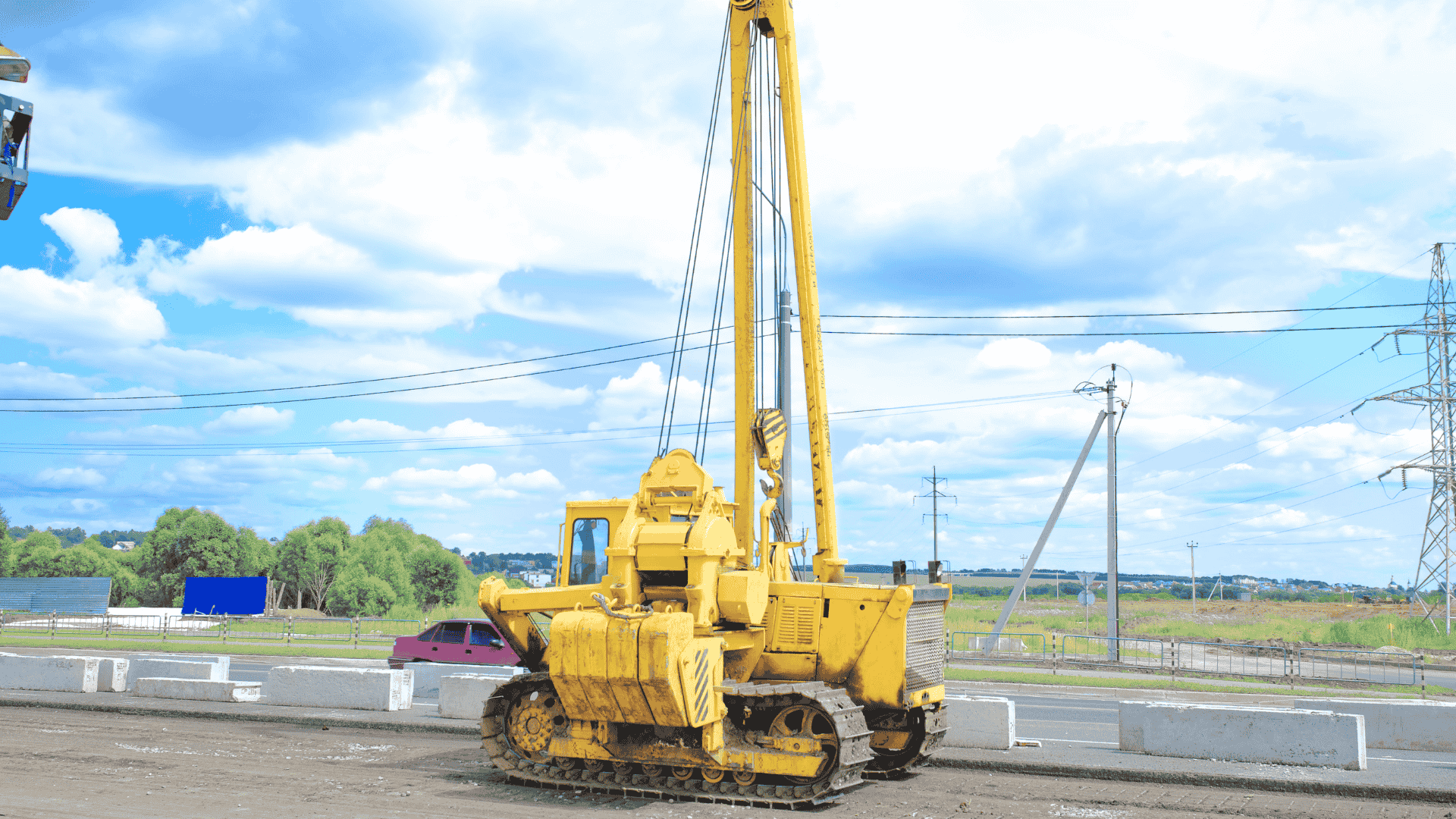
Pile-supported foundations remain essential where surface soils cannot support structural loads. Traditionally, this has been addressed using driven piles installed with impact, vibratory, or press-in pile drivers, methods that continue to perform well in open sites and high-load applications.
In 2026, many projects face new constraints that complicate conventional pile driving: vibration limits, restricted access, operating facilities, and compressed construction schedules. Under these conditions, controlled alternatives like helical piles, installed by rotation, allow engineers to meet structural requirements while minimizing vibration, spoil, and schedule delays.
This guide reviews modern pile driving methods. It contrasts them with helical pile foundations installed by rotation. The focus is on where each approach is technically appropriate and where driven piles introduce risk. The discussion is intended for engineers and decision-makers who evaluate deep foundation systems under real-world constraints.
Key Takeaways
Pile drivers remain essential in 2026 for transferring structural loads into competent soil where shallow foundations fail, especially in infrastructure, marine, and heavy industrial projects.
Modern pile driving methods have evolved to include impact, vibratory, press-in, and rotary systems, allowing engineers to balance load capacity, site constraints, noise, and vibration control.
Driven piles offer speed and predictable performance, using real-time installation data such as blow counts and penetration rates to verify foundation capacity during construction.
Helical piles represent a controlled alternative to traditional pile driving, achieving load capacity through rotational torque with minimal vibration, no spoil, and immediate readiness for loading.
TorcSill specializes exclusively in engineered helical pile foundations, providing verified capacity, reduced site disruption, and faster sequencing for projects where conventional pile driving introduces risk or delay.
Driven Piles as Foundation Installation Method
Driven piles are a displacement-based deep foundation system used when shallow foundations cannot reliably support structural loads. Steel, concrete, or timber piles transfer axial and lateral forces into competent soil or rock without excavation, making them effective in many open or greenfield projects.
In 2026, conventional pile drivers remain suitable for:
Open sites with minimal vibration sensitivity
Marine works and waterfront structures
Heavy infrastructure where equipment access is not restricted
Installation is monitored using resistance, penetration rate, and blow counts, providing real-time indicators of capacity without waiting for curing or managing spoil.
Constraints of driven piles: Despite their effectiveness, driven piles face increasing limitations in modern construction:
Vibration and noise: Impact and vibratory methods can disrupt nearby structures, utilities, or sensitive equipment.
Access and headroom: Large rigs may struggle on constrained or brownfield sites.
Soil variability: Uneven or hard soils increase the risk of pile refusal or damage.
Scheduling risks: Delays may occur when sequencing is tight or concurrent construction activities are ongoing.
Modern alternative: While driven piles perform well in ideal conditions, many projects now require safer, more controlled installation methods. Rotationally installed helical piles offer verified capacity, minimal vibration, immediate load readiness, and adaptability for restricted-access sites, making them a practical choice where conventional pile driving introduces risk.
From Force to Foundation: How Pile Drivers Work
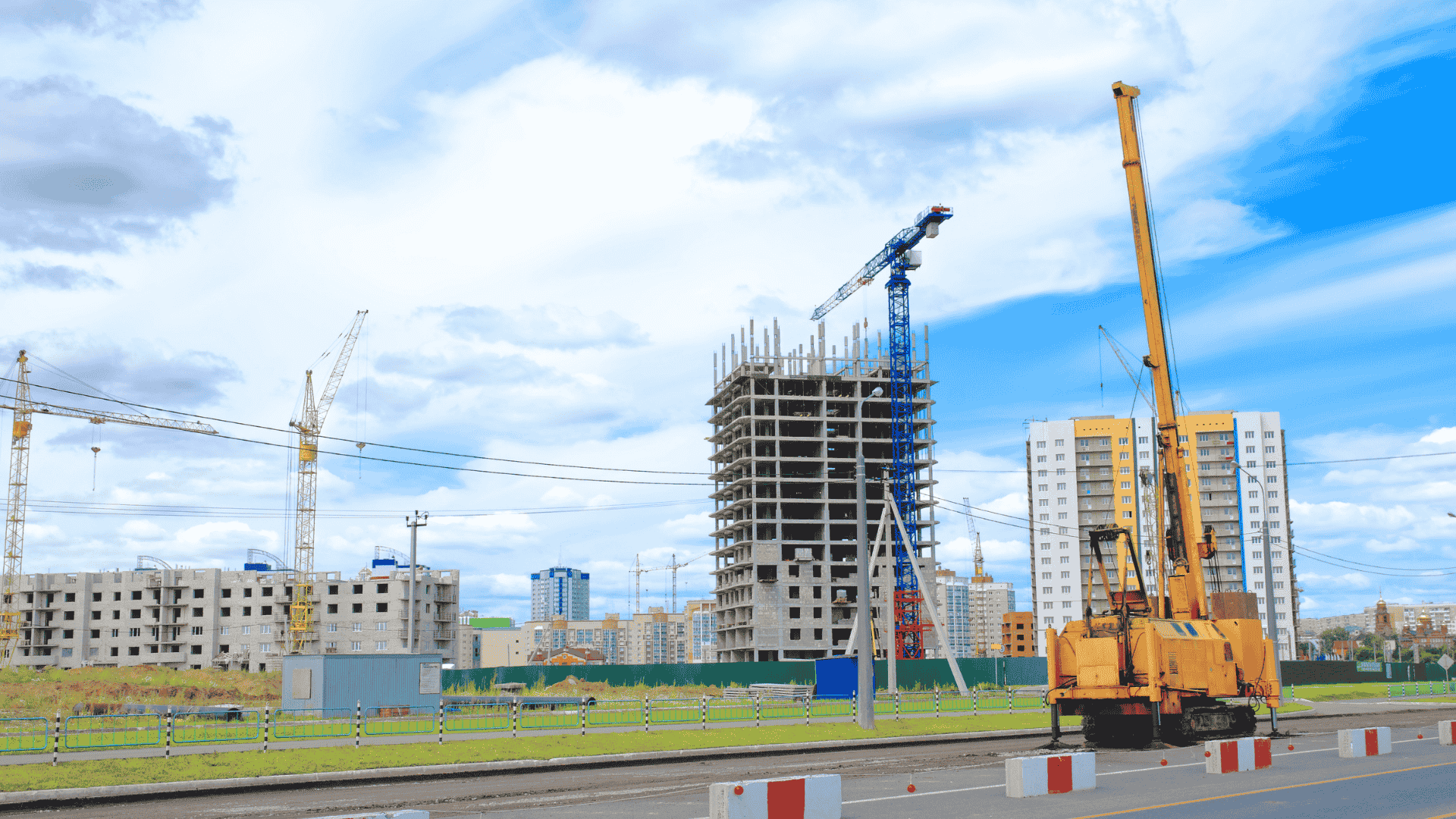
Pile drivers are used when shallow foundations cannot reliably support structural loads. In these cases, driven piles transfer structural loads to deeper, competent soil or rock through displacement-based installation.
Unlike excavation-heavy foundations, pile driving advances piles by applying force directly to the pile, compacting or displacing surrounding soil. This interaction enables load transfer and settlement control but also makes performance sensitive to ground conditions and installation precision.
Key stages of pile driving:
1. Pile positioning and alignment: Piles are lifted and positioned at the exact location and angle defined in the design. Leaders, frames, or guides ensure verticality or batter alignment, preventing structural misalignment or load transfer issues.
2. Energy application: Force is applied via impact hammers, vibratory systems, or static press-in equipment. The choice depends on soil type, pile material, load requirements, and site constraints such as noise or vibration limits.
3. Soil penetration and displacement: The pile advances by compacting or displacing surrounding soil. This soil–pile interaction develops friction and end-bearing capacity essential for structural support.
4. Capacity development and verification: Engineers monitor penetration rate, blow counts, or driving resistance to confirm the pile meets design criteria before construction continues.
In environments where vibration tolerance, access, or sequencing is limited, helical piles provide a controlled alternative, achieving verified capacity through rotational torque rather than soil displacement. Speak with a TorcSill engineer to evaluate installation feasibility for your site.
Types of Pile Driving Methods Used in Modern Construction
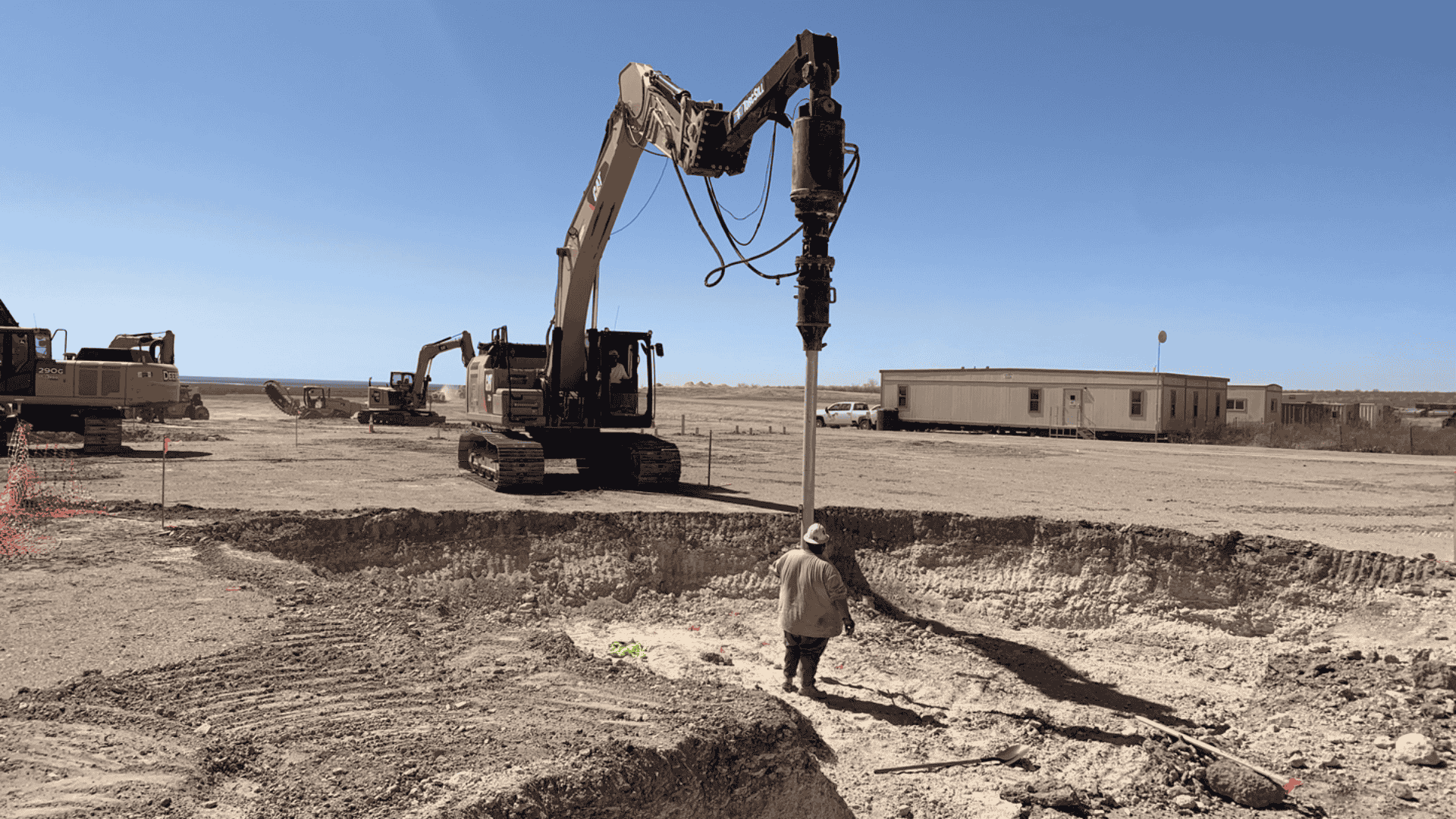
Pile driving is not a single technique but a group of installation methods chosen based on soil conditions, load requirements, environmental limits, and site constraints. In modern projects, selection depends as much on risk, vibration tolerance, and constructability as on load capacity.
The most common pile driving methods include:
Impact Pile Driving
Uses repeated blows from diesel, hydraulic, or drop-weight hammers to drive piles into the ground. Commonly used for bridges, highways, and heavy civil infrastructure where deep penetration and high load capacity are required. Allows engineers to verify pile capacity through blow counts and penetration rates.
Limitation: Generates significant noise and vibration, making it less suitable near sensitive structures or urban areas.
Helical pile alternative: Achieves comparable load capacity with minimal vibration, no spoil generation, and immediate load readiness, making it safer for restricted sites.
Vibratory Pile Driving
Uses vertical vibrations to reduce soil resistance, allowing piles to sink under their own weight or with added downward force. Common in marine works, sheet piles, cofferdams, and temporary structures. Faster and quieter than impact driving.
Limitation: Typically, suitable for moderate axial loads and often requires additional load testing or supplementation.
Helical Pile Alternative: Provides verified load capacity without relying on vibration, ideal for sensitive sites or areas with noise restrictions.
Press-In (Static) Pile Driving
Installs piles using hydraulic static force rather than impact or vibration. Preferred in dense urban areas, retrofit projects, and near sensitive facilities. Offers precise control of alignment and depth with minimal noise.
Limitation: Requires heavy equipment and careful sequencing; may be slower in deep or variable soil conditions.
Helical Pile Alternative: Offers the same precision and low-impact benefits, plus immediate load capacity and flexibility for retrofit or temporary structures.
Hydraulic and Rotary-Installed Piles
Uses controlled torque or rotation, often in mixed or variable ground conditions. Common in energy, utility, and industrial projects where piles resist lateral, uplift, or cyclic forces. Installation data (torque, depth, pressure) can be monitored in real time.
Limitation: Requires specialized rigs and operators; larger footprint than helical piles in tight sites.
Helical Pile Alternative: Installed entirely through rotational torque, providing verified capacity, minimal vibration, and adaptability for restricted or operational sites.
Driven vs. Drilled Foundations
Driven piles displace soil, densifying surrounding ground and reducing spoil, dewatering, and concrete curing needs. Drilled or cast-in-place foundations remove soil, which may be time-consuming and disruptive.
Limitation: Driven piles can introduce vibration, access, and sequencing challenges in urban, retrofit, or operational projects.
Helical Pile Alternative: Rotationally installed helical piles provide a controlled alternative, with real-time capacity verification through torque rather than hammer energy, ensuring predictable performance and minimal site disruption.
Where vibration limits, access constraints, or sequencing risk restrict impact or vibratory driving, engineers often evaluate rotationally installed helical piles as a controlled installation approach, with capacity verified through measured installation torque rather than applied hammer energy.
Applications of Pile Drivers Across Industries in 2026
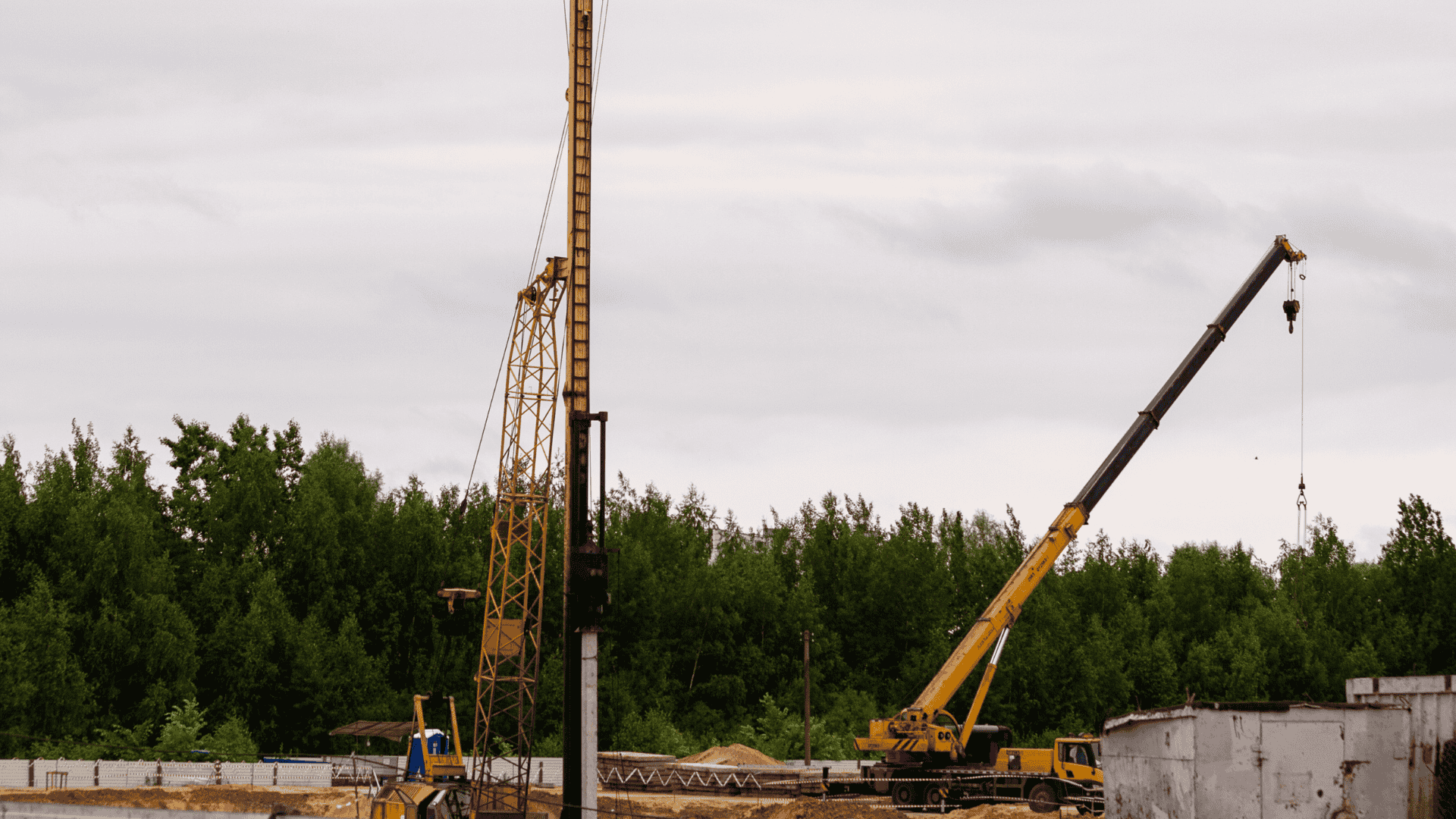
Driven piles continue to be used across infrastructure, industrial, energy, and marine projects where deep foundations are required. In 2026, their continued applicability is primarily shaped by vibration tolerance, of both supported structures and nearby assets, rather than by load capacity alone.
Infrastructure and Transportation
In the infrastructure and transportation sector, bridges, flyovers, and transportation corridors often demand deep foundations capable of supporting high axial loads. Driven piles are effective on open alignments and new corridors. In urban projects, however, vibration from pile installation can affect nearby structures, utilities, and track systems, often limiting installation methods and work windows.
Manufacturing and Industrial Facilities
Manufacturing and industrial facilities rely on deep foundations for heavy equipment, cranes, and dynamic loads. Driven piles perform well during greenfield construction. In operating plants, ground vibration may disrupt sensitive equipment, production processes, and structural tolerances, complicating impact-driven installation without causing downtime.
Energy and Utilities
The energy and utilities sector requires deep foundations for power plants, substations, and transmission structures to resist uplift, lateral, and cyclic loads. While driven piles can meet these demands, installation vibration is often tightly controlled near electrical equipment, transformers, and control systems, influencing method selection and construction sequencing.
Marine and Waterfront Structures
Marine and waterfront structures, such as ports, docks, and related infrastructure, often use driven piles to achieve depth and durability in saturated soils. Even in marine environments, vibration from pile driving can impact adjacent structures, underwater infrastructure, and environmental compliance, sometimes restricting installation timing or driving methods.
Mining and Heavy Industrial Operations
In mining and heavy industrial operations, projects impose extreme load demands on foundations supporting conveyors, processing equipment, and heavy machinery. Where construction is near operating assets, vibration from pile driving can affect equipment alignment, process stability, and worker safety, requiring careful control or alternative methods.
Driven piles remain effective where installation vibration can be tolerated or managed. As projects increasingly occur near sensitive or critical facilities, vibration tolerance is now the primary factor determining whether driven piles are chosen for deep foundation systems.
Many construction leaders across these constrained environments often opt for engineered helical piles that provide a controlled, low-vibration solution. Installed through rotational torque, they deliver verified capacity, immediate load readiness, and minimal site disruption, allowing deep foundations to be safely and efficiently deployed in urban, retrofit, operational, or environmentally sensitive projects where traditional pile driving introduces risk.
From Pile Driving to Helical Piles: Modern Foundation Installation Methods
Traditional pile driving faces growing challenges in 2026: vibration limits, restricted access, tight sequencing, and verification requirements. Urban sites, operating facilities, and modular steel projects demand deep foundations that deliver verified capacity without disrupting surrounding assets or delaying schedules.
Helical piles provide a controlled alternative, using rotational installation instead of impact. Steel shafts with helical plates advance into competent soil, developing load through torque resistance rather than soil displacement.
Case in point: For a petrochemical plant expansion, TorcSill installed 103 helical piles in just six days under congested site conditions, verifying capacity on-site and eliminating vibration risk to adjacent equipment.
Why engineers specify helical piles:
Controlled installation: Precise depth and alignment in tight or sensitive areas.
Immediate load capacity: No curing time delays construction.
Verified performance: Torque measurements confirm capacity in real time.
Minimal site disruption: Low vibration, noise, and no spoil.
Adaptable: Ideal for restricted access, retrofit, and fast-paced projects.
Helical piles expand the conditions under which deep foundations can be installed safely and efficiently, making them the modern alternative when traditional pile driving introduces risk.
Why Projects Choose TorcSill Helical Piles in 2026
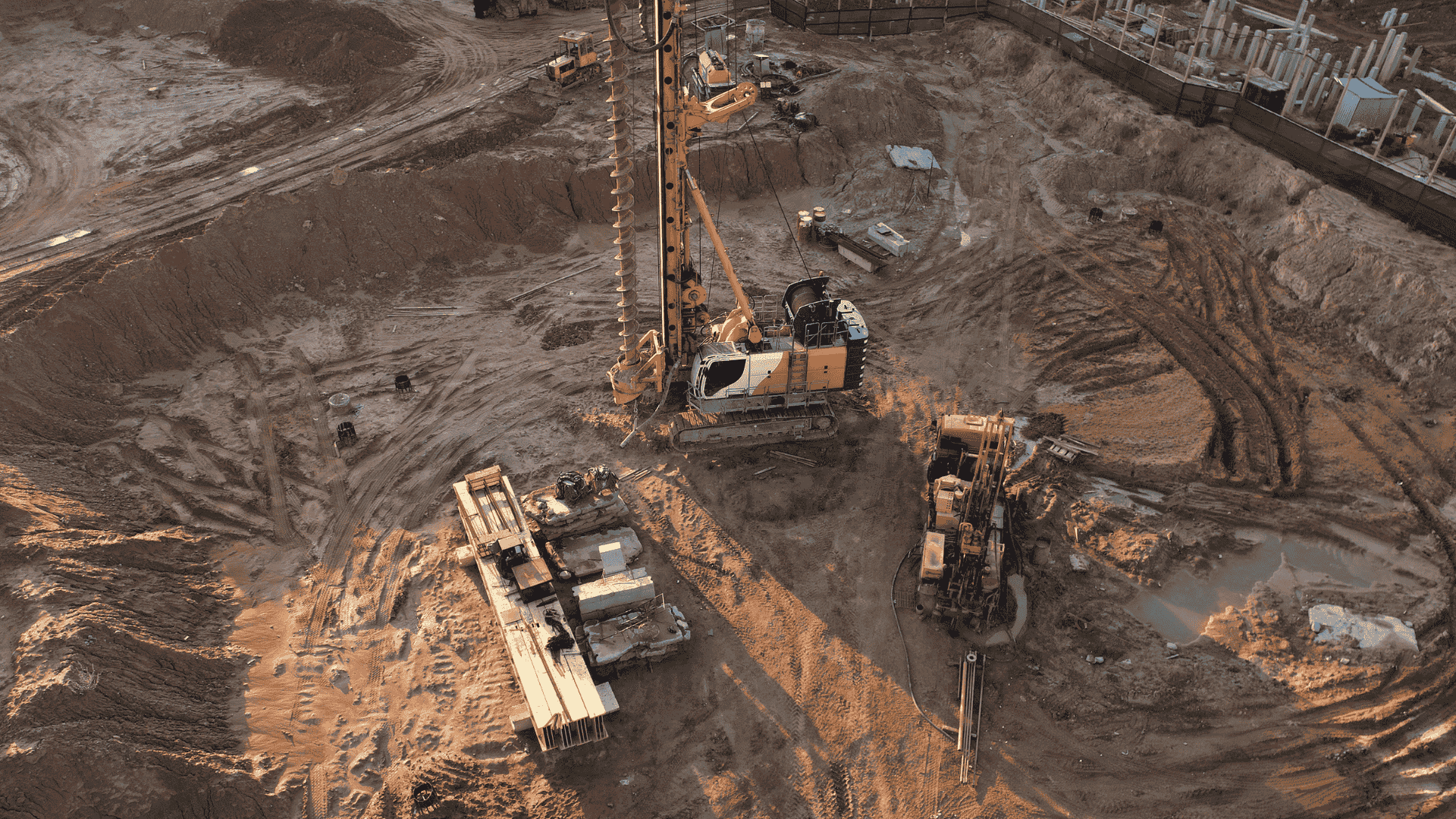
When vibration limits, restricted access, and verification risk constrain traditional pile driving, the choice of foundation system must favor control, predictability, and constructability during installation.
TorcSill helical pile foundations are engineered to meet these demands with features that matter in technically challenging and vibration-sensitive environments:
Controlled, low-vibration installation using rotational torque instead of impact or vibration, protecting adjacent structures and operating assets.
Immediate load capacity after installation, eliminating concrete cure time and accelerating schedule certainty.
Instant verification through installation torque rather than inferred hammer resistance, improving confidence under tight acceptance criteria.
High-capacity performance in demanding soils and deep installations, with capacities up to ~320 kips and depths exceeding ~130 ft where required.
Minimal site disruption and environmental impact, with no spoil generation and a significantly lower carbon footprint compared to concrete foundations.
Versatile engineered solutions for energy, industrial, marine, and power infrastructure, customized to project loading, soil, and site constraints.
Vertically integrated delivery from initial engineering design through ISO-certified manufacturing to installation execution, reducing coordination risk and quality variability.
These capabilities make helical pile systems a practical response to the constraints outlined earlier, especially where vibration tolerance and installation control are decisive factors.
Conclusion
Modern deep foundation projects demand installation methods that deliver verified capacity, minimal site disruption, and predictable performance under tight schedules. Conventional pile driving can introduce vibration, noise, access constraints, and sequencing delays that are increasingly difficult to manage on today’s sites.
TorcSill addresses these challenges through engineered helical pile foundation systems that provide a controlled alternative to traditional pile driving. By integrating in-house engineering, ISO-certified manufacturing, and on-site installation, TorcSill enables immediate load capacity, installation verification, and reduced environmental impact.
Talk to a TorcSill engineer to discuss whether helical pile foundations are the right solution for your next project.
Frequently Asked Questions (FAQs)
1. Does TorcSill use traditional pile drivers?
No. TorcSill does not install driven piles such as precast concrete, timber, or steel H-piles. TorcSill specialises in rotationally installed helical piles, which achieve capacity through torque and embedment rather than impact driving.
2. Can helical piles replace driven piles on most projects?
In many applications, yes. Helical piles are commonly used in place of driven piles where vibration, noise, access, or soil disturbance must be minimised. However, suitability depends on load demands, soil profile, and project constraints, which TorcSill evaluates during engineering.
3. How is load capacity verified without pile driving?
Helical pile capacity is correlated directly to installation torque, which is measured and recorded during installation. This provides real-time verification of axial capacity without dynamic or static load testing in many cases.
4. Are helical piles suitable for dense or hard ground?
Helical piles perform well in a wide range of soils, including dense sands, stiff clays, and mixed profiles. In very hard strata or rock, installation feasibility depends on equipment limits and pile configuration, which TorcSill assesses during design.
5. When is a traditional pile driver still required instead of helical piles?
Traditional pile driving may be required for extremely high loads, very deep foundations, or offshore conditions where driven piles are mandated by design codes or owner requirements. In such cases, TorcSill typically supports projects where helical piles are the most efficient engineered alternative, not a universal replacement.