Seawall erosion is rarely a surface-level problem. When a waterfront structure begins to lean, crack, or lose alignment, the failure almost always originates below grade, where tidal action, wave energy, and groundwater movement progressively undermine supporting soils.
For marinas, ports, and industrial waterfronts, this subsurface erosion can compromise structural stability long before visible damage appears. Repairs that focus only on armor stone, wall faces, or surface reinforcement often treat symptoms rather than restoring the underlying load path.
In 2026, effective seawall erosion repair increasingly depends on foundation stabilization methods such as helical piles, which restore load transfer below eroded soils while minimizing disturbance to active marine environments.
This guide explains how seawall erosion develops, how engineers evaluate subsurface failure mechanisms, and how helical pile foundation systems are used to deliver durable, long-term stabilization in coastal conditions.
Key takeaways
Seawall erosion is fundamentally a subsurface and foundation problem. Most failures begin below or behind the wall due to soil loss, scour, and uncontrolled water movement, often long before visible damage appears.
Helical piles provide a low-disturbance, verifiable solution in eroded coastal soils. By bypassing unstable soils and developing capacity during installation, helical piles deliver predictable performance under lateral, uplift, and cyclic loading.
Modern seawall erosion repair focuses on stabilizing soils and restoring load paths, not surface fixes. Effective repairs reinforce foundation support, manage hydrostatic pressure, and improve lateral resistance.
Repair strategies must be tailored to the specific erosion mechanisms and site constraints. Successful seawall repairs combine targeted techniques based on how and where erosion is occurring.
Engineering-led evaluation reduces long-term risk and unnecessary reconstruction. TorcSill’s approach aligns repair methods with real soil behavior, hydraulic forces, and constructability constraints.
What Is Seawall Erosion? Everything You Need to Know
Seawall erosion is the progressive loss of soil and support behind or beneath a seawall caused by hydraulic forces, groundwater movement, and repeated wave and tidal loading. Unlike surface deterioration, erosion typically develops out of sight, often long before visible cracking, leaning, or displacement appears.
As supporting soils are removed or weakened, the seawall loses the confinement and resistance it was originally designed to rely on. Even when the wall face remains intact, subsurface erosion can significantly reduce stability and load-carrying capacity.
Common erosion mechanisms include:
Internal soil migration: Fine soils wash through joints, cracks, or weep paths as water levels fluctuate.
Backfill loss: Repeated drawdown and recharge cycles pull material away from the wall.
Toe scour: Wave action and currents remove soil at the base of the wall, reducing embedment.
Hydrostatic pressure buildup: Poor drainage increases lateral forces and accelerates soil movement.
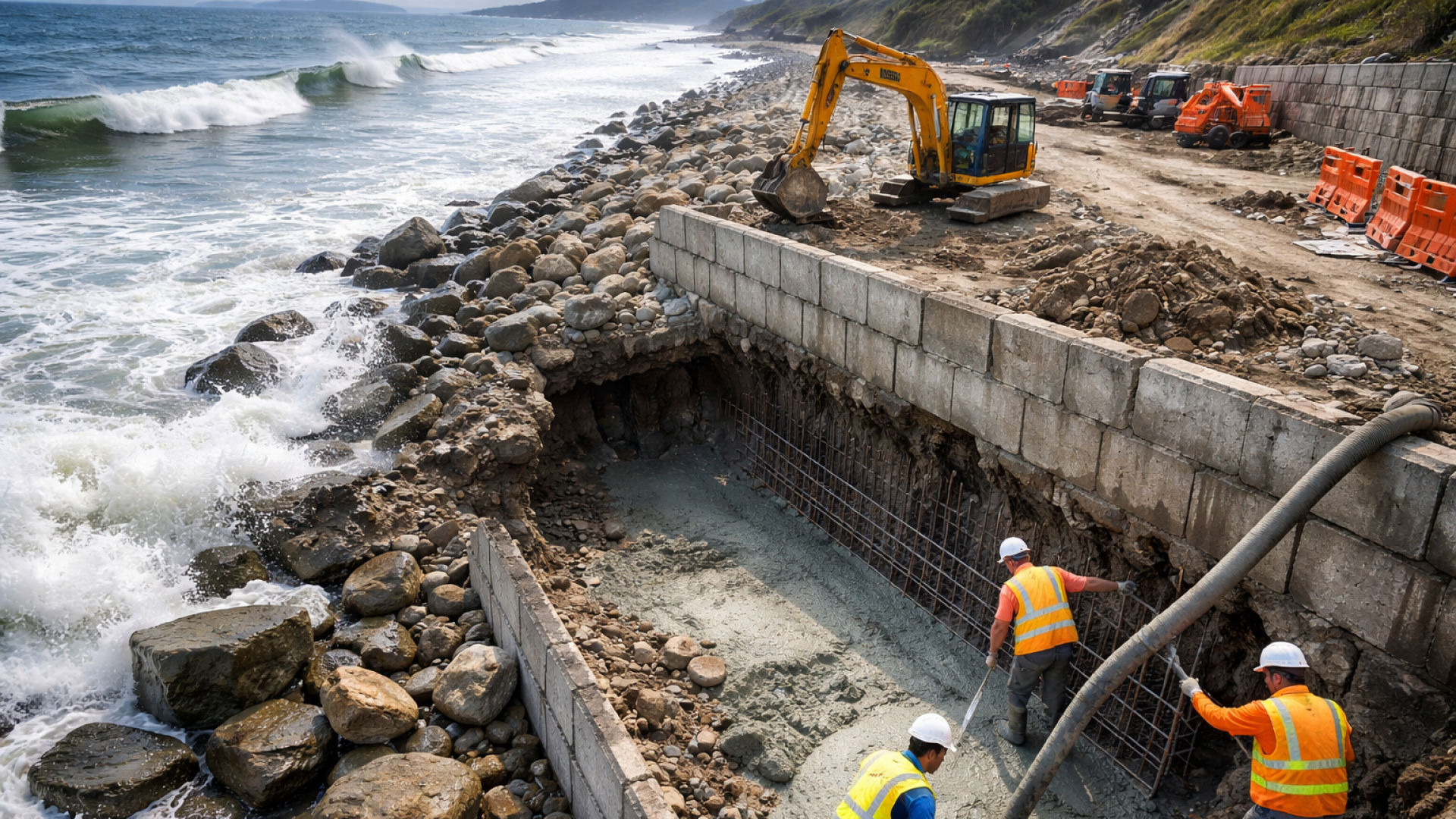
As erosion progresses, voids may form behind the wall, reducing passive resistance and increasing wall movement under lateral loads. This can lead to cracking, rotation, and progressive displacement that affects adjacent pavements, utilities, and structures.
As erosion advances, the seawall’s original load-transfer mechanism is compromised, making foundation reinforcement, not surface repair, the controlling factor in long-term stability.
Why Seawall Erosion is Often Underestimated
Seawall erosion rarely fails dramatically at first. Instead, it progresses incrementally, which makes it easy to overlook during routine visual inspections. Common early warning signs include:
Small sinkholes or depressions forming behind the wall
Cracking, leaning, or separation of wall panels
Increased movement or vibration during wave action
Standing water or poor drainage behind the wall
By the time these symptoms appear, significant soil loss has often already occurred.
Why Addressing Erosion Early Matters
Ignoring seawall erosion allows foundation conditions to continue degrading, which increases repair complexity and cost. Early intervention focuses on restoring soil support and managing water movement rather than replacing entire wall sections.
Modern seawall erosion repair strategies prioritize:
Stabilizing the foundation below and behind the wall
Controlling water flow and drainage paths
Reinforcing load transfer without excessive demolition
Understanding seawall erosion as a foundation and soil interaction problem, not just surface damage, is the first step toward selecting repair methods that extend seawall life and protect shoreline infrastructure in 2026 and beyond.
How Can Seawall Repair Counter Erosion? Key Strategies
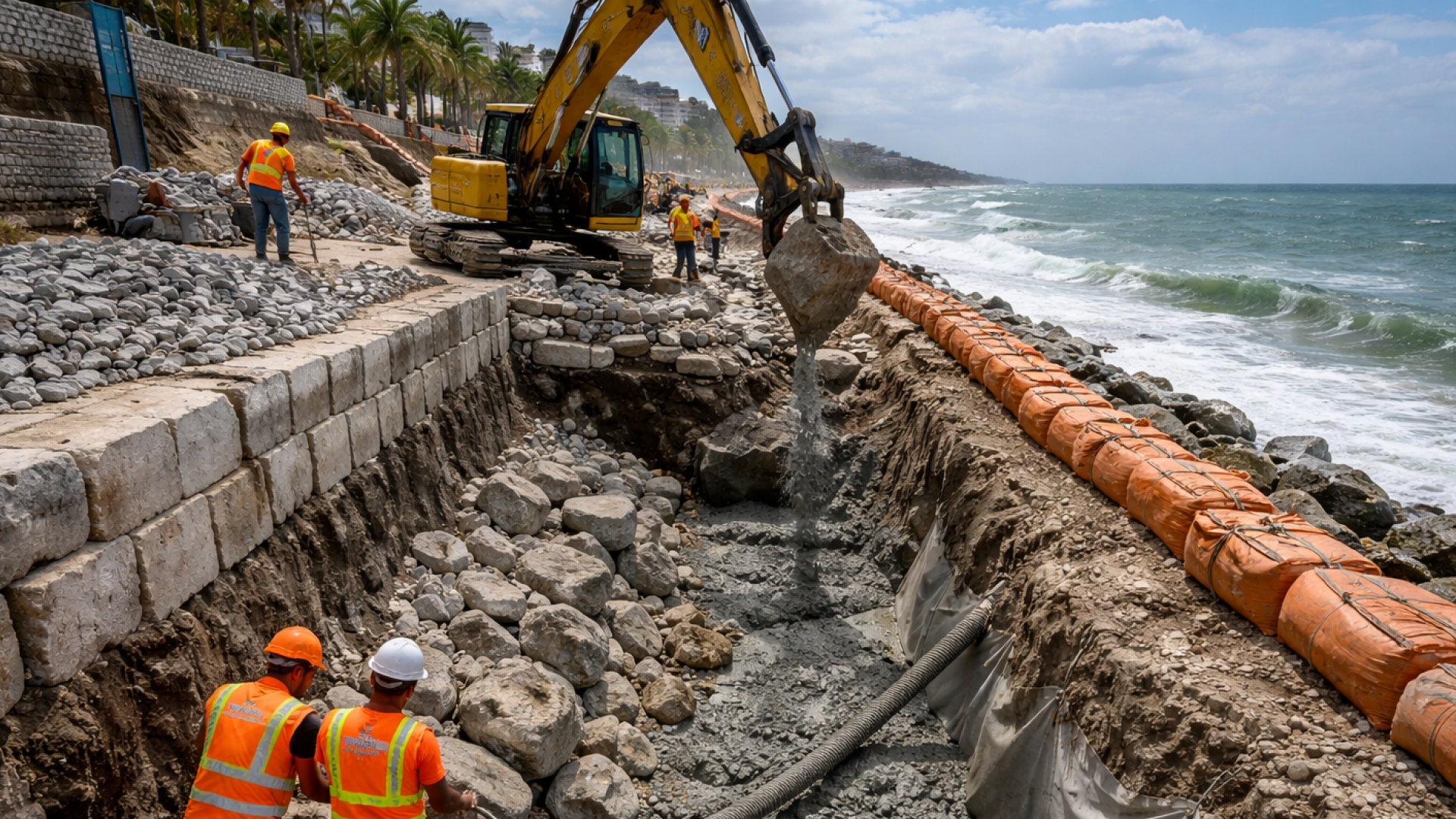
Effective seawall repair focuses on restoring structural performance where erosion has disrupted soil support and load transfer. Rather than treating surface damage alone, modern strategies address how forces are resisted below grade and how stability is maintained under changing hydraulic conditions.
Restoring Foundation Support Below the Erosion Zone
When erosion removes or weakens near-surface soils, repairs must bypass unstable material and re-establish load paths at depth. This is achieved by extending structural support into competent strata using deep foundation elements.
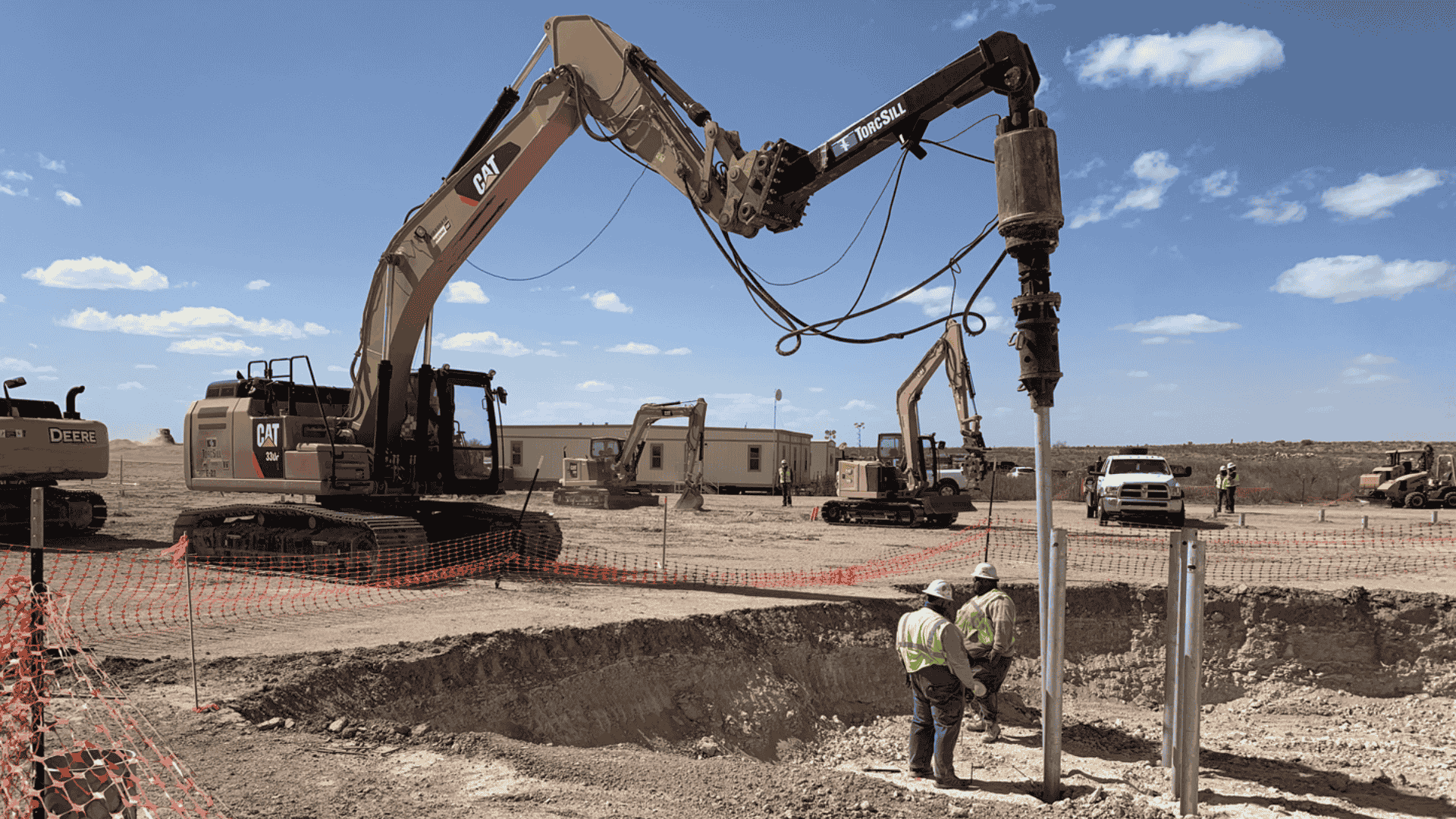
Helical piles are particularly effective in this role. Installed by rotation, they penetrate eroded soils and engage stable strata at depth with systems that allow resistance to be confirmed during installation.
This verification reduces uncertainty and ensures the repaired seawall is supported by measurable capacity rather than assumed soil conditions.
Managing Hydrostatic Pressure and Internal Drainage
Uncontrolled water pressure accelerates soil loss and increases lateral forces on the wall. Effective repairs incorporate drainage paths, pressure relief systems, and backfill stabilization to prevent recurring erosion behind the structure.
By controlling groundwater movement, these measures protect both the seawall face and the supporting foundation elements.
Increasing Resistance to Lateral and Overturning Forces
Erosion reduces passive resistance, making seawalls more vulnerable to sliding, rotation, and overturning under wave and tidal loading. Structural anchoring and deep foundation support increase resistance by transferring forces into stable soils below the erosion zone.
This avoids relying solely on added mass or wall thickening to compensate for lost soil support, which often increases cost and disturbance without restoring true structural capacity.
Coordinating Repair Methods with Site Constraints
Successful seawall repairs balance structural performance with constructability. In active marinas, ports, and waterfront facilities, low-disturbance installation methods are critical to minimizing downtime and environmental impact.
Helical pile systems support this approach by enabling precise installation in confined or submerged conditions with minimal vibration and immediate load readiness.
If your seawall repair requires restoring load paths below eroded soils while limiting disruption to active waterfront operations, a TorcSill engineer can evaluate whether helical pile stabilization is the right foundation strategy for your site.
Types of Seawall Erosion Repair Used in Modern Projects
Modern seawall erosion repair employs a range of techniques depending on erosion mechanisms, soil conditions, structural configuration, and site constraints. Effective solutions often combine multiple methods to address both hydraulic forces and structural stability.
Surface Protection and Armor Systems
Armor stone, riprap, articulated concrete mats, and revetments are used to dissipate wave energy and protect the seawall face from direct erosion. These systems reduce surface scour but do not address soil loss or load transfer behind or beneath the wall.
They are most effective when used as part of a broader stabilization strategy rather than as standalone repairs.
Drainage Improvements and Pressure Relief
Drainage systems such as weep holes, relief drains, and permeable backfill help control hydrostatic pressure behind the seawall. By reducing water buildup, these measures limit soil migration and decrease lateral forces acting on the wall.
While critical for erosion control, drainage alone does not restore structural support where foundation soils have already been compromised.
Toe Stabilization and Scour Protection
Toe protection methods—including stone aprons, sheet pile cutoffs, or concrete toe walls—are used to prevent further undermining at the base of the seawall. These techniques stabilize the wall against sliding and rotation caused by scour.
Toe stabilization is often necessary but typically relies on stable support conditions elsewhere in the system.
Structural Anchoring and Deep Foundation Reinforcement
Where erosion has disrupted load transfer, structural anchoring and deep foundation systems are used to bypass weakened soils and transfer forces into competent strata at depth. This includes the use of tiebacks, anchors, and deep foundation elements.
Helical piles are frequently selected for this role because they can be installed with minimal disturbance, develop capacity during installation, and resist compression, uplift, and lateral loads under cyclic marine conditions.
Integrated Repair Systems
Most successful seawall repairs integrate surface protection, drainage control, toe stabilization, and deep foundation reinforcement into a coordinated system. This approach addresses both the symptoms of erosion and its structural consequences.
Across these repair categories, methods that reinforce load transfer at depth, rather than relying on surface treatments alone, tend to deliver the most predictable outcomes. This is why deep anchoring systems, particularly helical piles, are increasingly integrated into erosion repair strategies as a primary stabilization element rather than a supplemental fix.
Seawall erosion repair starts with understanding how water, soil, and structural forces interact at your site. Talk to a TorcSill engineer to identify a repair strategy that restores stability without unnecessary reconstruction.
Why Helical Piles Are Preferred for Seawall Erosion Repair
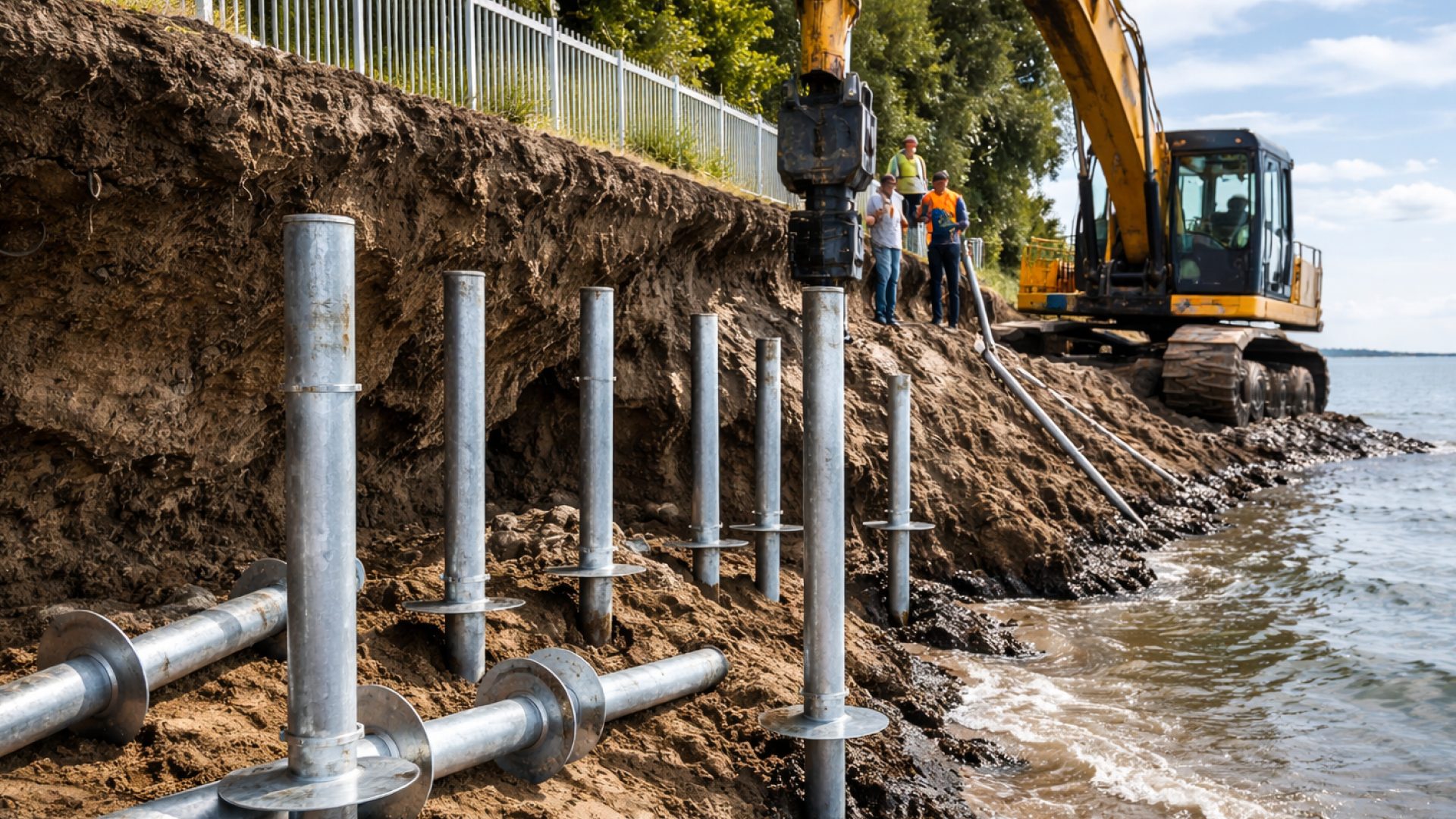
Helical piles are increasingly specified for seawall erosion repair because they address the root causes of failure: loss of subsurface support, compromised load paths, and ongoing soil movement below the wall.
This preference is reinforced by stricter environmental controls and permitting requirements that limit excavation, turbidity, and shoreline disturbance, particularly in coastal, marine, and waterfront environments.
Unlike surface-based repairs, helical piles restore stability by transferring loads through eroded or unstable soils and into competent strata at depth. This directly re-establishes the seawall’s structural support rather than masking symptoms of erosion.
Key reasons helical piles are favored in erosion repair include:
Minimal site disturbance: Installation by rotation avoids large excavations, dredging, and spoil removal, helping projects comply with environmental and permitting constraints while protecting adjacent habitats.
Verified performance during installation: Installation torque provides a measurable indicator of capacity, allowing engineers to confirm load resistance in real time rather than relying solely on post-construction testing.
Effective resistance to lateral and overturning forces: Helical piles perform well under wave loading, hydrostatic pressure, and cyclic forces common in marine environments, reinforcing walls without relying on added mass.
Immediate load capacity: Because no curing time is required, structural stabilization can begin as soon as installation is complete, reducing exposure to further erosion during construction.
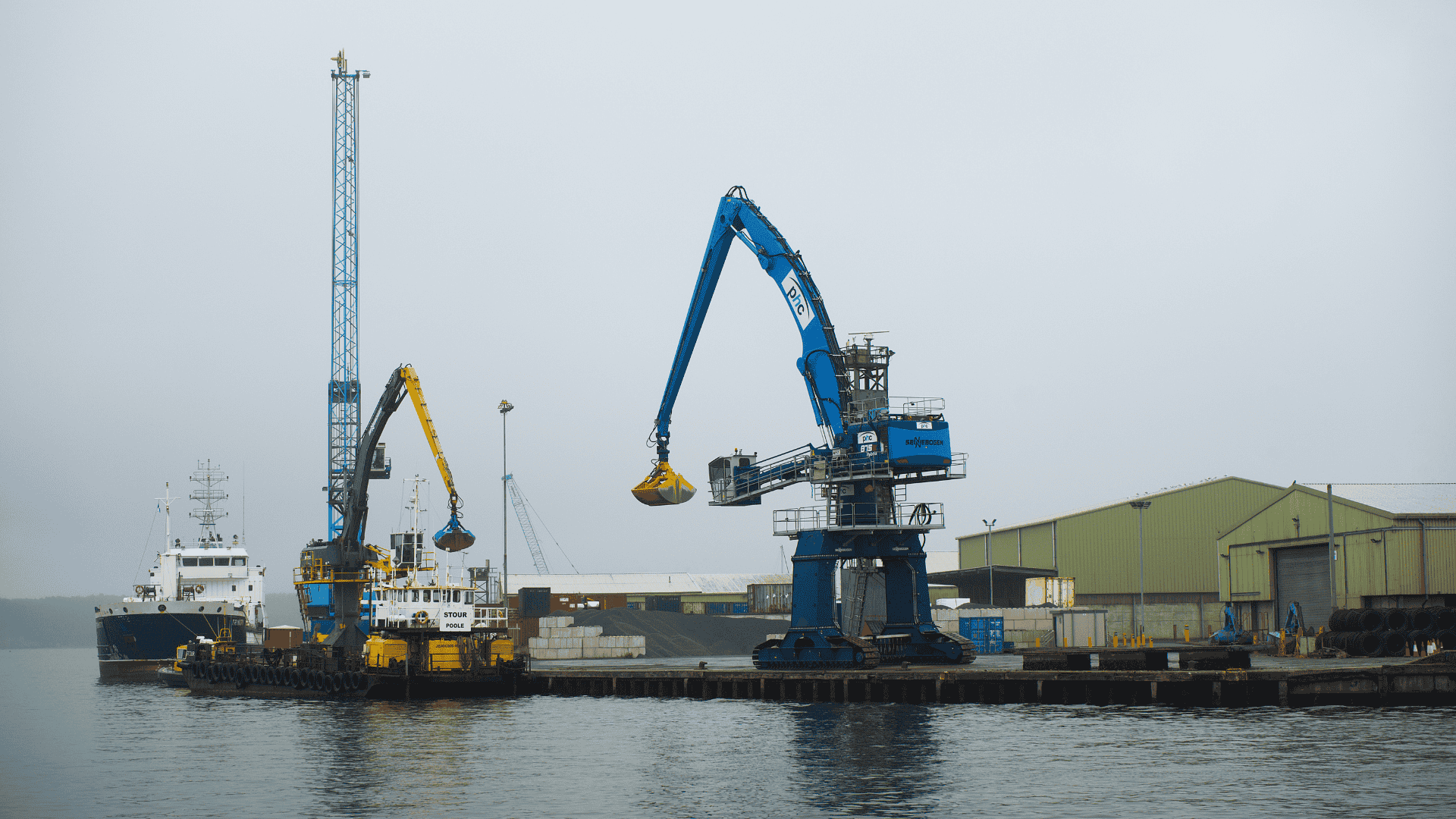
Adaptability to constrained or underwater sites: Helical piles can be installed from land, barges, or limited-access zones, making them practical for repairs where conventional equipment cannot operate.
By combining environmental compliance, constructability, and predictable structural performance, helical piles provide a foundation-first solution that aligns with how seawall erosion repair is evaluated and approved in 2026.
How TorcSill Supports Seawall Erosion Repair Decisions in 2026
Seawall erosion repair is rarely a single-solution problem. It requires understanding how soil loss, hydraulic forces, and structural loads interact below the waterline, often under strict environmental and construction constraints. TorcSill supports project teams by evaluating erosion repair as a foundation engineering challenge, not just a wall repair exercise.
On waterfront and marine projects with active scour and limited construction windows, TorcSill has supported erosion repairs where helical piles stabilized undermined seawalls while avoiding full wall replacement.
Rather than defaulting to mass-based reconstruction, TorcSill helps determine when deep foundation reinforcement can restore load paths more efficiently and with less disturbance.
Key Ways TorcSill Adds Value
Engineering & Design to Tailored Foundation Engineering: Site-specific evaluation of erosion mechanisms, soil behavior, and lateral loading to determine whether helical piles can re-establish long-term stability below eroded zones.
Manufacturing to Quality Helical Piles & Components: ISO-certified fabrication ensures pile geometry, materials, and connections align precisely with engineered repair intent.
Construction Services to Site Execution & Installation: Controlled, low-disturbance installation in tidal, waterfront, and constrained environments, with capacity verified during installation.
Drilling Services to Site Preparation & Soil Access: Specialized drilling capabilities support pre-boring or access where dense soils, debris, or obstructions are present.
Integrated Engineering Through Installation: Design intent is carried through manufacturing and field installation, ensuring erosion repairs perform as modeled, not just as assumed.
This integrated approach positions TorcSill as a foundation engineering partner for coastal stabilization, not just a supplier of repair components.
Conclusion
Effective seawall erosion repair requires more than surface treatment. Shoreline structures must resist ongoing hydraulic forces, changing subsurface conditions, and continued soil loss, often within tight schedules and environmental constraints. Choosing the right repair strategy is essential to restoring stability without creating future movement or erosion risk.
TorcSill supports these challenges through engineering-led evaluation of erosion drivers, soil behavior, and structural loading beneath and behind the seawall. This approach helps ensure repair solutions are practical to install and verifiable in the field.
For projects where shoreline stability and long-term performance are critical, engineered erosion repair solutions offer a proven path forward.
Consult a TorcSill engineer to identify the foundation strategy best suited to your site and structural demands.
Frequently Asked Questions (FAQs)
1. Can seawall erosion be repaired without rebuilding the entire wall?
Yes. In many cases, erosion occurs beneath or behind an otherwise intact wall. Targeted stabilization, such as adding helical piles to reinforce toe support or wall anchorage, can restore stability without full demolition or replacement.
2. How do engineers determine whether erosion is still active?
Engineers evaluate scour patterns, soil loss behind the wall, water level fluctuations, and movement indicators such as cracking or rotation. TorcSill uses subsurface data and site observations to determine whether erosion is ongoing or historical before selecting a repair approach.
3. Can seawall repairs be completed while adjacent facilities remain operational?
Often, yes. Low-disturbance installation methods, including helical pile systems, allow repairs near active marinas, pipelines, or industrial assets with minimal vibration, noise, and access disruption.
4. How long do engineered seawall erosion repairs typically last?
When repairs are designed to address the underlying soil and load transfer issues, not just surface damage, they can perform for decades. Anchoring repairs into stable soil layers below erosion zones is key to long-term performance.
5. Are helical pile–supported seawall repairs suitable for varying water levels?
Yes. Helical piles are anchored below fluctuating water tables and erosion-prone soils, allowing them to maintain capacity despite tides, seasonal changes, or storm-driven water level variations. TorcSill designs systems specifically for these dynamic coastal conditions.