Sheet piling remains a critical tool in modern construction where excavation stability, groundwater control, and adjacent structures limit conventional earthwork. On tight urban sites, marine environments, and infrastructure projects, sheet piles enable safe excavation and temporary soil retention under difficult ground conditions.
However, sheet piling is only part of the equation. While it stabilizes soil during construction, foundation engineering determines how structural loads are ultimately transferred into competent ground. In many projects, retaining systems are temporary, while foundations must perform for decades. Helical pile foundations allow loads to bypass retained soils entirely, transferring forces directly to deeper strata and reducing reliance on deep or permanent retention systems.
This guide explains how sheet piling works, when it is technically appropriate, how it differs from foundation systems, and how modern foundation engineering, including helical piles, addresses load transfer under constrained site conditions.
Key Takeaways
Sheet piling provides reliable earth retention and groundwater control for tight urban sites and complex excavations in 2026.
Z-type, flat web, and pan-type sheet piles offer tailored solutions for deep, high-load, or light-duty retention needs.
Sheet piling manages soil and water behavior, while helical pile foundations transfer structural loads—together enabling safer, leaner excavation and foundation strategies.
Modern sheet piling integrates with bracing, anchors, or helical foundations to deliver predictable performance and safer construction.
TorcSill helps teams evaluate soil, groundwater, and excavation demands to define optimal retention and support strategies early.
What is Sheet Piling? Key Characteristics
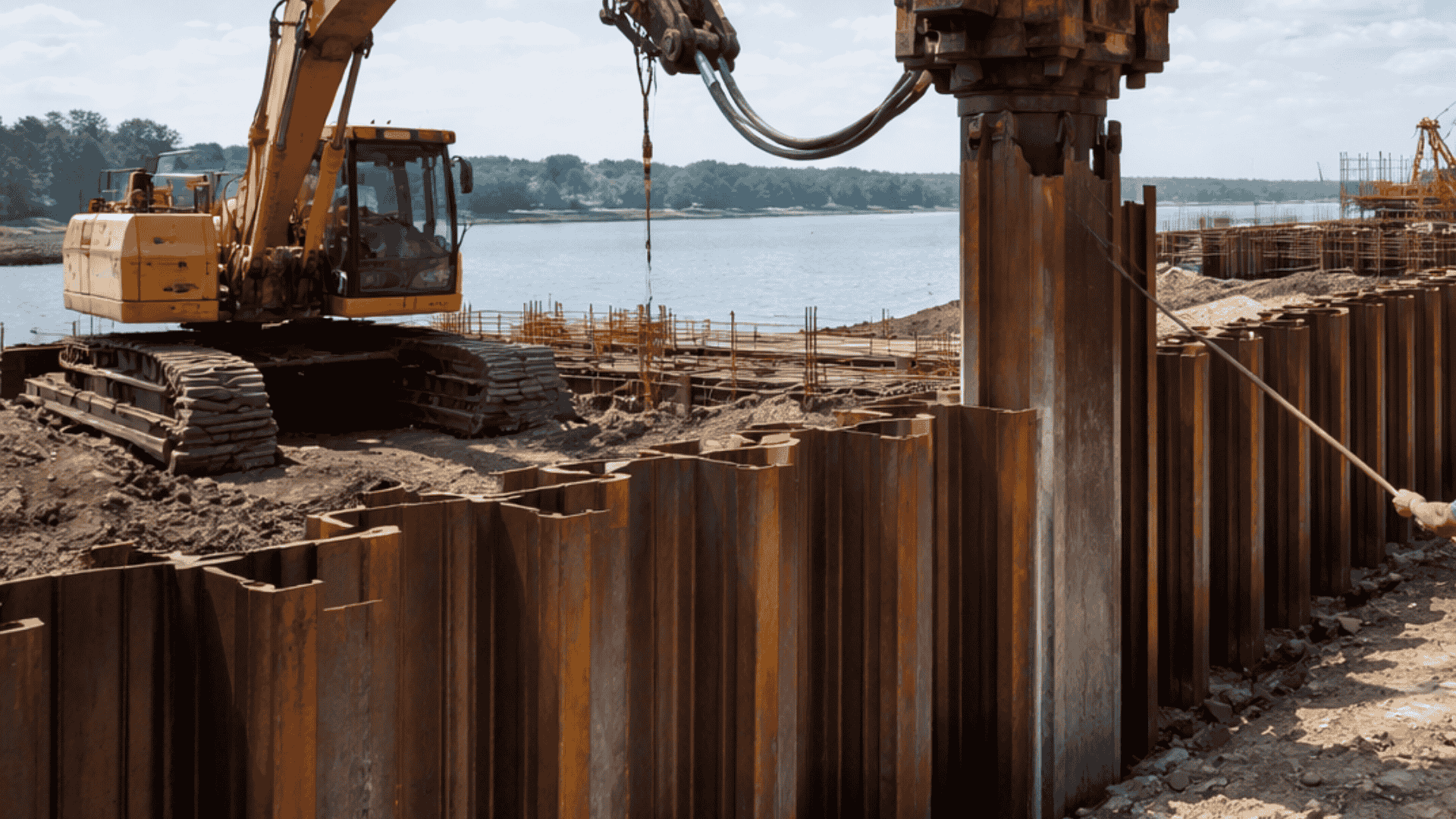
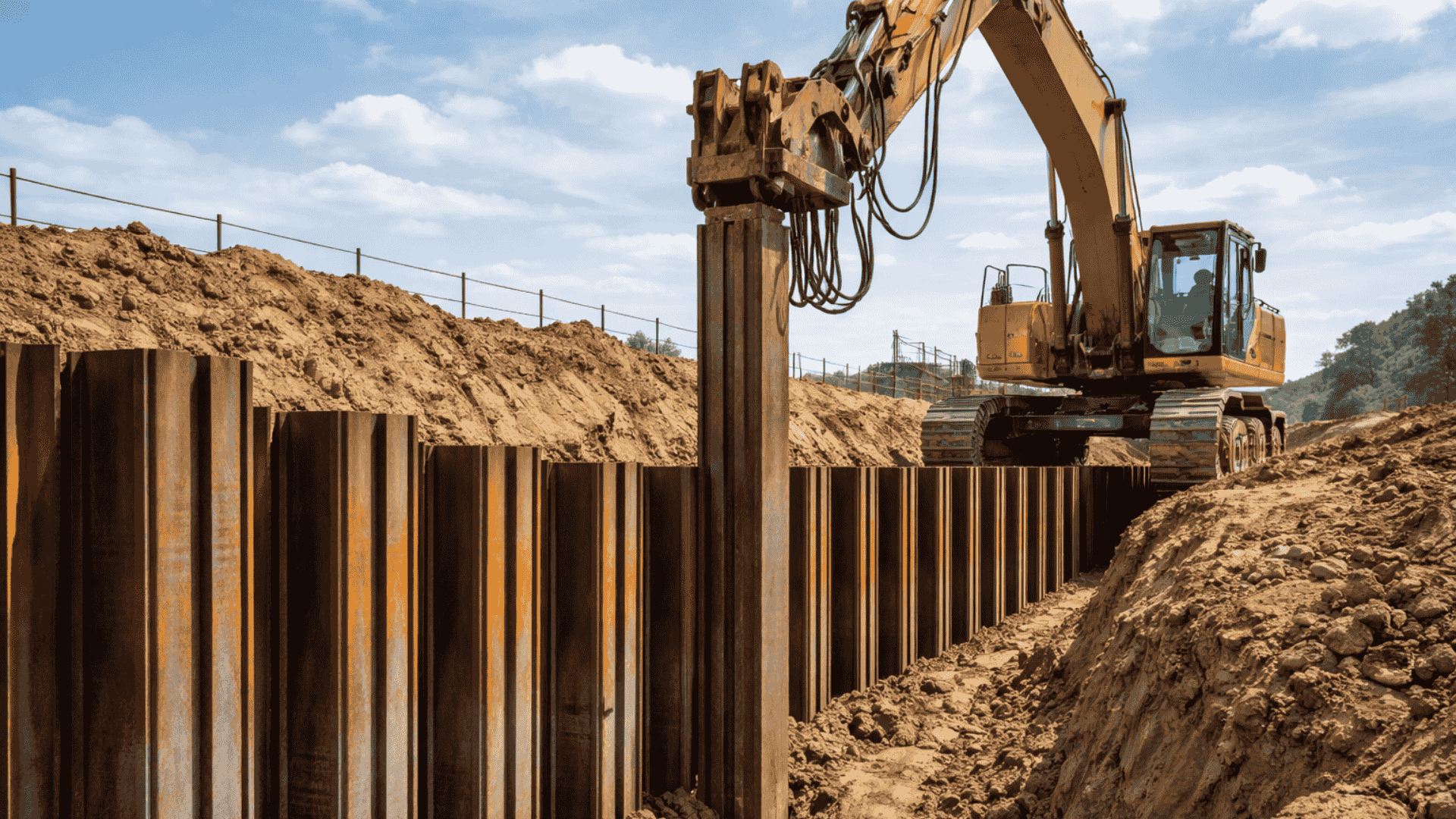
Sheet piling is a deep excavation support and earth-retention system used to stabilize soil and control groundwater during construction. Interlocking steel, vinyl, or composite sheets are driven or pressed into the ground to form a continuous wall that resists lateral earth and hydrostatic pressures.
Rather than carrying vertical structural loads, sheet piling functions primarily as a retaining system, providing temporary or permanent support to excavations, waterfront structures, and below-grade construction. Because sheet piling is not designed to support vertical structural loads, permanent foundation systems, such as helical piles, are often used in parallel to carry building or infrastructure loads independently.
Key characteristics of sheet piling include:
Lateral load resistance: Designed to resist soil and water pressures acting horizontally.
Groundwater control: Effective for cutoff walls and temporary water exclusion in excavations.
Temporary or permanent use: Can be installed for temporary construction support or incorporated into permanent structures when designed accordingly.
Installation methods: Typically installed by driving, vibrating, or pressing sheets into place, depending on site constraints and vibration limits.
Constructability in tight sites: Well suited for constrained urban, marine, and infrastructure environments where space is limited.
By clearly separating the roles of soil retention and load-bearing foundations, engineers can design safer, more efficient systems that address both excavation stability and long-term structural performance.
Common Types of Steel Sheet Piles Used in Construction
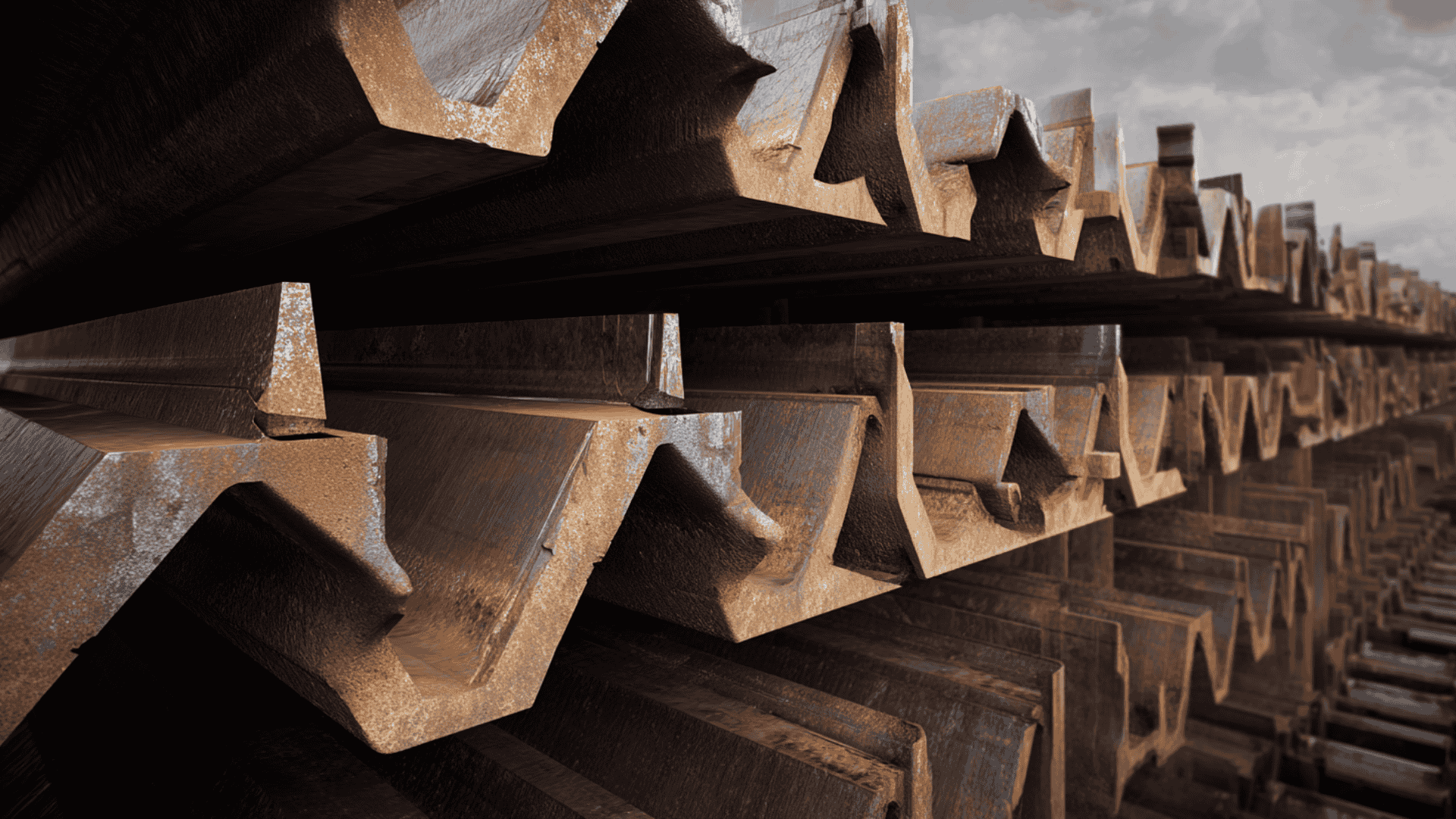
Steel sheet piles are available in several profiles and configurations, each suited to specific soil conditions, load demands, and construction constraints. Selection depends on required bending resistance, drivability, corrosion exposure, and whether the wall is temporary or permanent.
Common steel sheet pile types include:
Z-section sheet piles: Characterized by high section modulus and efficient load distribution, Z-piles are commonly used in deep excavations, waterfront structures, and heavy civil works where significant lateral earth pressures must be resisted.
U-section sheet piles: Featuring interlocks at the neutral axis, U-piles provide good bending resistance and are often used in medium-depth excavations, cofferdams, and temporary retaining applications.
Straight-web sheet piles: Designed primarily for cutoff walls and groundwater control rather than high bending resistance, straight-web piles are used where seepage control is the governing requirement.
Box or combined wall systems: Built from paired sheet piles or tubular elements, combined walls deliver increased stiffness and are applied in ports, quay walls, and heavy marine structures.
In projects where sheet piles provide temporary retention, foundation systems such as helical piles are frequently installed inside or adjacent to the retained zone to support permanent structural loads independently of the sheet pile wall.
Why Sheet Piling Remains Essential for Ground and Water Control
Sheet piling plays a critical role in modern construction by stabilizing excavations and managing groundwater in environments where open excavation would be unsafe or impractical. It enables construction to proceed in soft soils, high water tables, and confined sites by forming a continuous barrier that resists lateral earth and hydrostatic pressures.
The performance of a sheet pile wall depends on soil–structure interaction. Factors such as embedment depth, section stiffness, interlock behavior, and support conditions determine how loads are transferred into the surrounding ground and how much movement occurs during excavation.
Sheet piling is particularly effective for:
Lateral earth retention: Resisting soil pressures during excavation and temporary works
Groundwater control: Acting as a cutoff wall to limit seepage and inflow
Protection of adjacent assets: Reducing ground movement near structures, utilities, or waterways
Constructability in constrained sites: Enabling excavation where space, access, or stability is limited
While sheet piling controls lateral earth and groundwater pressures, foundation systems govern settlement behavior, vertical load transfer, and long-term structural performance. Treating these as separate but coordinated functions allows engineers to design safer, more efficient systems that address both construction-phase stability and permanent load-bearing requirements.
Applications of Sheet Piling Across Modern Construction
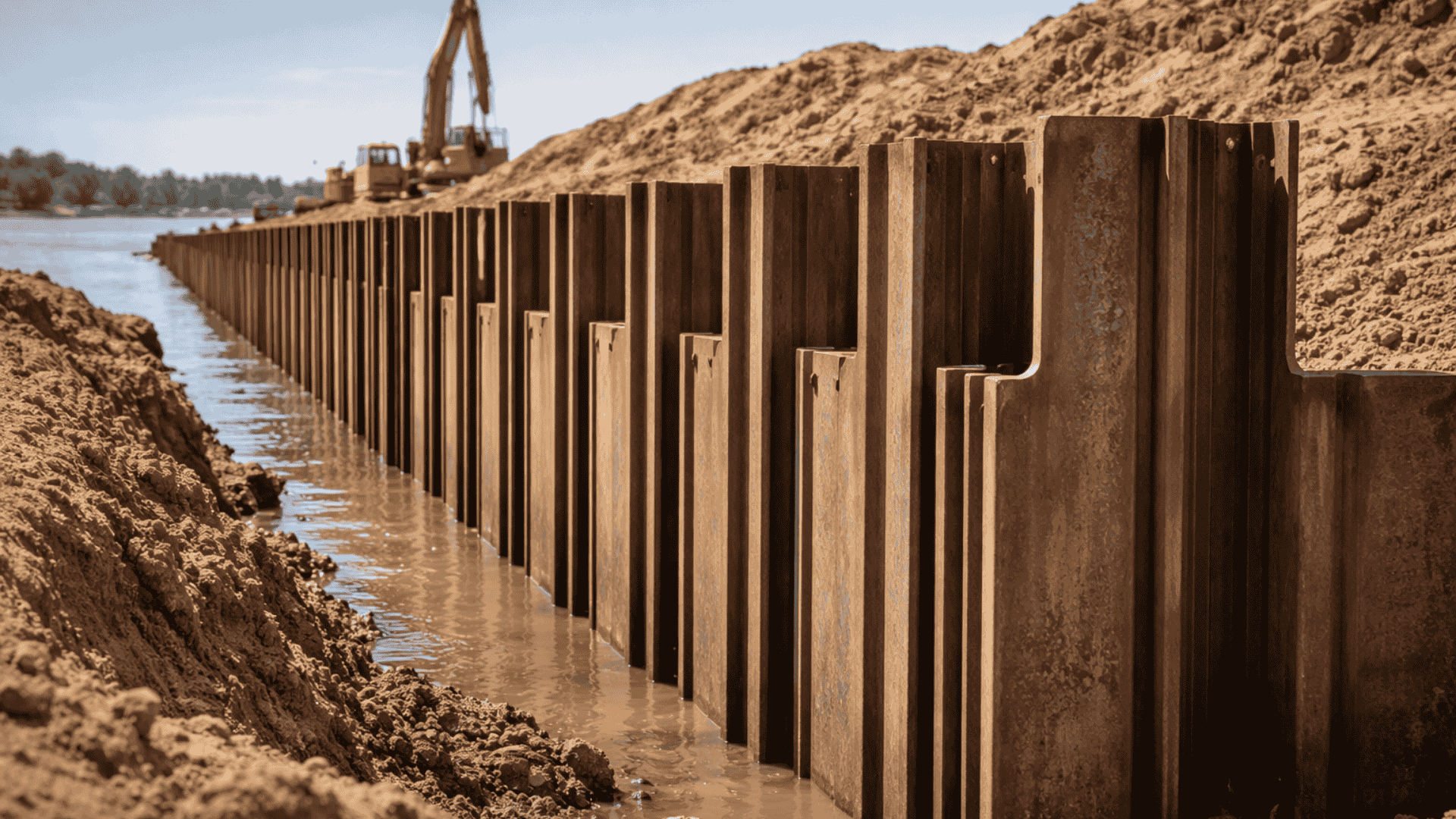
Sheet piling is widely used across construction sectors where excavation stability, groundwater control, and protection of adjacent assets are critical. Its role varies by environment, soil conditions, and whether retention is required temporarily or permanently.
Urban Construction
In dense urban environments, sheet piling is commonly used to support deep excavations adjacent to existing buildings, utilities, and transportation infrastructure. It limits ground movement and controls groundwater where open excavation would pose unacceptable risk.
In these environments, helical pile foundations can support structures within retained excavations, reducing the need for permanent sheet piling walls or heavy internal bracing once vertical loads are transferred to competent strata.
Marine and Waterfront Projects
Sheet piling is essential for cofferdams, quay walls, bulkheads, and shoreline protection. It provides lateral resistance against soil and water pressures while enabling construction below the waterline.
Marine sheet pile systems are often designed for long-term exposure and corrosion resistance, with performance governed by embedment depth, anchorage, and environmental loading.
Industrial and Brownfield Sites
Industrial sites frequently present complex subsurface conditions, including fill, obstructions, and variable groundwater levels. Sheet piling is used to stabilize excavations, isolate contaminated soils, and maintain safe working conditions near operating facilities.
In these settings, helical pile foundations can be installed inside or adjacent to retained zones to carry permanent structural loads, simplifying retention systems and reducing the extent of permanent sheet piling.
Infrastructure and Transportation
Sheet piling supports bridge abutments, culverts, tunnels, and roadway excavations by controlling soil movement and groundwater during construction. Its use is common where right-of-way constraints or traffic staging limit excavation options.
Temporary Works and Cofferdams
Sheet piles are widely used for temporary works, including cofferdams and excavation support, where retention is required only during construction. Their removability and reuse make them well suited for short-term applications.
By separating the functions of ground retention and load-bearing foundations, engineers can optimize both systems, using sheet piling where it is most effective and foundation solutions to govern long-term structural performance.
How TorcSill Helps Project Teams Evaluate Sheet Piling in 2026
Evaluating sheet piling in modern projects requires more than determining whether soil and groundwater can be retained safely. It requires understanding how excavation support, foundation systems, and construction sequencing interact under real site constraints. TorcSill supports project teams by helping separate these functions early, reducing overdesign and long-term risk.
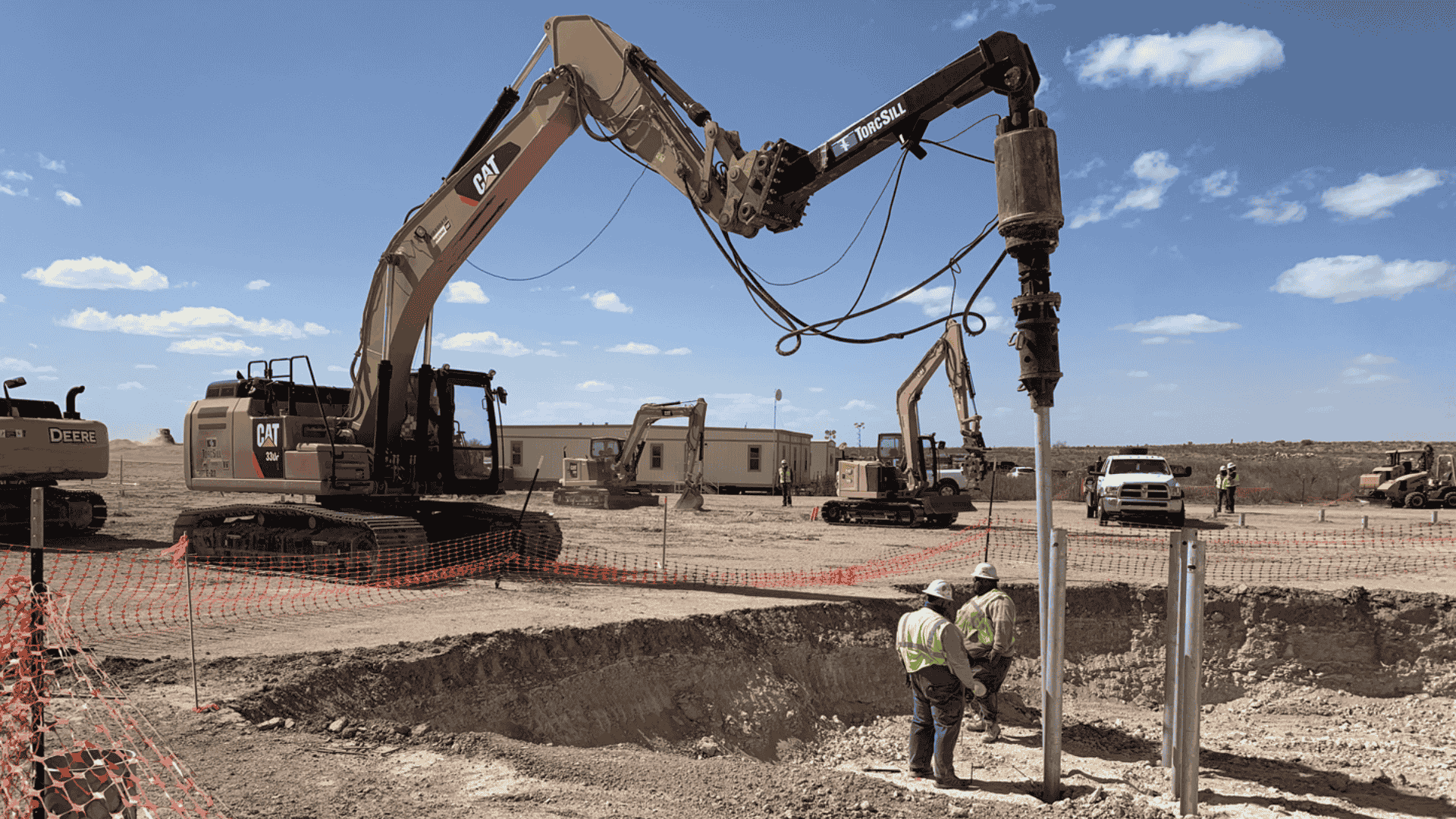
On constrained urban and waterfront projects, TorcSill has supported designs where helical piles carried permanent structural loads while sheet piling was limited to temporary excavation support, simplifying retention systems and improving constructability once excavation was complete.
TorcSill approaches these evaluations through an integrated foundation engineering model:
Engineering & design: Site-specific analysis of soil behavior, loading demands, serviceability limits, and constructability to determine where retention ends and load transfer begins
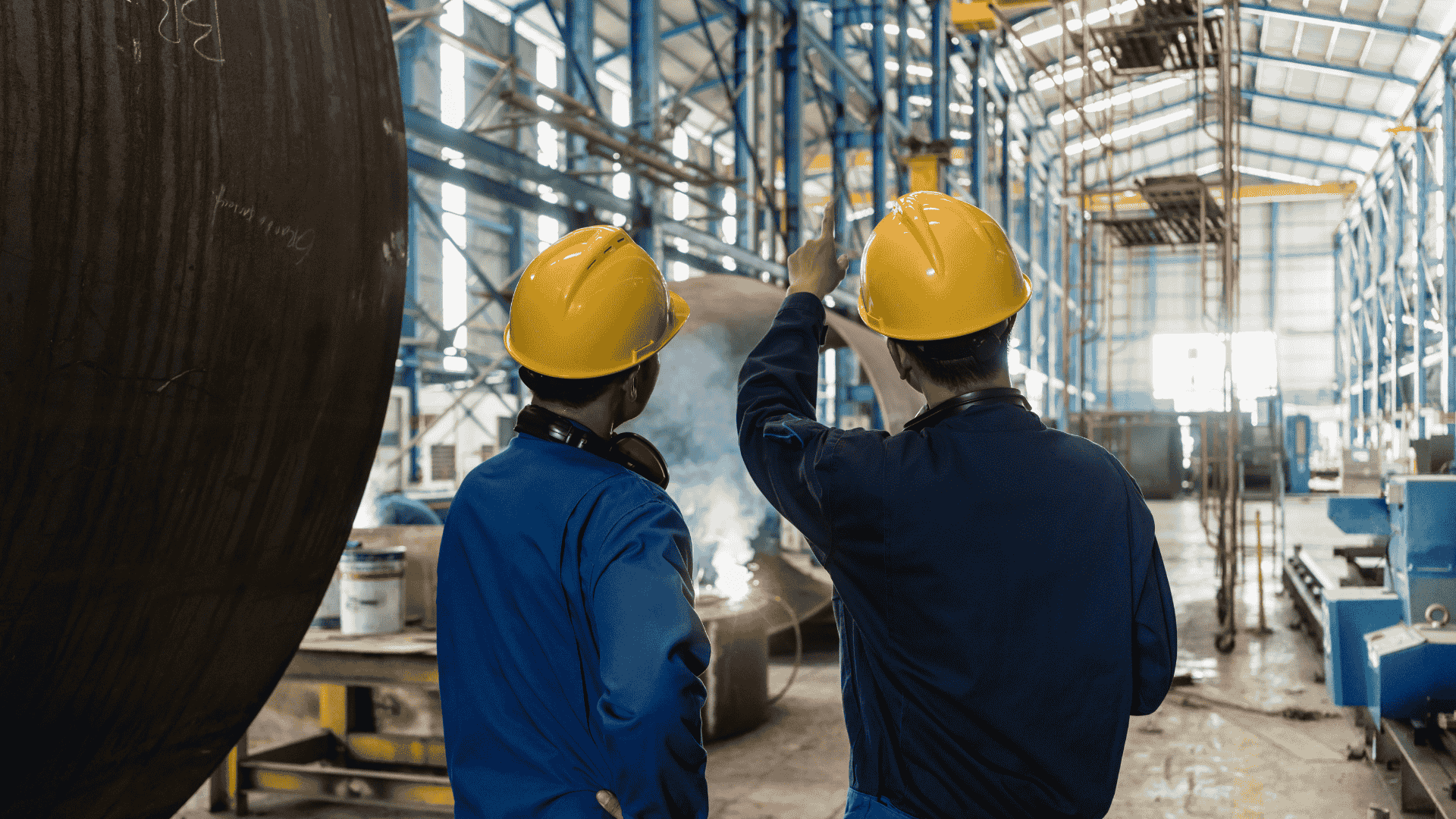
Manufacturing: In-house, ISO-certified fabrication of helical piles and components to match engineered requirements without material variability
Construction services: Controlled, low-vibration installation with real-time capacity verification, reducing uncertainty during execution
Drilling services: Pre-boring and access solutions for difficult ground, obstructions, or mixed subsurface conditions
This integrated capability allows TorcSill to evaluate sheet piling not as a standalone solution, but as part of a coordinated foundation system. As a result, it acts as a foundation engineering partner, helping teams balance retention needs, load transfer, and long-term performance, rather than simply a foundation provider.
Conclusion
Modern construction projects demand earth-retention systems that provide reliable lateral support, predictable performance, and minimal site disruption under increasingly tight schedules. As sites become more constrained and excavation depths vary, retention solutions must perform as designed without introducing risk, rework, or sequencing delays.
TorcSill addresses these requirements by providing engineering guidance on sheet piling and support strategies, helping teams assess soil conditions, groundwater, and load requirements early. By using site-specific analysis and design input, TorcSill ensures that retention systems are both effective and constructible while minimizing environmental and operational impact.
For projects where reliability, constructability, and long-term performance cannot be compromised, engineered sheet piling solutions provide a practical, proven approach.
Consult a TorcSill engineer to determine the optimal retention strategy for your site and excavation requirements.
Frequently Asked Questions (FAQs)
1. What is sheet piling, and when is it used?
Sheet piling is a method of creating vertical earth-retention walls using interlocking steel panels. It’s typically used for deep excavations, waterfront structures, retaining walls, and temporary or permanent support in challenging soil conditions.
2. What types of sheet piles are available?
Common types include Z-type (for maximum interlock strength and load-bearing), flat web (used for large cells or gravity structures), and pan-type piles (for light loads and restricted spaces). The choice depends on soil conditions, load requirements, and installation constraints.
3. Can sheet piling be installed in limited-access sites?
Yes. Sheet piles can be installed using compact or specialized equipment, making them suitable for urban areas, retrofit projects, or sites with space constraints.
4. How does TorcSill help determine the right sheet piling solution?
TorcSill evaluates soil data, groundwater conditions, excavation depth, and support requirements to recommend the most effective sheet piling strategy for safety, constructability, and long-term performance.
5. Are sheet piling walls permanent or temporary?
Sheet piling can be designed for both temporary and permanent applications. Temporary walls support construction work or excavation, while permanent walls provide long-term earth retention for buildings, infrastructure, or waterfront structures.