Structural steel fabrication is the backbone of modern construction, enabling everything from high-rise towers to complex industrial facilities. Consider the Salesforce Tower in San Francisco. Rising more than 1,000 feet in a dense urban environment, its steel framework was fabricated offsite and assembled with extreme precision to ensure strength, alignment, and safety under wind and seismic forces. Without meticulous fabrication, projects of this scale and complexity would not be possible.
In many modern projects, structural steel fabrication extends beyond the superstructure. Fabricated pile caps, grillages, and equipment support frames are increasingly used to connect directly to helical pile foundations, requiring tight tolerances, immediate load readiness, and predictable installation.
This guide explains structural steel fabrication, its key processes, and how modern projects rely on engineered foundation systems such as helical piles to meet today’s performance and schedule demands.
Key Takeaways
Precision and predictability: Structural steel fabrication converts raw steel into exact, ready-to-install components, improving accuracy, reducing on-site errors, and supporting complex designs in modern construction.
Faster, cost-effective construction: Off-site fabrication and modular assembly accelerate project timelines, minimize labor, and lower costs compared to traditional on-site concrete or steel assembly methods.
Durability and adaptability: Fabricated steel components are strong, lightweight, malleable, and low-maintenance, allowing for long-lasting, flexible structures suitable for industrial, energy, and infrastructure applications.
TorcSill integration for reliable foundations: Engineered helical piles provide immediate load capacity, settlement control, and minimal site disruption, perfectly complementing prefabricated steel systems and reducing construction risk.
Sustainability and lifecycle benefits: TorcSill’s foundations reduce material waste, embodied carbon, and environmental impact, while enabling removability and reuse for future projects.
What is Structural Steel Fabrication? Relevance in 2026
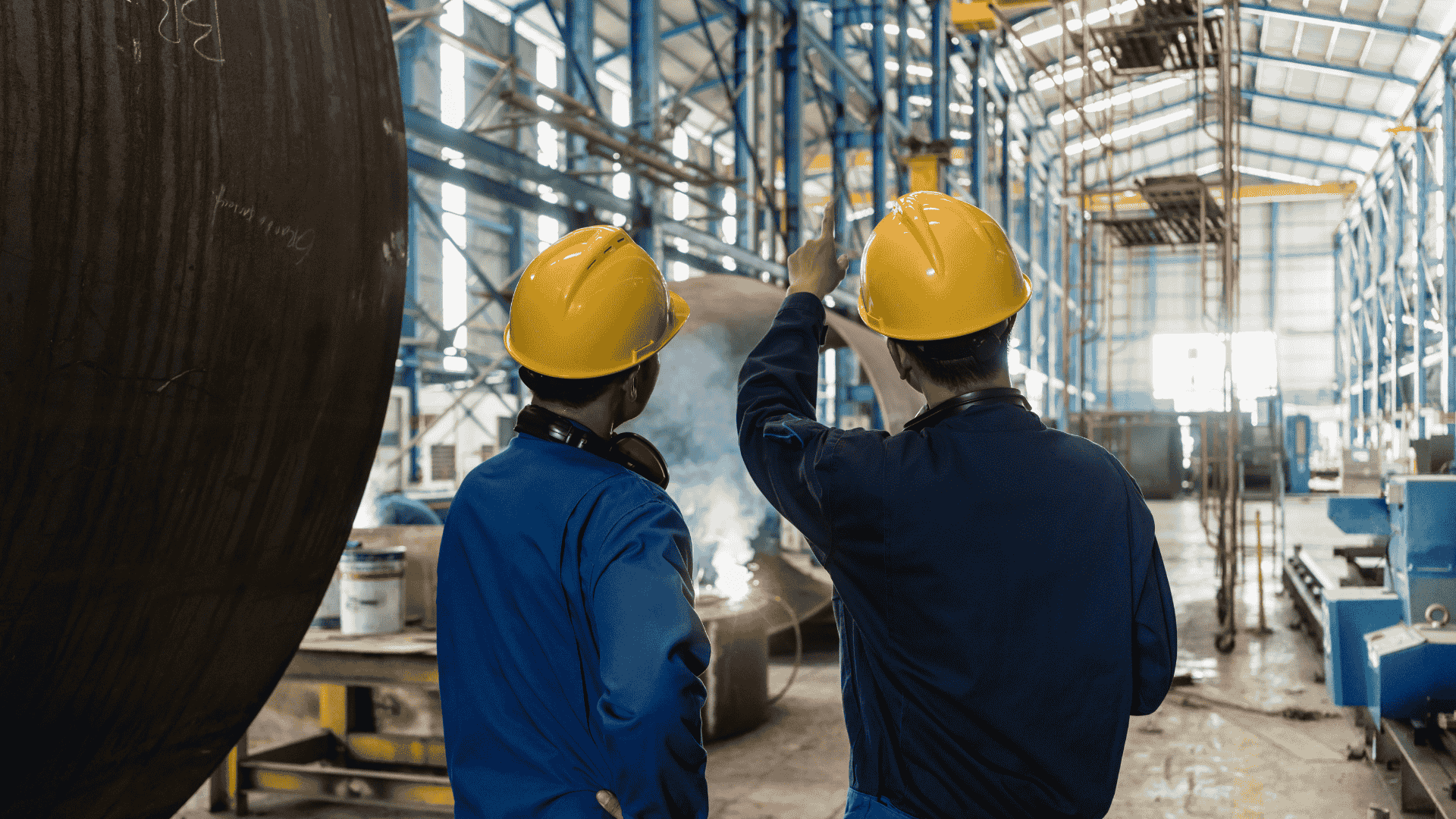
Structural steel fabrication is the process of transforming raw steel into precisely engineered components for construction projects. It involves cutting, shaping, welding, drilling, and assembling steel members to create beams, columns, trusses, and other structural elements ready for on-site erection.
Fabrication ensures that each component meets exact specifications, tolerances, and performance requirements, bridging the gap between design and construction. In foundation systems supported by helical piles, fabrication quality directly affects load transfer, alignment, and installation sequencing.
In 2026, structural steel fabrication remains crucial as buildings, industrial facilities, and infrastructure projects demand faster construction, higher precision, and longer-lasting structures. Modern fabrication integrates advanced digital workflows, robotics, and quality assurance to deliver predictable performance under stricter project constraints.
Key aspects of structural steel fabrication include:
Material selection and certification: Ensures steel meets required grades, yield strength, and durability for specific loads and environmental conditions.
Cutting and shaping: CNC plasma, laser cutting, and press brakes produce precise profiles for beams, columns, and connections.
Welding and assembly: Automated and manual welding techniques join components while maintaining strength and alignment; modular subassemblies can be pre-assembled offsite.
Quality control and inspection: Dimensional checks, weld testing, and stress analysis prevent errors that could compromise structural integrity.
Integration with design and construction: Fabricated elements are tailored to architectural and structural designs, enabling faster, safer erection and reduced on-site labor.
In essence, structural steel fabrication converts complex design specifications into ready-to-install components that deliver structural reliability, efficiency, and cost-effectiveness.
As fabrication tolerances tighten, foundation systems increasingly govern whether steel assemblies can be erected immediately or require site rework.
From Raw Steel to Strong Structures: Understanding Fabrication
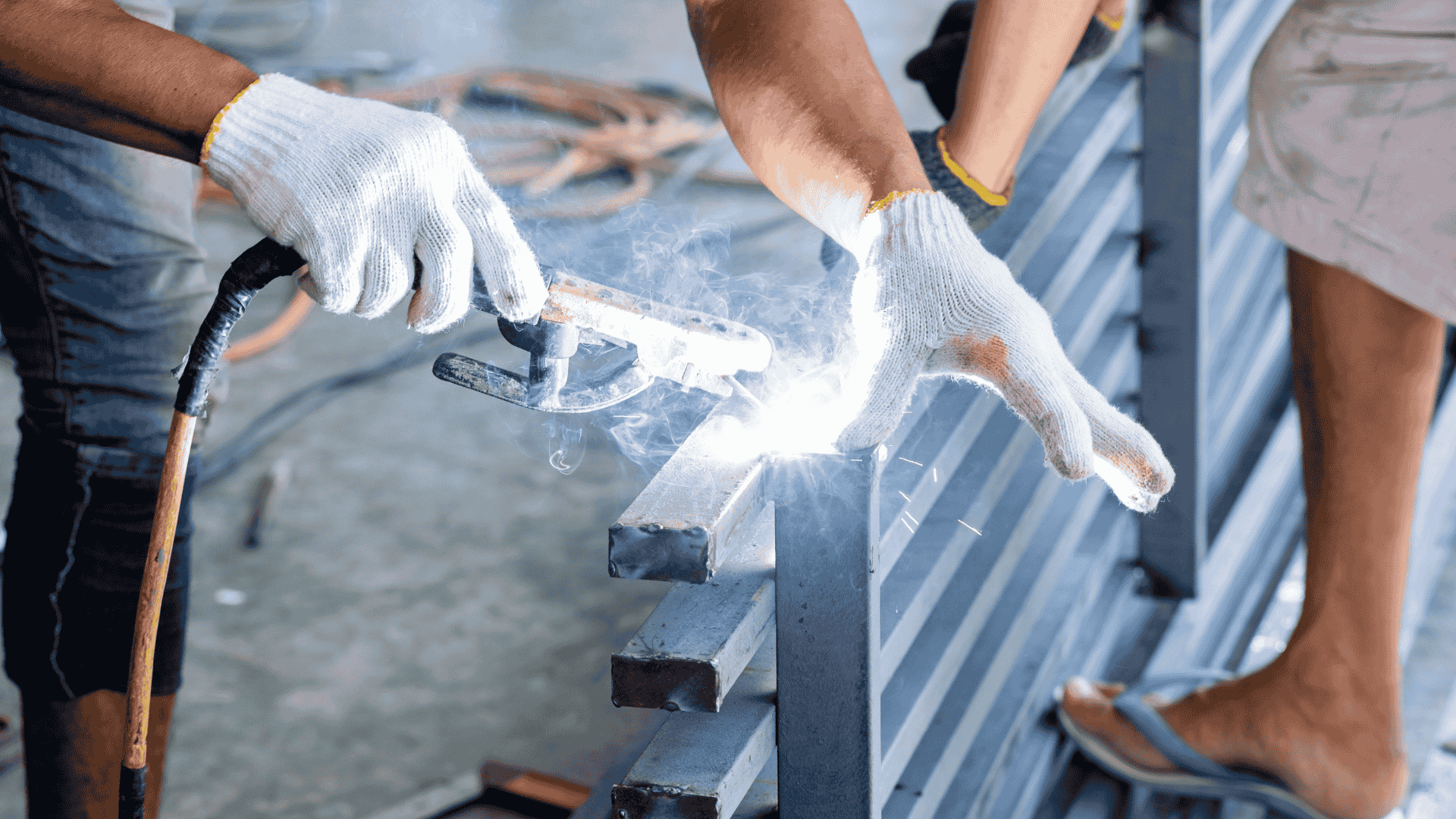
Structural steel fabrication exists because raw steel alone cannot meet modern construction demands. Fabrication allows steel to be precisely cut, bent, and welded under controlled conditions, producing components that are stronger, lighter, and faster to install.
Unlike site-based assembly methods, fabrication shifts critical work into manufacturing environments where tolerances, quality, and repeatability can be tightly controlled. This precision is what enables modern steel structures to perform predictably under complex loading conditions.
Key Stages of Structural Steel Fabrication
1. Cutting Structural Steel: The process begins with cutting raw steel to required sizes and shapes. Fabricators use shearing, sawing, plasma cutting, water jets, or laser cutters in controlled facilities with strict safety measures. Precision at this stage is critical to ensure proper fit and load transfer during erection.
2. Bending Structural Steel: Steel is then bent to achieve the required angles or curves. Complex or repetitive bending is performed using specialized machinery to maintain consistency and dimensional accuracy. Proper bending ensures members align correctly and perform as intended under load.
3. Assembling Structural Steel: Cut and bent components are joined into subassemblies or complete structural elements. Welding is the most common method, providing strong, continuous connections that maintain structural integrity. Bolting, riveting, or mechanical fastening may also be used depending on design requirements.
For helical pile foundations, fabricated steel components often form the direct load path between the structure and the piles, making connection accuracy and weld quality critical to performance. The precision achieved during fabrication must be matched at the foundation interface; misalignment or settlement can compromise even perfectly fabricated assemblies.
Fabricators rely on advanced design software, inspection procedures, and controlled workflows to ensure assemblies meet specified tolerances before delivery to site.
Benefits of Structural Steel Fabrication
Structural steel fabrication delivers predictable performance, reduced site risk, and flexibility across a wide range of construction applications. By shifting critical work into controlled manufacturing environments, fabrication improves quality, speed, and long-term reliability.
Key benefits include:
Affordability: Steel offers high strength at a lower material cost compared to many alternative structural systems, particularly for long spans and heavy industrial loads.
Prefabrication and speed: Fabricated components arrive ready for installation, reducing on-site labor, minimizing rework, and accelerating construction schedules.
Predictable erection and foundation compatibility: Prefabricated steel performs best when supported by foundations that provide immediate load capacity and verified alignment, allowing erection to proceed without waiting periods, shimming, or corrective adjustments.
Low maintenance: Steel resists pests, rot, and environmental degradation better than many traditional materials, reducing inspection and repair demands over the structure’s life.
Design flexibility: Steel’s strength-to-weight ratio and malleability support complex geometries, long spans, and future modifications without compromising structural performance.
Environmental sustainability: Steel is highly recyclable and often requires less material by volume, contributing to lower embodied carbon compared to many concrete-heavy systems.
In combination, these benefits make structural steel fabrication well suited to modern projects where precision, constructability, and schedule certainty are critical to success.
Applications of Structural Steel Fabrication Across Industries
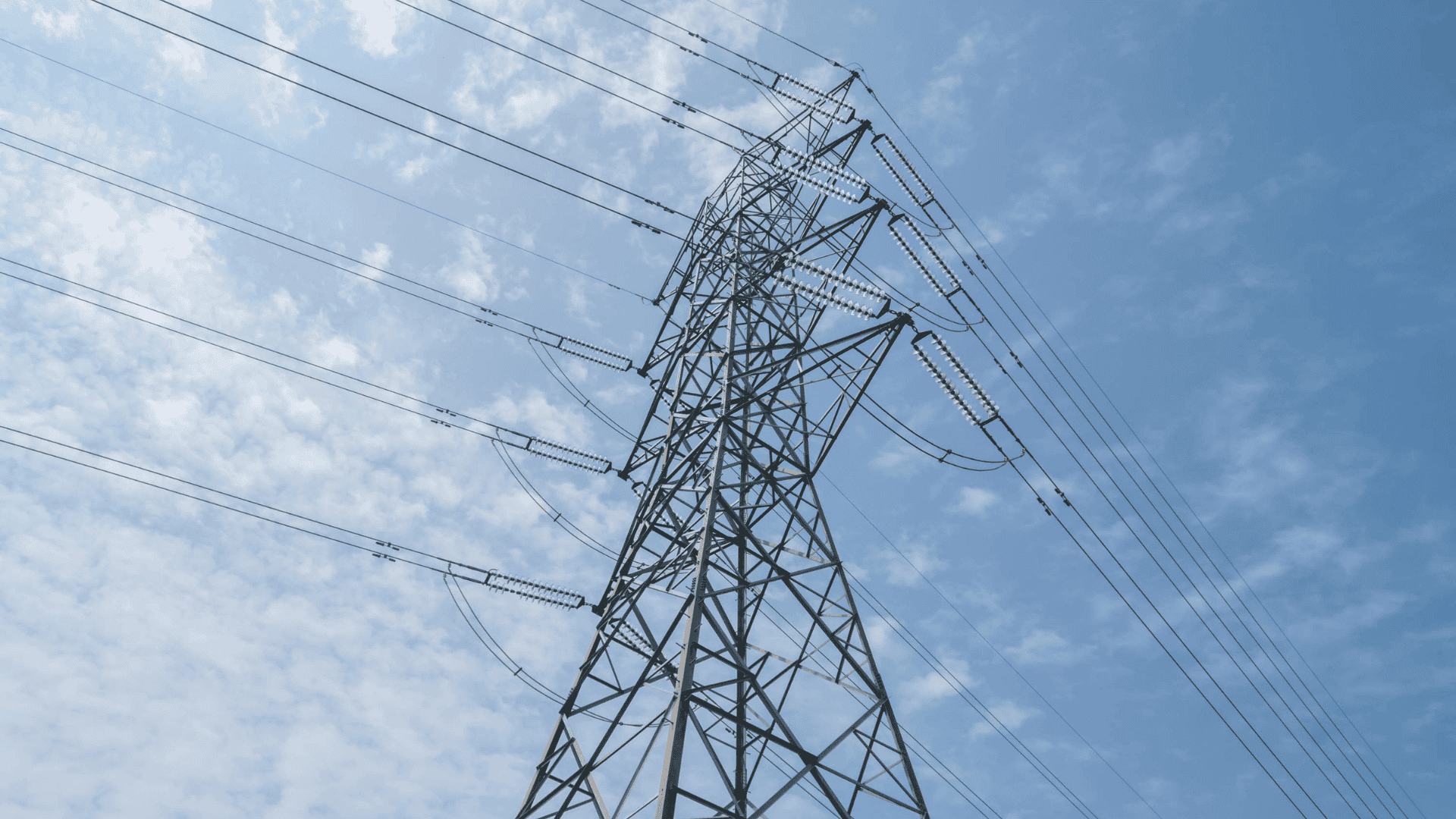
Structural steel fabrication is preferred in industries where structures must carry high loads over long spans, integrate precisely with equipment and foundations, and be erected quickly without compromising safety.
Unlike in-situ concrete or standardized steel sections, fabricated steel allows engineers to control geometry, connection behavior, and tolerances in advance. This makes it essential in environments where access is limited, downtime is expensive, and structural performance must remain predictable over decades.
Construction and Infrastructure
In commercial, industrial, and infrastructure projects, fabricated structural steel forms the primary load-bearing framework. Beams, columns, plate girders, trusses, and connection assemblies are produced to tight tolerances to ensure predictable load paths, efficient erection, and compliance with structural design assumptions.
Fabrication enables complex geometries, long spans, and modular assembly, reducing site congestion while maintaining structural reliability under gravity, wind, and seismic loads.
Manufacturing and Industrial Facilities
Manufacturing plants rely on fabricated steel for mezzanines, platforms, pipe racks, equipment supports, ladders, and access structures. These systems must accommodate dynamic loads from machinery, vibration, thermal movement, and frequent operational modifications.
In these environments, foundations that limit vibration and settlement are critical to maintaining alignment and avoiding rework during steel erection, particularly where equipment tolerances and operational uptime are tightly controlled.
Energy and Utilities
Fabricated structural steel plays a critical role in power and energy infrastructure, including support frames, transmission structures, substations, pipe supports, and access platforms.
These applications demand resistance to fatigue, corrosion, and environmental exposure. Foundation performance directly affects erection accuracy and long-term serviceability, especially where vibration-sensitive equipment, cyclic loading, and tight construction windows leave little margin for foundation-induced movement.
Mining and Heavy Industrial Operations
Mining environments place exceptional demands on steel structures due to high loads, abrasion, impact forces, and aggressive operating conditions. Fabricated steel is used for conveyor supports, structural frames, grating systems, rails, and heavy-duty platforms.
Precision fabrication ensures proper load distribution and alignment, reducing premature wear and minimizing downtime in operations where maintenance access is limited and costly.
In these sectors, fabricated steel pile caps and support frames are commonly paired with helical piles to enable rapid installation and immediate loading.
Discover the right structural steel fabrication for your site constraints and soil conditions. Our team can evaluate your project requirements.
Structural Steel Fabrication Standards and Codes
Structural steel fabrication is governed by rigorous standards because even small deviations in material quality, welding, or workmanship can compromise load paths, fatigue life, or seismic performance.
In practice, these codes establish a common technical baseline that ensures fabricated steel performs as designed, both during construction and throughout its service life.
Core U.S. Standards That Govern Fabrication
In the United States, the American Institute of Steel Construction (AISC) sets the primary framework for structural steel design and fabrication.
AISC 360 defines strength, serviceability, and fabrication requirements for structural steel buildings.
AISC 341 and AISC 358 introduce additional controls for seismic applications, where connection performance and ductility are critical.
Welding quality is regulated by the American Welding Society (AWS).
AWS D1.1 establishes welding procedures, inspection criteria, and acceptance limits for structural steel.
AWS D1.8 adds seismic-specific requirements, including enhanced inspection and welder qualification standards.
Material properties are governed by ASTM specifications such as ASTM A36, ASTM A572, and ASTM A992, which define chemical composition, strength, and toughness to ensure predictable structural behavior.
International and Project-Specific Compliance
For projects outside the United States or involving multinational stakeholders, additional standards may apply, including EN 1090 and Eurocode 3 in Europe, or CSA S16 and CSA W47.1 in Canada. Compliance is typically dictated by project location, owner requirements, and regulatory authority.
Fabrication standards extend beyond design documents. They require:
Qualified welders and approved welding procedures
Full material traceability from mill to installation
Documented inspections and testing
Independent verification where required
Adherence to these standards reduces structural risk, improves constructability, and ensures fabricated steel performs as intended under real-world loads, environments, and service conditions.
As standards tighten, foundations must install fast and perform predictably. See how TorcSill’s services adhere to industry standards and meet modern construction requirements.
Structural Steel Fabrication Outperforms Traditional Methods in 2026
Modern construction has moved beyond site-built, cast-in-place approaches because today’s projects leave little room for delay, rework, or uncertainty. Compared to traditional methods such as in-situ concrete construction or on-site steel cutting and assembly, structural steel fabrication offers clear technical and commercial advantages.
Traditional construction methods are heavily influenced by site conditions. Concrete foundations and frames require excavation, formwork, reinforcement placement, curing time, and weather-dependent sequencing. Variability in workmanship, soil disturbance, and curing conditions often leads to schedule slippage and inconsistent quality. Once placed, concrete systems are permanent, difficult to modify, and costly to remove or adapt.
Structural steel fabrication shifts much of this risk away from the site. Steel components are engineered, manufactured, and quality-checked in controlled factory environments, then delivered ready for installation. This reduces on-site labor, shortens construction programs, and improves predictability.
From a cost and performance standpoint, fabricated steel offers key advantages:
Faster project delivery: Off-site fabrication and parallel workflows allow foundations, steelwork, and superstructures to progress concurrently.
Lower site risk and disruption: Reduced wet works, minimal excavation, and less reliance on weather lower indirect costs such as delays and remediation.
Predictable structural performance: Factory-controlled cutting, welding, and assembly improve dimensional accuracy and connection reliability.
Design flexibility and adaptability: Fabricated steel systems can be modified, extended, dismantled, or reused more easily than cast-in-place structures.
Lifecycle and cost efficiency: Lighter structural systems reduce foundation demand, while reuse and recyclability lower long-term environmental and decommissioning costs.
However, the benefits of fabricated steel are often lost when foundations become the schedule bottleneck. Where curing requirements, excavation constraints, or post-install verification delay foundation readiness, steel erection is forced to wait, negating the speed, precision, and modular advantages of fabrication.
Foundation systems that cannot support immediate erection introduce risk even when the steel itself is delivered on time.
In sectors where speed, load control, and constructability matter, such as industrial facilities, energy infrastructure, and modular construction, fabricated steel consistently outperforms traditional methods. In 2026, it is not just a faster alternative, but a lower-risk way to deliver durable, high-performance structures under modern project constraints.
Structural Steel Fabrication, Backed by TorcSill Expertise
Modern structural steel projects succeed only when foundations are ready the moment fabricated steel reaches the site. As steel fabrication becomes faster and more modular, foundation systems must align with erection sequencing rather than dictate it. TorcSill approaches this challenge as an engineering coordination problem, not just an installation task.
TorcSill’s steel-to-steel foundation solutions integrate fabricated structural components directly with helical piles, eliminating concrete interfaces and improving installation control.
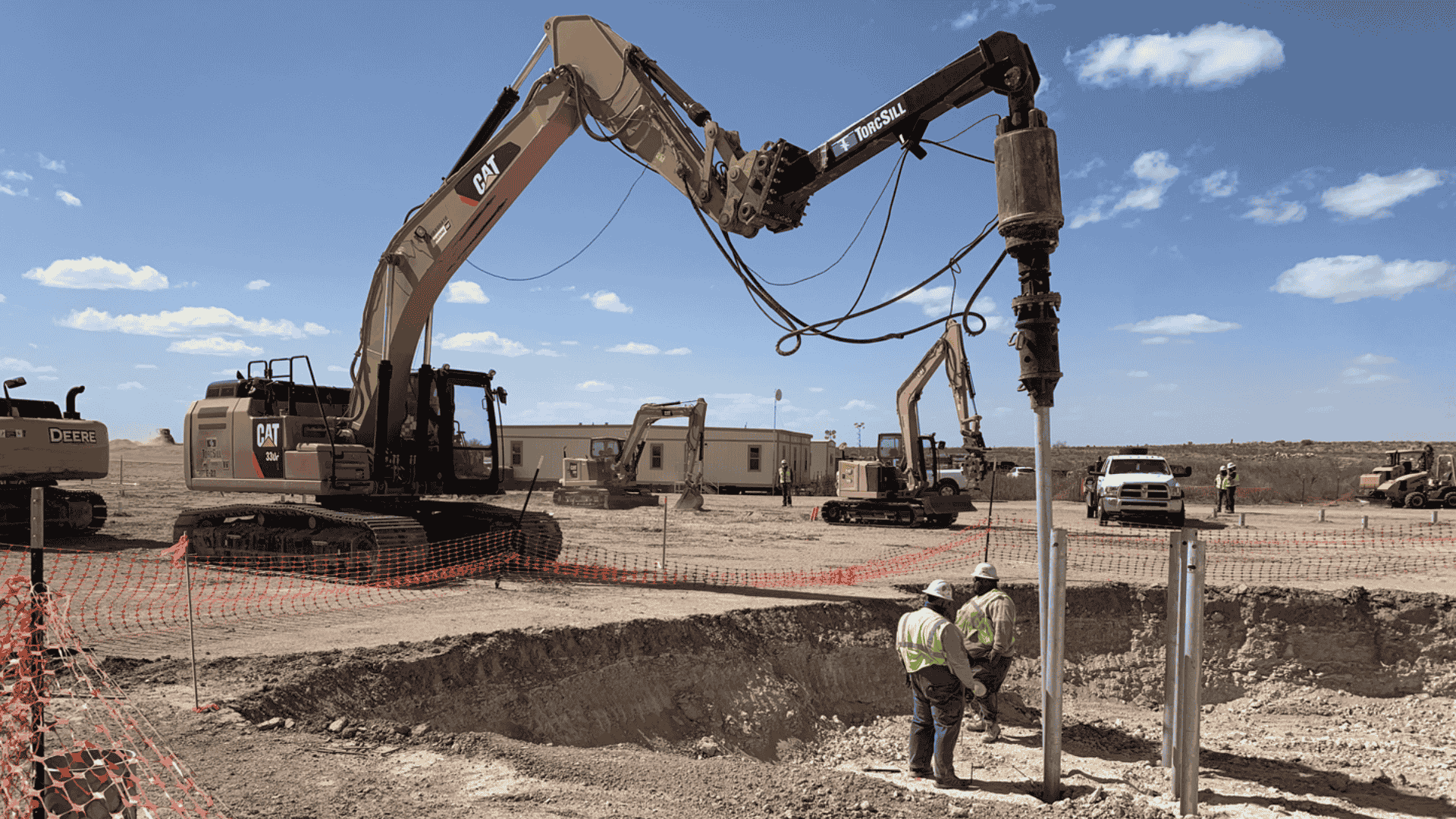
On modular industrial and energy projects, TorcSill helical pile foundations have been used to align with prefabricated steel delivery schedules, allowing immediate erection without delays caused by curing, excavation rework, or post-install verification. Controlled rotational installation and real-time torque monitoring help ensure foundations are validated before steel is set.
TorcSill supports fabricated steel systems through an integrated foundation delivery model:
Engineering coordination: Foundation designs developed around steel load paths, tolerances, and erection sequencing
Immediate load readiness: Capacity achieved through torque and embedment, not curing time
Installation verification: Real-time correlation between installation parameters and capacity
Low-disruption execution: Minimal vibration and no spoil generation near active or sensitive sites
By integrating engineering, manufacturing, installation, and drilling, TorcSill enables foundation systems to function as part of the structural steel solution, supporting predictable erection, maintained alignment, and reduced schedule risk.
Conclusion
Modern structural steel projects demand fast, precise, and reliable foundation solutions that keep schedules on track, costs controlled, and site disruption minimal. Traditional concrete-heavy approaches can slow down prefabricated steel assembly, increase environmental impact, and introduce long-term performance risks.
TorcSill addresses these challenges with engineered helical pile foundations designed for fabricated steel structures. By combining in-house engineering, ISO-certified manufacturing, and on-site installation, TorcSill delivers immediate load capacity, predictable performance, and minimal site impact.
Talk to a TorcSill engineer to explore how their solutions can support your next steel fabrication project.
Frequently Asked Questions (FAQs)
1. Can TorcSill foundations support modular structures?
Yes. TorcSill’s engineered helical piles are ideal for modular and prefabricated steel assemblies, providing immediate load capacity and alignment precision during on-site installation.
2. How does TorcSill handle uneven or challenging soil conditions?
TorcSill designs each foundation based on detailed site-specific soil analysis. Helical piles transfer loads efficiently into competent layers, reducing differential settlement and improving long-term stability.
3. Are TorcSill systems reusable for future steel projects?
Yes. Unlike traditional concrete, TorcSill’s helical piles can be removed, relocated, or repurposed, making them suitable for temporary or evolving steel structures while reducing waste.
4. Does TorcSill reduce construction timelines for steel assemblies?
Absolutely. Helical pile foundations develop capacity immediately through torque and embedment, allowing steel structures to be assembled on-site faster than traditional concrete foundations.
5. How does TorcSill contribute to cost efficiency in steel fabrication?
By reducing concrete use, minimizing excavation, and streamlining on-site installation, TorcSill lowers material, labor, and schedule costs while maintaining structural reliability.