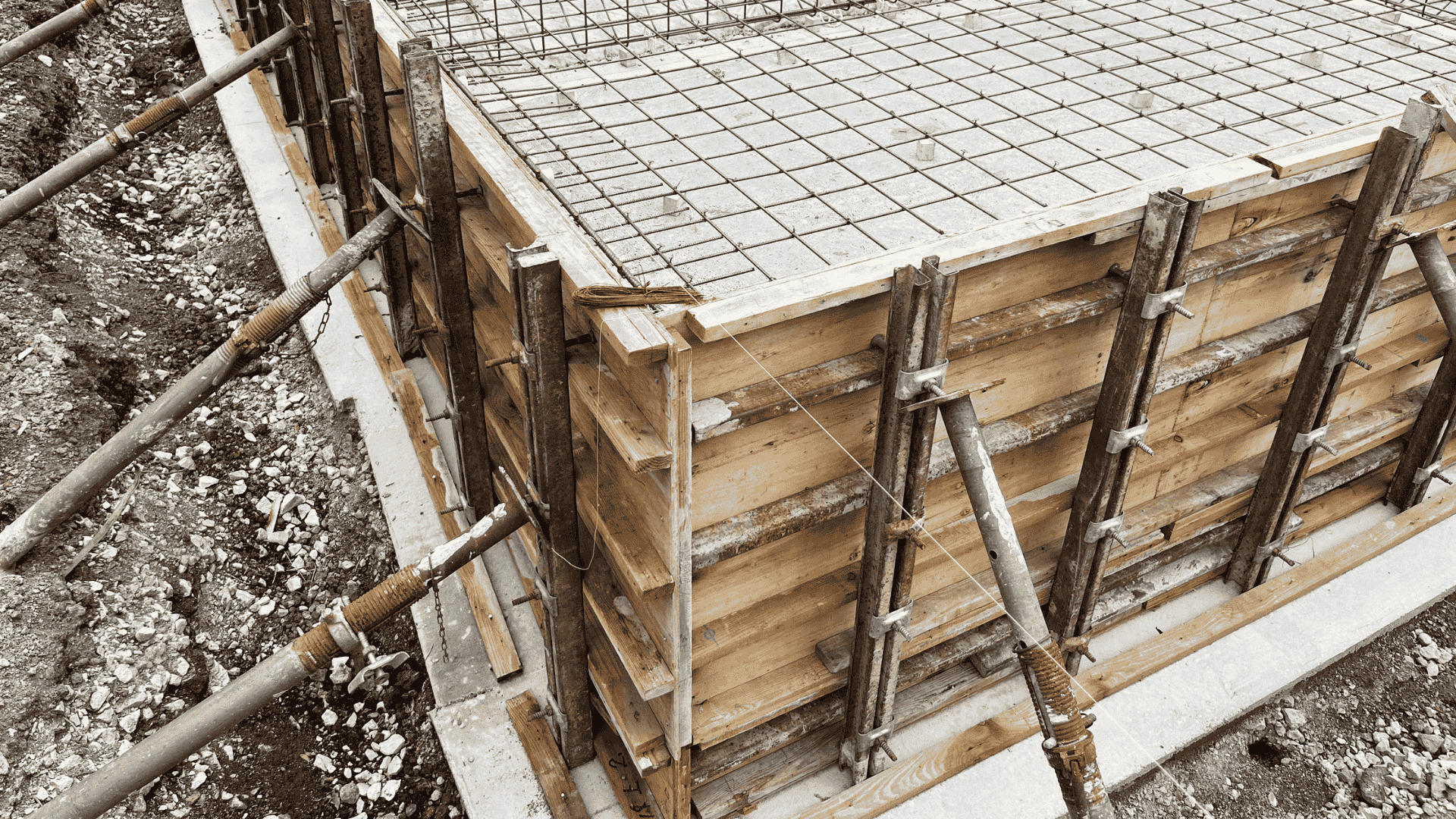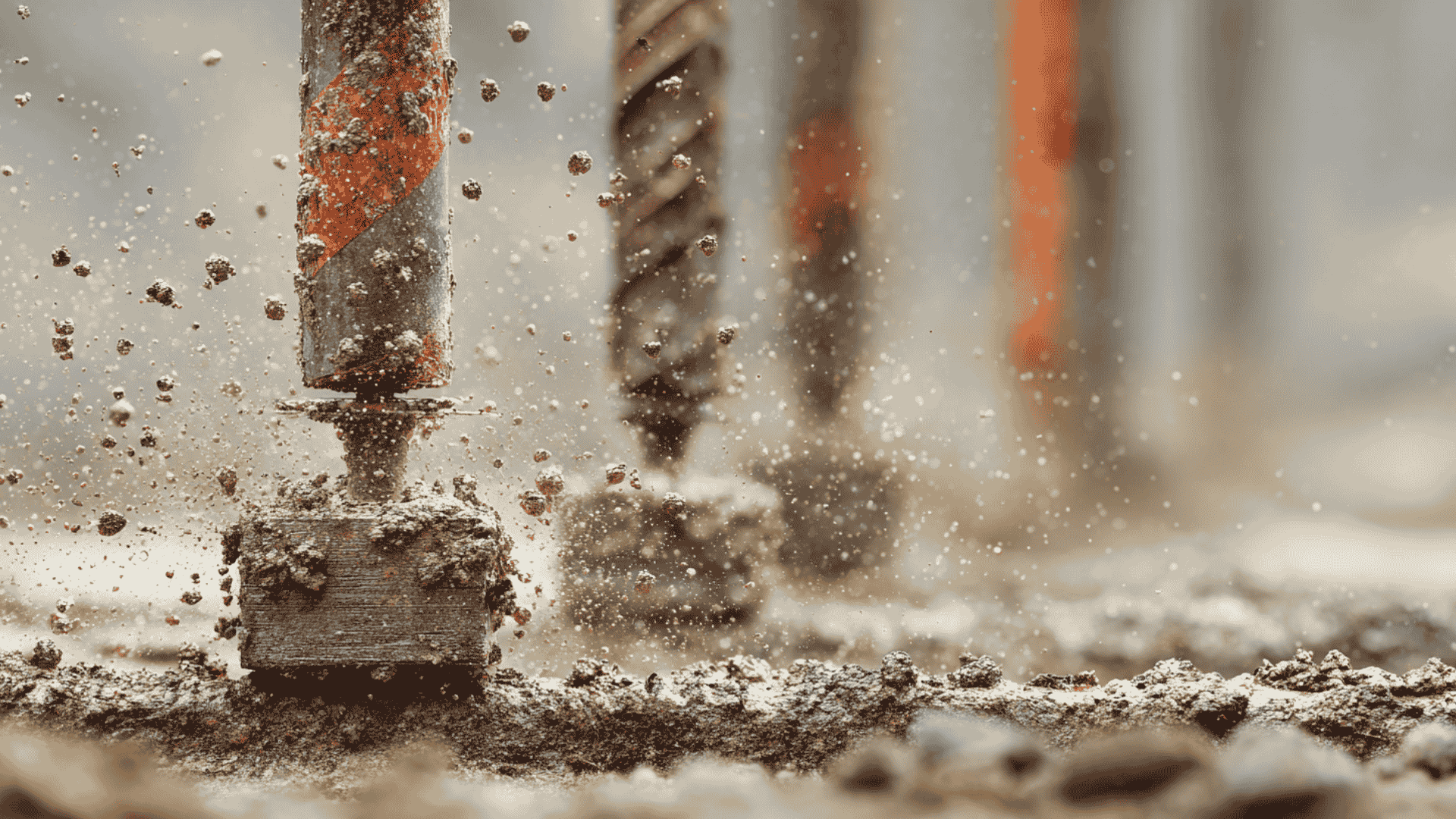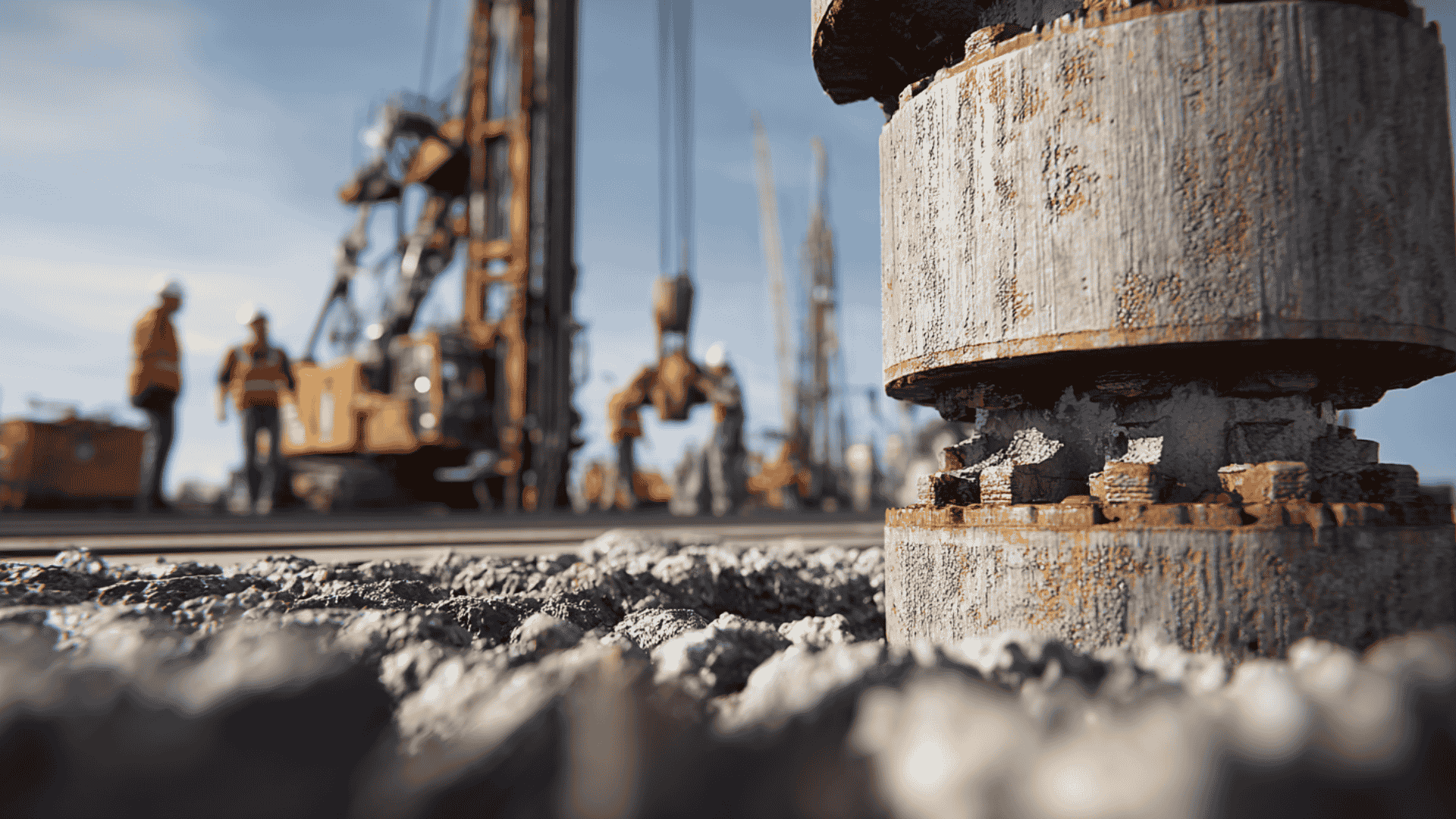
When projects face weak soils, tight schedules, or sensitive sites, foundation decisions become high-stakes. Owners, EPCs, and engineers in energy, power, industrial, and marine infrastructure often face the same challenges.
Project teams contend with unpredictable ground conditions, long concrete foundation cure times, installation delays, and rising rework costs. Large infrastructure projects often amplify these risks when foundation systems rely heavily on excavation and curing schedules that are hard to control. Selecting the wrong foundation system can ripple through the entire project timeline.
This blog breaks down pile foundations in clear, practical terms: what they are, where they make sense, and why they offer benefits such as increased schedule certainty, reduced excavation, and adaptability to poor soils. You’ll learn about the main types of pile foundations and the key design considerations driven by soil and load conditions.
Quick Recap
Strong & Stable: Pile foundations transfer loads to deeper, reliable soil or rock for safe structures on weak sites.
Highly Versatile: Multiple pile types and materials suit varied soils, heavy loads, and tight or complex sites.
Design Matters: Soil, load, and environmental factors guide the right pile selection for optimal performance.
Efficient Installation: Bored and helical piles minimize vibration, spoil, and delays for faster, safer construction.
Long-Term Reliability: Well-engineered piles ensure durability, reduce settlement, and protect structures in challenging conditions.
What Are Pile Foundations?
Pile foundations are a type of deep foundation used to transfer structural loads to deeper, more stable soil or rock layers when near-surface soils cannot provide adequate support. Pile foundations work by penetrating weak or unstable layers to reach strata capable of safely carrying the load.
Piles are long, slender structural elements made from materials such as steel, concrete, or timber. They are installed by driving, drilling, or screwing them into the ground, depending on soil conditions, load requirements, and site constraints. Their primary role is to create a reliable load path from the structure to the ground below.
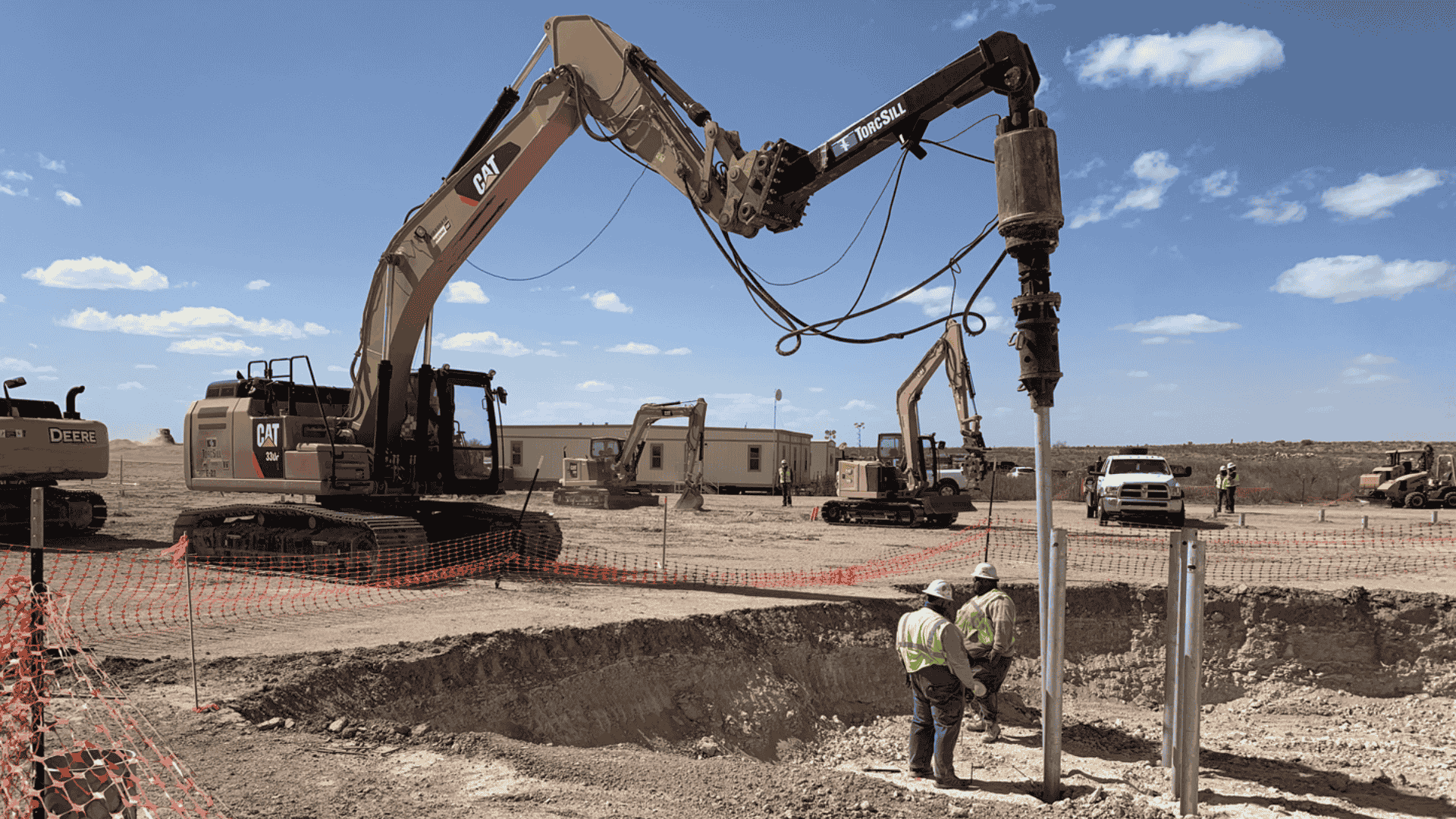
In applications where immediate load capacity, low vibration, and reduced spoil are critical, screw or helical pile systems are increasingly used as an alternative to traditional driven or cast-in-place foundations.
Pile foundations are commonly used for large buildings, industrial facilities, and infrastructure projects where soil strength varies or settlement risk is high. Some piles transfer loads directly through their tips to firm layers below, while others rely on friction along their sides.
Now that we understand what pile foundations are, it’s important to see where they are used and why they are preferred in challenging conditions.
When Pile Foundations Become the Safest and Most Reliable Choice
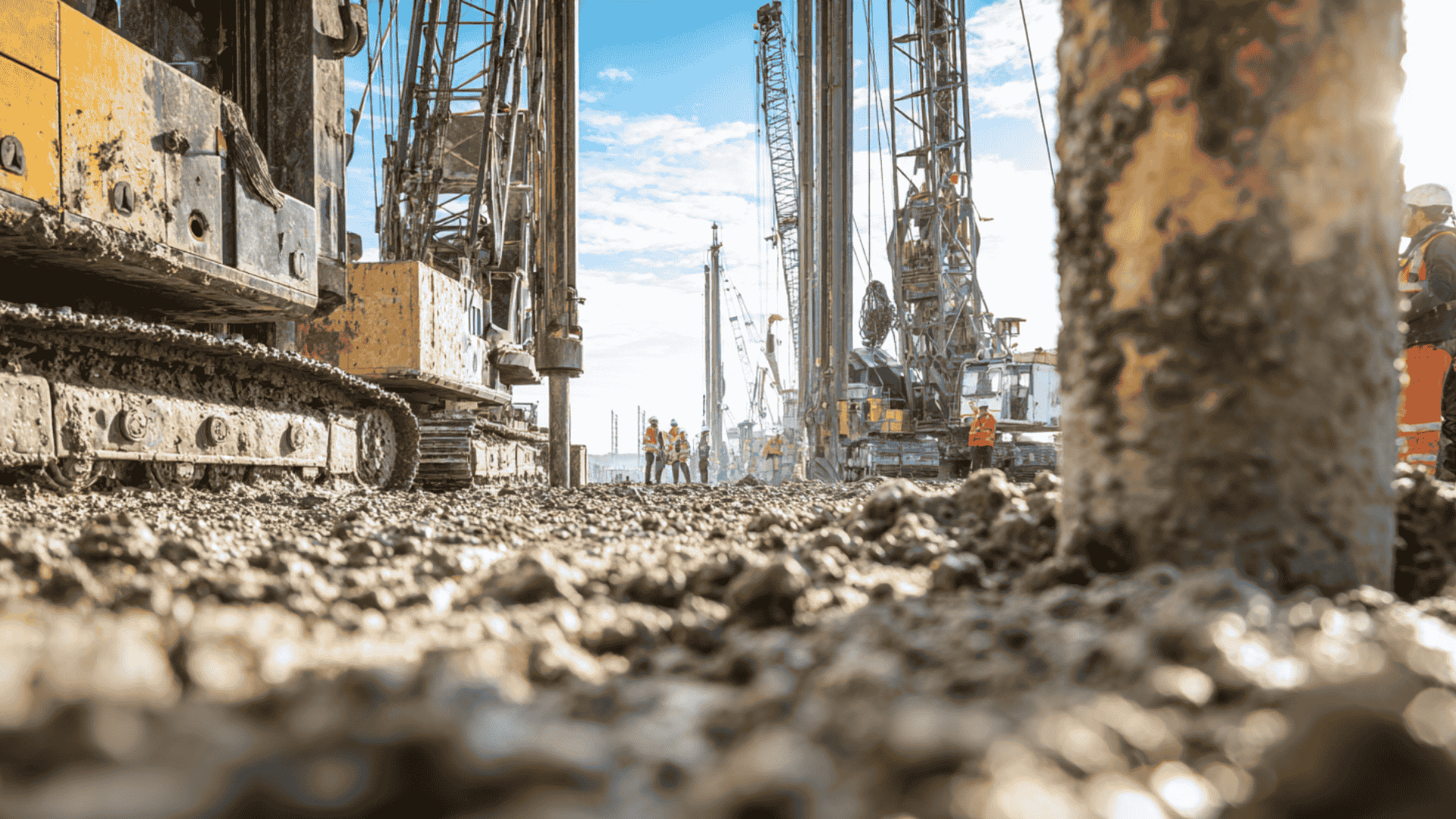
Pile foundations are typically chosen when surface conditions or site constraints make shallow foundations unreliable, risky, or impractical. Common situations include:
Weak or compressible soils that cannot safely support structural loads at shallow depths.
High water tables where deep excavation becomes difficult, unsafe, or uneconomical.
Sites prone to settlement or liquefaction, especially under seismic loading.
Areas exposed to scouring or erosion, such as riverbanks, coastlines, or marine environments.
Limited construction space, where large excavations or mass foundations are not feasible.
Proximity to existing structures requiring controlled installation with minimal ground disturbance.
Heavy or uneven loading conditions that could lead to differential settlement.
Uplift forces caused by groundwater pressure or buoyancy effects.
Significant lateral or overturning forces from wind, waves, or earthquakes.
Reclaimed land with variable and unpredictable soil profiles.
Locations subjected to vibrations or impact loads, including industrial and transportation facilities.
In these scenarios, pile foundations transfer loads to deeper, more stable strata, improving long-term performance and structural reliability.
If your project demands reliability beyond shallow foundations, TorcSill helps you get it right the first time. From engineering and manufacturing to on-site installation, our helical pile foundations are designed for strength, speed, and stability.
Once we know when pile foundations are required, the next step is to understand the benefits they offer in terms of performance and project efficiency.
Where Pile Foundations Add Real Value in Foundation Design: Key Advantages
Pile foundations are widely used when site conditions demand more than a conventional shallow foundation can offer. Below are the key advantages that make them a dependable choice across complex construction environments.
Performs Well in Waterlogged Areas: By bypassing saturated or unstable soils, piles provide a firm base in coastal zones, riverbanks, and areas with a high water table.
Low Vibration Installation Options: Bored and drilled piles minimize ground disturbance, making them suitable for projects near existing buildings or sensitive infrastructure.
Handles Heavy Structural Loads: Pile foundations support high vertical and lateral loads, making them ideal for towers, bridges, industrial plants, and energy infrastructure.
Adaptable Across Site Conditions: Different pile types allow engineers to respond effectively to tight access, variable soils, rocky layers, or environmental restrictions.
Improved Load Distribution: Piles spread structural loads evenly into the ground, reducing settlement risk and preventing stress concentration beneath the structure.
Long-Term Durability: Modern materials and protective systems ensure pile foundations perform reliably in aggressive soils, marine environments, and corrosive conditions.
Environmentally Responsible Options: Techniques like screw piling generate minimal spoil, reduce site disruption, and support more sustainable construction practices.
Provides Structural Resilience: Properly designed piles help structures resist wind, seismic forces, and ground movement, maintaining safety under extreme conditions.
Pile foundations combine strength, adaptability, and reliability, making them essential where ground conditions or structural demands leave little room for error.
With the benefits clear, it helps to look at the different types of pile foundations available and how each one is suited to specific project needs.
3 Main Types of Pile Foundations Classification
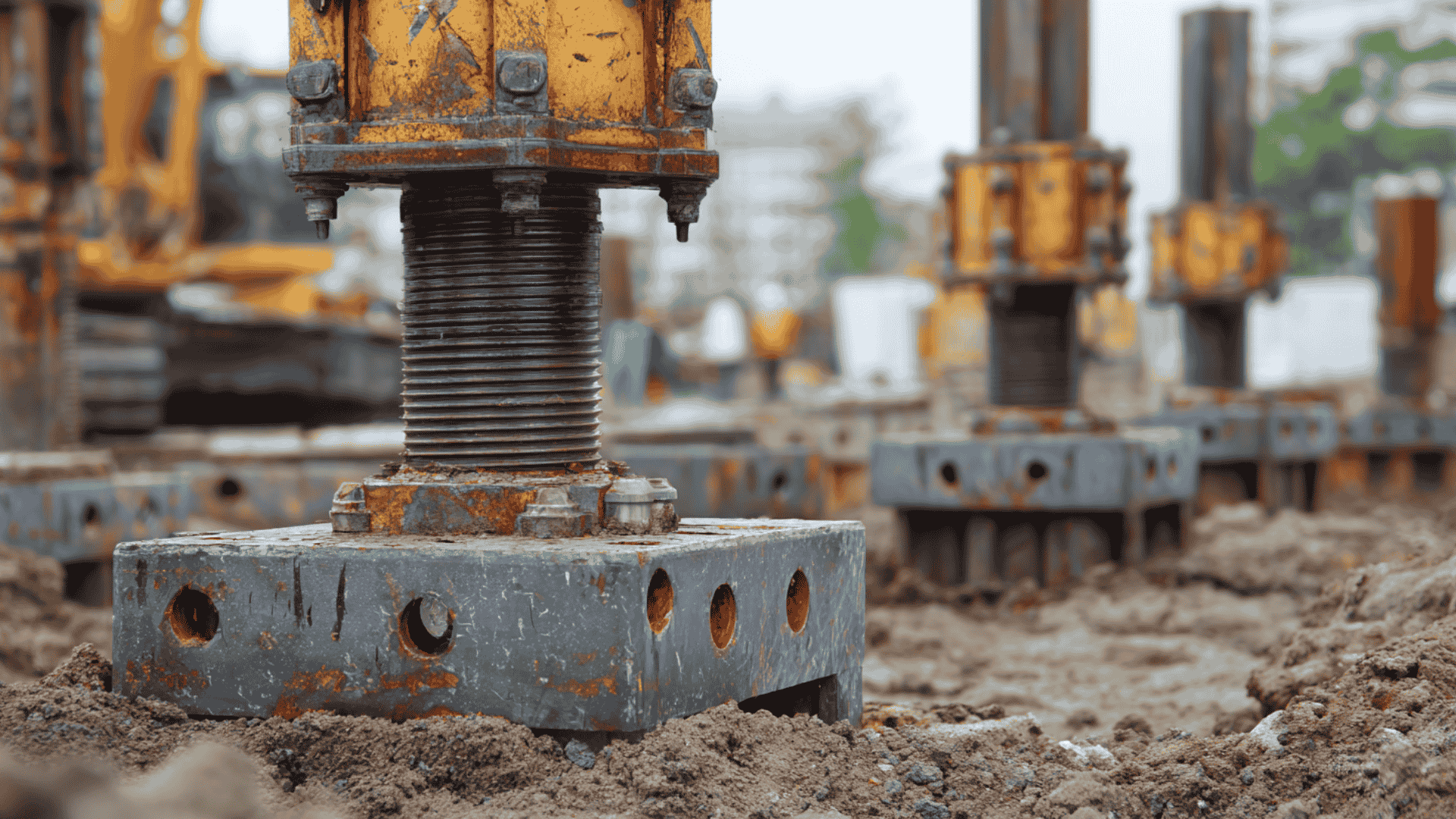
Pile foundations are classified by function, material, and installation method to address varying soil behavior, structural loads, and construction constraints.
Classification Based on Function or Use
This classification explains what role the pile plays once installed: whether resisting loads, improving soil, or retaining ground.
Wall Piles (Sheet Piles)
Wall piles are primarily structural retaining elements designed to resist lateral forces from soil and water.
Interconnected piles form a continuous vertical wall.
Designed to resist lateral earth and hydrostatic pressure.
Not intended to carry significant vertical structural loads.
Used in cofferdams, trench shoring, seawalls, and waterfront works.
Suitable for both temporary and permanent retention systems.
Load-Bearing Piles
Load-bearing piles transfer structural loads from weak surface soils to deeper, competent strata.
End-Bearing Piles
End-bearing piles rely on firm soil or rock at depth to support structural loads.
Load is transferred directly through the pile tip.
Function structurally like vertical columns.
Typically terminate at dense soil or bedrock.
Capacity depends on pile tip area and bearing strength at depth.
Common where strong strata are economically reachable.
Friction Piles
Friction piles develop capacity through interaction with the surrounding soil along the pile shaft.
Load is resisted through skin friction.
Suitable where bedrock is deep or inaccessible.
Capacity develops along the part or full pile length.
Performance depends on soil type and pile surface roughness.
Common in stiff clays and medium-dense sands.
Ground Improvement (Soil Compactor) Piles
These piles are installed to modify soil behavior rather than directly support structural loads.
Installed at close spacing to densify loose soil.
Increase bearing capacity through compaction.
Reduce settlement under large foundation areas.
Act collectively as a group of friction elements.
Often used beneath tanks, embankments, and slabs.
Classification Based on Material
Material selection affects pile durability, load capacity, installation method, and long-term performance.
Timber Piles
Timber piles are typically used for light loads and are most effective below the groundwater level.
Economical and widely available in some regions.
Easy to handle, cut, and install.
Suitable for temporary or low-load structures.
Often treated with preservatives for durability.
Concrete Piles
Precast Concrete Piles
Precast piles are manufactured off-site under controlled conditions.
Cast and cured before installation.
Reinforced to resist handling and driving stresses.
High durability and resistance to chemical attack.
Quality can be verified before driving.
Cast-in-Place Concrete Piles
These piles are formed directly in the ground after drilling.
Length can be adjusted during construction.
Minimal risk of damage during installation.
Suitable for large-diameter, heavy-load applications.
Steel Piles
Steel piles are selected for deep foundations and high load demands.
Available as I-sections or hollow pipes.
Small cross-section allows deep penetration.
Easy to splice for extended depths.
High strength makes them suitable for end-bearing use.
Composite Piles
Composite piles combine materials to optimize performance and constructability.
Utilize strengths of different materials.
Common configuration includes steel at depth and concrete above.
Suitable when required pile length exceeds casting limits.
Adaptable to complex soil profiles.
Designed to balance structural performance and cost.
Classification Based on Installation Method
Installation method influences soil displacement, vibration, construction speed, and site suitability.
Driven Piles (Displacement Piles)
Driven piles displace soil during installation, improving ground density.
Installed using impact or vibratory hammers.
Compact surrounding soil, increasing load capacity.
Suitable for non-cohesive and saturated soils.
Bored Piles (Replacement Piles)
Bored piles replace excavated soil with concrete.
Installed by drilling and concreting.
Minimal vibration during installation.
Suitable for urban and confined sites.
Preferred for heavy structural loads.
Helical Piles
Screw piles are mechanically installed using rotational torque.
Steel shafts with one or more helices.
Helices provide uplift and compression resistance.
Rapid installation with minimal spoil.
Allow immediate load application.
Suitable for projects with tight schedules.
Micro Piles
Micro piles are used where access or headroom is limited.
Small diameters, typically 100 mm to 400 mm.
Installed using compact drilling equipment.
Ideal for underpinning and retrofit projects.
Perform well in variable soil conditions.
Common in dense urban environments.
TorcSill brings engineered certainty with proprietary helical pile systems, PE-backed foundation design, in-house manufacturing, and expert installation. Whether you’re building in challenging soils or mission-critical environments, our solutions help you get reliable load performance with faster deployment. Reach out today!
How Engineers Decide on the Right Pile Foundation Type
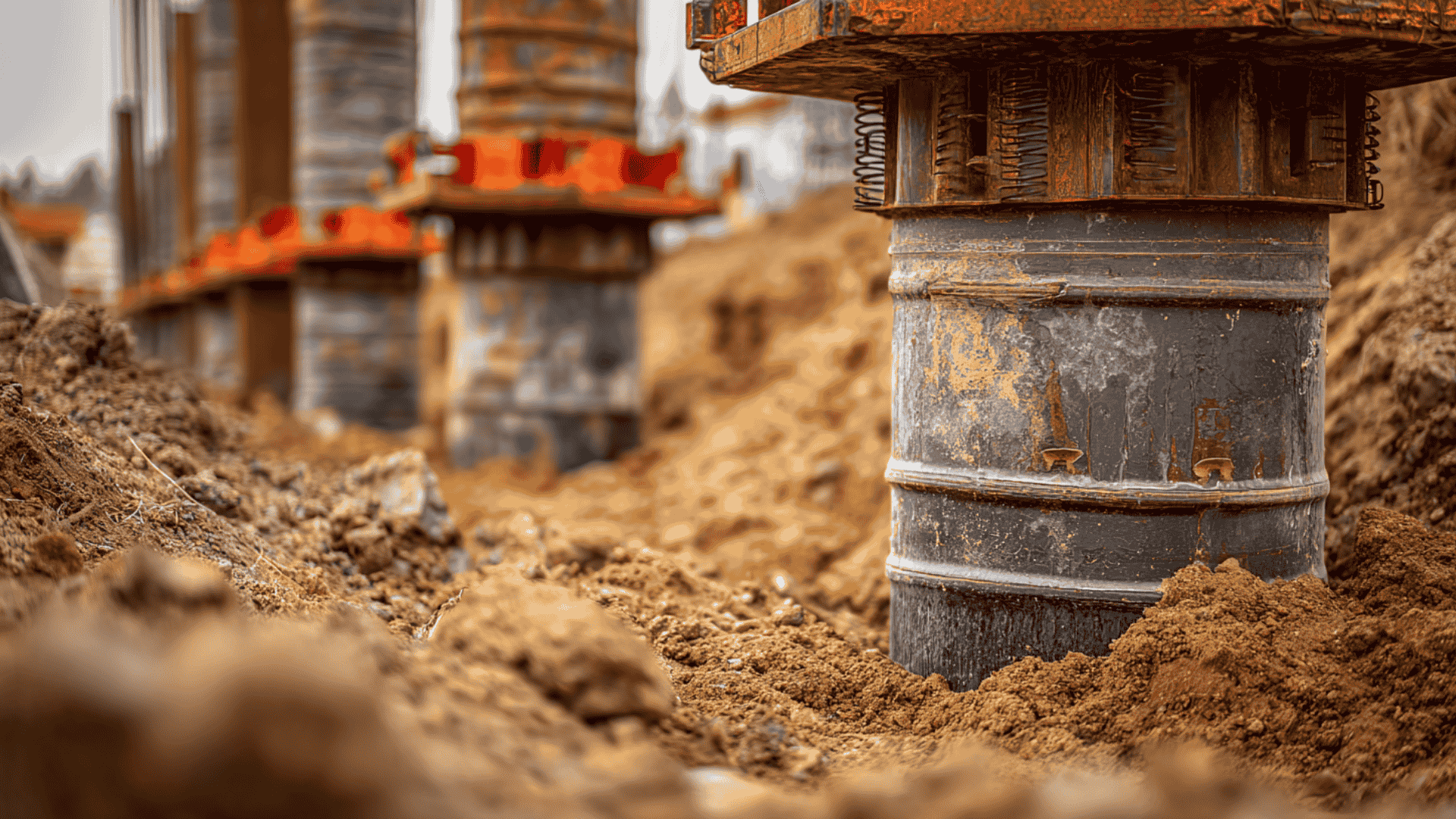
Selecting the right pile foundation is a structured process that blends early planning discussions with detailed technical evaluation. While some considerations can be addressed quickly, others demand rigorous geotechnical and structural input to reduce long-term risk.
General Project Considerations
These factors are typically aligned early through client-contractor coordination:
Budget constraints: Material choice, installation method, and testing scope must align with project economics without compromising performance.
Available equipment: Access to piling rigs, hammers, or torque motors directly influences feasible pile types.
Surrounding environment: Urban, congested, or sensitive sites may limit vibration, noise, or spoil generation.
Technical and Site-Driven Considerations
These require deeper investigation and engineering analysis:
Soil properties: Strength, stratification, compressibility, and groundwater conditions govern pile capacity and length.
Load type and magnitude: Vertical, lateral, and uplift loads affect pile size, spacing, and load-transfer mechanism.
Exposure conditions: Offshore, marine, or hydraulic structures demand corrosion resistance and durability planning.
Depth of competent strata: Determines whether end-bearing, friction, or combined piles are more appropriate.
Groundwater depth and flow: Influences installation method, stability during construction, and long-term performance.
Other Influencing Factors
Site accessibility: Limited space or headroom can restrict installation methods.
Environmental risks: Flooding, seismic activity, or erosion shape foundation strategy.
Construction timeline: Faster installation methods may reduce schedule risk where time is critical.
Why Detailed Investigation Matters
Technical selection relies on thorough site validation, including:
Borehole drilling and subsurface exploration
Soil sampling and laboratory testing
Trial or mock-up pile installations
Analytical modeling and design optimization
Rushing this stage often leads to conservative designs, higher costs, or constructability issues.
A well-selected pile foundation balances performance, constructability, cost, and long-term reliability, making early collaboration between geotechnical and structural teams essential.
Even with the right knowledge, choosing a foundation solution requires expertise, engineering precision, and proven field experience, which is where TorcSill adds real value.
Professional Pile Foundation Solutions by TorcSill
When your project demands reliable deep foundation solutions, TorcSill delivers practical engineering and construction support that aligns with what your project requires:
Engineered Solutions Backed by Data: We provide foundation designs based on soil conditions and load requirements to ensure reliability and performance.
Helical & Deep Pile Expertise: Whether friction or torque-based, our helical solutions handle challenging soil and high structural demands.
Turnkey Services: From design and manufacturing to installation, we manage the entire foundation process for you.
Fast, Predictable Installation: Our methods minimize disruption, reduce cure times, and allow immediate load application where feasible.
Low-Impact Construction: Less spoil, lower vibration, and reduced site footprint make our pile options ideal in sensitive or built-up areas.
Quality Manufacturing Standards: Components are produced under rigorous quality control, ensuring consistency in performance.
Trusted in Energy & Infrastructure Projects: We support power delivery, oil and gas, marine, and industrial sectors with proven results.
If your project requires dependable deep foundation performance, partner with TorcSill for engineered solutions that deliver strength, stability, and peace of mind.
Conclusion
Pile foundations are a critical solution when building on weak soils, waterlogged sites, or areas with high structural demands. From friction and end-bearing piles to helical screw options, selecting the right foundation system can reduce construction risks and support heavy loads with confidence.
For projects that demand precision, reliability, and efficient execution, partner with TorcSill for engineered helical pile foundation solutions that deliver strength, stability, and peace of mind from design through installation.
Get in touch with TorcSill today and take your project from design to installation with confidence.
FAQs
1. What is a pile foundation?
A pile foundation is a deep foundation system where long, slender structural elements transfer building loads to stronger soil or rock layers below weak or unstable surface soil.
2. Can pile foundations be used for homes?
Yes, pile foundations are often used for homes built on soft, loose, or waterlogged soil where conventional shallow foundations might settle or fail.
3. When would a pile foundation be used?
Pile foundations are used when soil near the surface is too weak to support the structure, in waterlogged areas, for heavy loads, or where minimal settlement is critical.
4. What are the disadvantages of pile foundation?
They can have higher upfront costs, require specialized equipment, and involve longer installation times than shallow foundations in simple soil conditions.
5. What types of pile foundations are most common?
The most common types are end-bearing piles, friction piles, bored piles, and helical (screw) piles, each suited for different soil and load conditions.